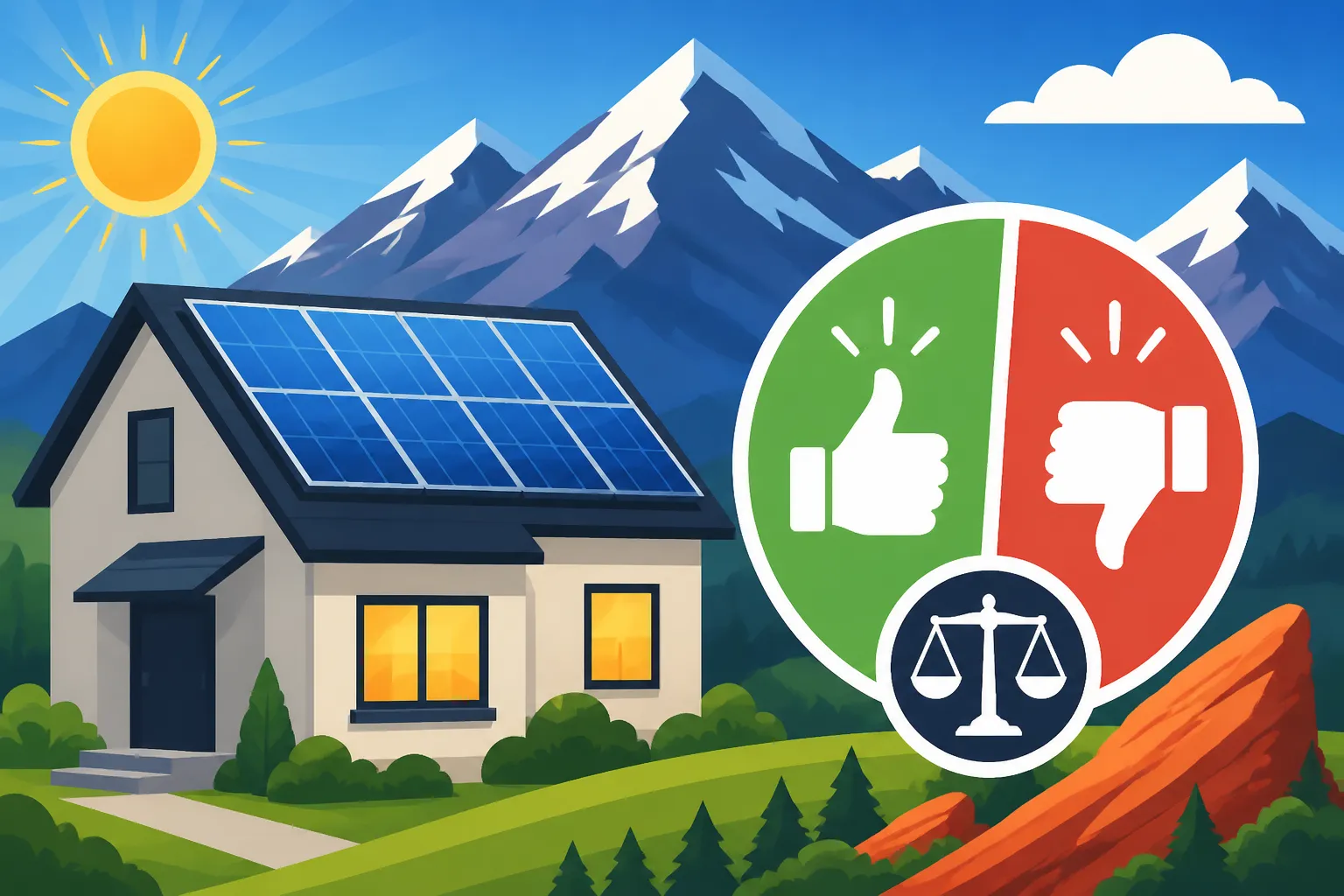
Is Solar Worth It in Colorado?
Many Colorado homeowners feel stuck between rising utility bills and the lingering question of whether switching to solar is truly a worthwhile investment. It's a significant decision, after all, and you want to be sure it actually makes financial sense in the long run. This comprehensive guide will peel back the layers of solar in the Centennial State, helping you understand the unique factors, incentives, and real-world savings that make solar power a compelling option for many families here.
The Colorado Solar Landscape: Why It's Unique
Colorado stands out for solar power thanks to a fantastic combination of natural resources and increasing energy demands. It's not just a trend; there are concrete reasons why installing solar panels here makes so much sense for homeowners.
Abundant Sunshine and High Altitude Advantages
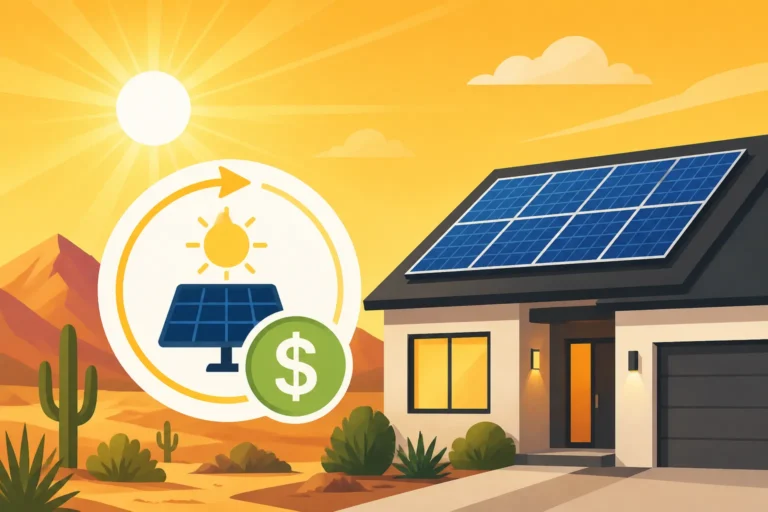
One of the first things people think about when considering solar is, "Does my area get enough sun?" For Colorado, the answer is a resounding yes! The state boasts over 300 days of sunshine a year across many regions, easily putting it among the sunniest states in the nation. This isn't just a pretty statistic; it translates directly into more electricity production for your solar panels. Imagine your system in Denver, Fort Collins, or Colorado Springs soaking up all that natural light, consistently generating clean energy for your home.
But there's another subtle, yet powerful, advantage here: high altitude. While it might sound counter-intuitive, solar panels actually perform better in cooler temperatures, provided they're still getting plenty of direct sunlight. Colorado's elevation means the air is often thinner and clearer, which can reduce atmospheric interference and allow more solar radiation to reach your panels. This contributes to a slight boost in efficiency compared to systems at sea level, making each panel work a little harder for you. Plus, the often lower humidity at higher altitudes means less atmospheric moisture scattering sunlight, optimizing production even further.
Rising Electricity Rates in Colorado
If you've been living in Colorado for a while, you've probably noticed your electricity bills creeping steadily upward. This isn't just your imagination. Major utility providers like Xcel Energy and Black Hills Energy have seen their rates increase over the past few years, a trend that experts predict will continue. These increases are driven by a variety of factors, including rising fuel costs for traditional power generation, infrastructure upgrades, and growing demand.
For example, Xcel Energy, which serves a significant portion of the state, has seen rate adjustments multiple times, impacting the average monthly bill. When you compare the upfront investment in solar to the certainty of these escalating utility costs, the long-term financial stability offered by solar power becomes incredibly attractive. By generating your own electricity, you essentially lock in your energy costs for decades, protecting yourself from future price hikes. This foresight can be a huge relief, especially for those on a fixed income or simply looking for more predictable household expenses. It’s a direct way to gain control over a part of your budget that often feels entirely out of your hands.
Financial Incentives and Programs for Colorado Homeowners
The upfront cost of solar can feel daunting, but thankfully, there are several powerful incentives available that significantly reduce the financial burden, making solar much more accessible and appealing in Colorado.
Federal Solar Tax Credit (ITC)
Let's talk about the big one: the federal solar tax credit, officially known as the Investment Tax Credit (ITC). This isn't just a Colorado thing; it's a nationwide program that's been instrumental in making solar affordable for millions of Americans. Currently, homeowners who install a new solar energy system can claim a credit equal to 30% of the total cost of their system. This is a direct dollar-for-dollar reduction of your federal income tax liability, not just a deduction. So, if your system costs $25,000, you could get a $7,500 credit back!
This incentive applies to the cost of equipment, installation, and even certain related expenses like battery storage. It’s incredibly valuable and significantly cuts down your net investment. For those wondering about the future, the Inflation Reduction Act of 2022 actually extended and strengthened the ITC, setting it at 30% for systems installed through 2032. So, while some may ask Is the Solar Tax Credit Gone in 2026?, the good news is that for now, and for many years to come, this substantial federal incentive is firmly in place for Colorado residents. To learn more about other federal incentives, you can check out the guide on Federal Solar Incentives That Still Exist in 2026.
State and Local Incentives
Beyond the federal credit, Colorado also offers a patchwork of state and local incentives that can further sweeten the deal. While Colorado doesn't have a statewide solar tax credit like some other states, it does provide property tax exemptions and, in some cases, sales tax exemptions.
- Solar Property Tax Exemptions by State: This is a huge benefit. Normally, if you add something that increases your home's value, like a swimming pool or a new addition, your property taxes go up. Solar panels definitely increase your home's value, but in Colorado, state law allows for an exemption on the added value from a renewable energy system. This means you get all the benefits of increased home value without getting hit with a higher property tax bill. It's a fantastic policy that directly impacts your long-term savings. You can find more details on Solar Property Tax Exemptions by State.
- Sales Tax Exemptions: Many counties and municipalities in Colorado exempt solar energy equipment from sales tax. This can vary by location, so it's important to check with your local jurisdiction or your solar installer, but it’s another way the state encourages adoption by reducing the upfront cost.
- Utility Rebates: Don't forget about your local utility! Companies like Xcel Energy and Black Hills Energy sometimes offer their own solar rebate programs, often called performance-based incentives (PBIs) or upfront rebates, especially for residential customers. These programs are designed to encourage solar adoption within their service territories. The availability and specifics can change, so it's always wise to inquire directly with your utility provider or work with an installer who is familiar with these local programs. A great resource for tracking these down is a guide on Utility Solar Rebates: How to Find Yours. Some programs might even offer incentives for adding a solar battery, which is increasingly popular for backup power.
Net Metering Policies in Colorado
Net metering is a critical policy that makes rooftop solar financially viable for many homeowners. In Colorado, net metering generally works by allowing you to send any excess electricity your solar panels produce back to the grid. When your panels generate more power than your home needs (for example, on a sunny afternoon when you're at work), that extra electricity is exported to the utility grid. Your utility then gives you a credit on your bill for that power, typically at the full retail rate. Then, when your panels aren't producing enough (like at night or on a cloudy day), you draw electricity from the grid as usual, and those credits help offset the cost.
For Xcel Energy customers in Colorado, for instance, a comprehensive net metering policy is in place that allows for the crediting of excess generation. This means you're effectively using the grid as a giant, free battery. This system is a huge economic driver for solar, ensuring that every kilowatt-hour your system produces contributes to your savings. Without robust net metering, much of the economic benefit of solar would disappear. Understanding Net Metering Explained: How It Works by State is crucial for any homeowner considering solar, as policies can vary.
Analyzing the Return on Investment for Solar in Colorado
Deciding whether solar is "worth it" ultimately comes down to the return on your investment. In Colorado, with its specific market conditions and incentives, the financial picture for solar homeowners is often quite favorable.
Calculating Payback Periods
The payback period for solar panels refers to the amount of time it takes for your energy savings and incentives to offset the initial cost of your solar system. In Colorado, the average solar payback period can range significantly, typically falling between 7 to 12 years. This is a decent return, especially when you consider that most solar panel systems come with warranties of 25 years or more.
Several factors heavily influence this timeframe:
- System Size: A larger system generally costs more, but if it's perfectly sized to offset your entire electricity usage, your savings will be maximized, potentially shortening the payback period. However, oversizing can lead to less favorable economics if net metering rates aren't generous.
- Energy Consumption: Homes with higher electricity bills tend to see faster payback periods because they have more money to save each month. If you're currently paying a lot for power, solar has a greater impact on your budget.
- Incentives Claimed: Maximizing the federal ITC and any available state or local rebates directly reduces your net cost, which in turn shortens your payback period. It's really important to ensure you claim every incentive you're eligible for.
- Electricity Rate Increases: As Colorado's electricity rates continue to climb, your savings from solar actually increase over time, which can accelerate the effective payback period even further.
To get a precise estimate for your situation, you’ll need a detailed quote from a solar installer that includes all costs and expected incentives. They can typically run a savings analysis specific to your home and energy usage. If you're curious to dive deeper into how this is calculated, check out our guide on Solar Panel Payback Period Explained.
Long-Term Savings and Home Value
Once your system has paid for itself, that's when the real long-term savings kick in. Over the typical 25-30 year lifespan of a solar energy system, Colorado homeowners can expect to save tens of thousands of dollars on electricity bills. This is pure profit from your investment, money that can be used for other home improvements, retirement savings, or simply enjoying life in the Rockies.
Consider this: if you break even in 10 years, you still have another 15-20 years (or more!) of free or heavily discounted electricity. With average electricity rates around 16 cents per kWh in Colorado and projecting even modest increases, these savings compound significantly over time. For example, a system that saves you $100 per month initially could be saving you $200 per month in a few years as rates rise.
Beyond direct savings, solar panels are a proven way to increase your home's value. Studies consistently show that homes with owned solar panel systems sell for more than comparable homes without solar. In competitive housing markets across Colorado, from Boulder to Colorado Springs, a home with solar panels is seen as a major asset—it offers lower utility bills, a smaller carbon footprint, and a modern edge. The exact increase varies by location and system size, but it's often enough to recoup a significant portion, if not all, of your initial investment at the time of sale. Plus, as we discussed, Colorado's property tax exemption means this added value doesn't hit you with higher annual taxes. This makes solar a smart investment that pays dividends both monthly and when you eventually decide to sell. Learn more about how solar can boost your property value in Do Solar Panels Increase Home Value?.
Practical Considerations for Going Solar in Colorado
While the financial benefits are clear, there are also practical steps and considerations unique to going solar in a state like Colorado. Thinking these through upfront will lead to a smoother installation and a more effective system.
Roof Suitability and System Sizing
Before you even think about signing a contract, you need to assess your roof. Is it in good condition? Most solar panels are designed to last 25 years or more, so you want your roof to have at least that much life left in it. If your roof is nearing the end of its lifespan, it might be more cost-effective to replace it before installing solar. This prevents the costly process of removing and reinstalling panels just a few years down the line. Additionally, consider the pitch and direction of your roof. A south-facing roof is generally ideal for maximizing sun exposure in the Northern Hemisphere, but east and west-facing roofs can also be highly effective, especially with bifacial panels or in cases where morning or evening energy production is key.
Shading is another critical factor. Tall trees, chimneys, or neighboring buildings can cast shadows on your roof, significantly reducing the efficiency of your solar panels. Modern solar designs often incorporate microinverters or power optimizers, which help mitigate the impact of shading on individual panels, but minimizing shade is always best.
Once your roof is deemed suitable, the next step is determining how many solar panels you need for your home. This isn't a one-size-fits-all answer; it depends entirely on your household's electricity consumption. You'll want to look at your past 12 months of utility bills to get an accurate picture of your average kilowatt-hour (kWh) usage. A good solar installer, like those you can find through Modernize, will perform a thorough energy audit and design a system specifically tailored to offset your historical usage. They'll also consider any future plans, like buying an electric vehicle or adding new energy-intensive appliances. Understanding How Many Solar Panels Do I Need for My Home? is a fundamental part of the planning process.
Choosing the Right Solar Installer and Equipment
Selecting a reliable solar installer is perhaps one of the most crucial decisions you'll make. A good installer will guide you through the entire process, from initial consultation and site assessment to design, permitting, installation, and interconnection with the utility. Unfortunately, the rapid growth of the solar industry has also led to some less-than-reputable companies popping up.
Here are some tips for finding trustworthy local installers:
- Look for experience and reputation: Prioritize companies with a solid track record, good online reviews, and proper licensing. Ask for references from past customers in your area.
- Get multiple quotes: Never settle for the first quote you receive. Contact at least three different companies. This allows you to compare system designs, equipment options, warranties, and pricing. Platforms like Modernize can connect you with pre-vetted installers, making this process much easier.
- Understand warranties: A reputable installer will offer comprehensive warranties, covering both the equipment (panels, inverters) and the workmanship. A good solar panel warranty typically covers power output for 25 years.
- Check certifications: Look for certifications like those from the North American Board of Certified Energy Practitioners (NABCEP), which indicates a high level of expertise.
Regarding equipment, solar panels themselves have become incredibly efficient and durable. For Colorado's climate, panels that perform well in diverse conditions, including some snow and potential hail, are a good choice. Brands like REC, Qcells, and Maxeon (SunPower) are well-regarded for their quality and performance. Inverter technology is also important, with options like string inverters, microinverters (like those from Enphase), and power optimizers (like SolarEdge) each offering different advantages in terms of efficiency, monitoring, and shade mitigation. Your installer should explain the pros and cons of each for your specific roof and energy needs. Remember, a comprehensive guide on How to Choose a Solar Installer can walk you through the essential questions to ask.
Here's a quick comparison of key aspects to consider:
| Feature | High-Quality Panels (e.g., Maxeon, REC) | Standard Panels (e.g., Jinko, Canadian Solar) |
|---|---|---|
| Efficiency | 20-23% | 18-20% |
| Durability | Higher resistance to hail, wind, and extreme temps | Good standard durability, but may vary |
| Temperature Coeff. | Excellent (less power loss in heat) | Good (moderate power loss in heat) |
| Warranty (Product) | 25-40 years | 12-25 years |
| Warranty (Performance) | 25 years (retaining >87% of original output) | 25 years (retaining >80-85% of original output) |
| Cost | Higher upfront | More budget-friendly |
Note: These are general ranges and can vary significantly by specific model and manufacturer.
Is Solar Worth It in Colorado? The Verdict
After breaking down all the unique aspects of going solar in the Centennial State, the overwhelming answer for most Colorado homeowners is a resounding yes, solar is absolutely worth it.
You're in a prime location with abundant sunshine and high altitudes that actually boost panel efficiency. Critically, you're facing steadily rising electricity rates from utilities like Xcel Energy and Black Hills Energy, which means every kilowatt-hour you generate yourself translates into substantial, growing savings. The federal Investment Tax Credit (ITC) offers a powerful 30% reduction on your system's cost, and Colorado's state-level property tax exemptions protect you from increased taxes when your home value inevitably rises with solar. Add to that the benefits of net metering, where your utility credits you for excess power sent back to the grid, and the financial case becomes incredibly strong.
While the upfront investment is significant, the combination of incentives, long-term savings, and increased home value typically leads to a favorable payback period, usually within 7-12 years. After that, you're essentially enjoying free electricity for the remainder of your system's long lifespan, often 25 years or more. This isn't just about saving money, though that's a huge perk. It's about gaining energy independence, stabilizing your monthly budget, and making an environmentally conscious choice that benefits your community and the planet.
Before making any final decisions, always engage with several reputable, local solar installers. They can provide a personalized assessment, taking into account your specific energy usage, roof characteristics, and the latest local incentives. Services like Modernize can help connect you with trusted professionals who understand the nuances of the Colorado solar market. By doing your homework and partnering with the right experts, you'll be well on your way to enjoying the many benefits of solar power in your Colorado home.
Disclaimer
This article is intended for informational purposes only and does not constitute financial, tax, or legal advice. Solar incentives, policies, and equipment costs can change frequently. Readers should consult with qualified professionals for personalized advice regarding their specific circumstances.