Community Solar vs Rooftop Solar ROI
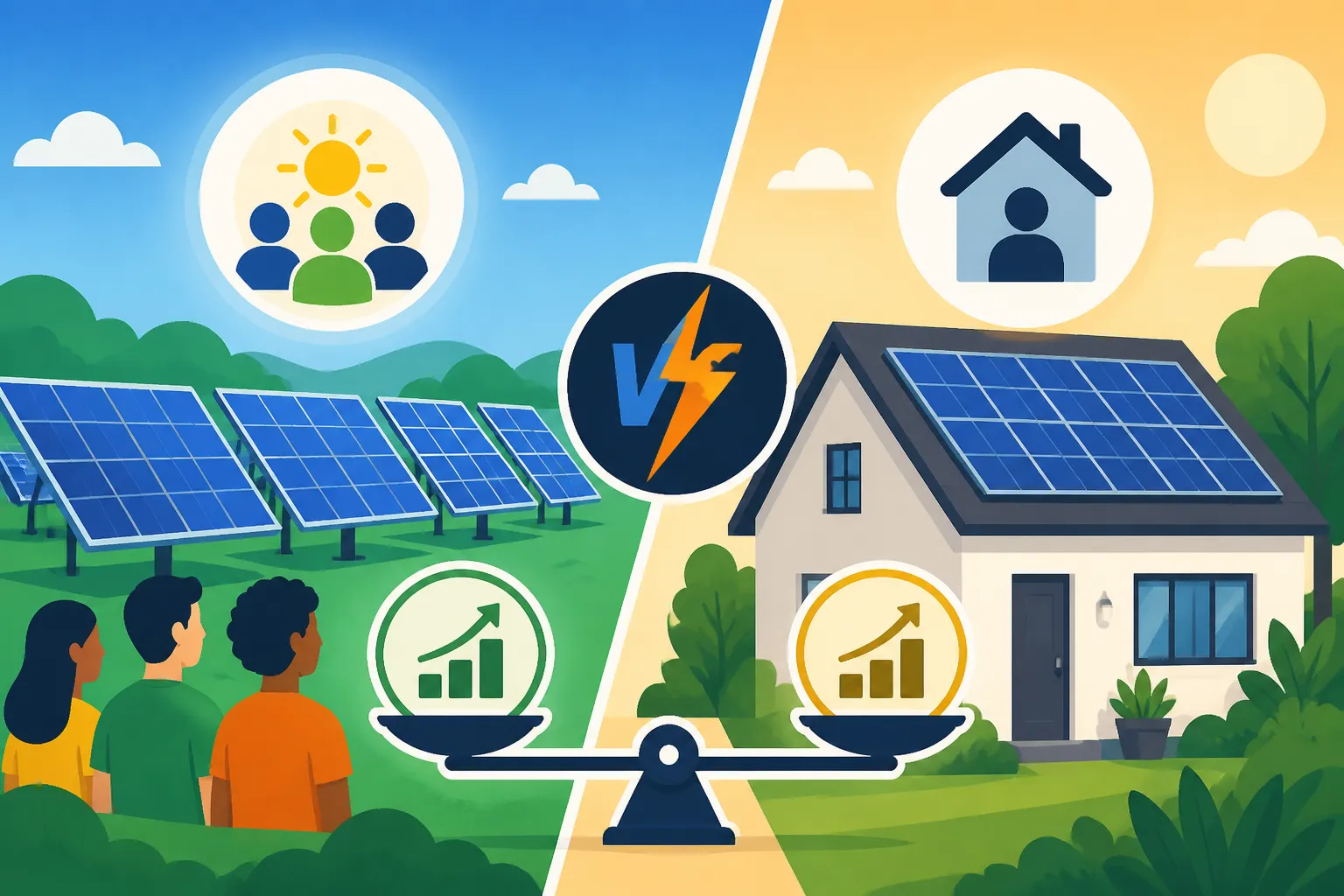
Deciding to go solar is a fantastic step toward energy independence and often, significant long-term savings. But for many homeowners, the journey starts with a big question: should you put panels on your roof, or subscribe to a community solar program? It can feel overwhelming trying to figure out which option makes the most sense for your home, your wallet, and your lifestyle. This comprehensive guide is here to break down the return on investment (ROI) for both rooftop and community solar, helping you navigate the choices and find the path that's truly right for you.
Understanding Rooftop Solar: The Traditional Path to Savings
When most people think about going solar, they picture gleaming panels installed directly on their own roof. This is the traditional path, offering a direct connection to renewable energy and a strong sense of ownership over your power production. It's a significant home improvement that can bring substantial benefits, but it also comes with its own set of considerations.
How Rooftop Solar Works for Homeowners
With rooftop solar, a system of photovoltaic (PV) panels is installed on your home's roof, converting sunlight directly into electricity. This electricity then powers your home, reducing or even eliminating your reliance on the traditional utility grid during daylight hours. Any excess power your system generates is typically sent back to the grid, and if your state or utility has a strong net metering policy, you'll receive credits for that power. This is where the real magic happens for many homeowners – those credits can then offset the cost of electricity you draw from the grid when your panels aren't producing, like at night or on very cloudy days. You essentially become your own mini power plant, with the grid acting as a giant battery. It's an empowering feeling to watch your meter spin backward!
Initial Investment and Setup Costs
Let's be real, the upfront cost of a rooftop solar system can seem daunting. We're talking about a significant investment, often ranging from $15,000 to $30,000 or even more, depending on the size of your system, your location, and the specific equipment you choose. This cost covers everything from the panels themselves to the inverters, racking, wiring, labor, and all the necessary permits and inspections. For those wondering, "How Much Do Solar Panels Cost? 2026 Guide," you'll find that prices vary wildly, but the investment is generally substantial. While financing options like solar loans can make it more accessible, allowing you to go solar for $0 down, it's crucial to understand the total cost before diving in. Many homeowners find themselves looking into options like the Solar Loans: Complete Guide to understand how to manage this initial outlay.
Key Financial Benefits and Incentives
Despite the upfront cost, rooftop solar offers a multitude of financial benefits that contribute to a strong return on investment. The most obvious is the drastic reduction, or even elimination, of your monthly electricity bill. Imagine paying only a small connection fee, or nothing at all, for your power! Beyond that, there are often fantastic incentives available. While the federal solar tax credit has seen changes, many states still offer their own impressive incentives. For example, some states provide tax credits, while others have programs like Solar Renewable Energy Credits (SRECs) that you can sell for additional income. Property tax exemptions are also common, preventing your solar system from increasing your home's assessed value for tax purposes, even though it generally does increase your home's market value. These incentives, when stacked, can significantly reduce your overall cost and shorten your Solar Panel Payback Period Explained. It's worth consulting with a reputable installer, or using a service like Modernize, to find out what specific incentives are available in your area.
Deciphering Community Solar: A Different Approach to Green Energy
Not everyone has a roof that's ideal for solar panels – maybe it's too shady, too old, or perhaps you live in an apartment or condo. That's where community solar shines! It offers a fantastic alternative for accessing clean energy without installing anything on your property. It's a shared approach, democratizing solar access for a wider range of people.
The Basics of Community Solar Subscriptions
Community solar, sometimes called a "solar garden" or "shared solar," involves a large-scale solar project built off-site, typically in a sunny field or on a commercial rooftop. Instead of installing panels on your home, you subscribe to a portion of the electricity generated by this larger, shared solar farm. Think of it like a community garden, but for solar energy. You don't own the panels, but you receive credits on your utility bill based on the electricity generated by your subscribed share of the project. This means you're supporting local renewable energy, reducing your carbon footprint, and seeing direct savings on your electricity bill, all without the hassle or upfront investment of a rooftop system. It's a brilliant way to participate in the solar revolution for those whose homes aren't suitable for panels.
Cost Structure and Participation Models
The financial model for community solar is typically much simpler than rooftop solar. Instead of a large upfront purchase, you usually enter into a subscription agreement with a community solar provider. This might involve a small, recurring monthly fee, or sometimes no upfront cost at all, simply a commitment to purchase your energy credits at a discounted rate. For instance, you might agree to buy credits for 10 cents per kilowatt-hour (kWh) from the community solar farm, when your utility typically charges 12 cents per kWh.
There are generally two main participation models:
- Discount on Credits: This is the most common. You receive credits on your utility bill for the solar energy generated by your share, and then you pay the community solar provider for those credits at a rate that's usually 5-15% lower than your utility's standard rate. So, if you get $100 worth of solar credits on your utility bill, you might pay the community solar provider $85-$95, saving you $5-$15 directly.
- Fixed Price per kWh: In some programs, you pay the community solar provider a fixed rate for the solar energy produced, regardless of your utility's fluctuating rates. This offers predictability, but the savings can vary more based on market conditions.
Because there are no panels on your roof, there's no installation cost, no maintenance, and no need to worry about the system's performance. This makes community solar an incredibly accessible option for many.
How Credits and Savings Are Applied
Here's how community solar usually translates into savings on your bill:
- Solar Production: The community solar farm generates electricity, and your subscribed portion is calculated (e.g., you subscribe to 500 kWh per month).
- Utility Credits: Your utility company then applies a credit to your monthly bill for the value of that 500 kWh, essentially treating it as if you generated it yourself. These are often called "virtual net metering" credits.
- Community Solar Bill: Separately, you receive a bill from your community solar provider for the subscribed electricity, but at a discounted rate.
- Net Savings: The difference between the value of the credits you received from your utility and what you paid the community solar provider is your actual savings. For example, if your utility credit is $70, and you pay the community solar company $60, you've saved $10 that month.
These savings might seem smaller than those from a full rooftop system, but they accumulate steadily over time, often with no risk or capital investment on your part. It's a simple, straightforward way to support renewable energy and see a reduction in your electricity expenses. If you're curious about the mechanics, our guide on "Community Solar: How It Works & Who Qualifies" provides even more detail.
Comparing the Return on Investment (ROI) Metrics
When it comes to financial decisions, especially those involving your home and energy, everyone wants to know: what's the return? Both rooftop and community solar offer financial benefits, but their ROI pathways are quite different, catering to distinct needs and situations.
Payback Period: Rooftop vs. Community
The payback period refers to the time it takes for your solar investment to pay for itself through energy savings and incentives.
For rooftop solar, this period can vary significantly. In states with high electricity rates and generous incentives, such as Massachusetts or California, the payback period might be as short as 5-8 years. However, in areas with lower electricity costs or fewer incentives, it could stretch to 10-15 years or even longer. For instance, homeowners in San Diego might see a faster return due to high utility rates compared to someone in, say, Oklahoma, which traditionally has lower rates, though this is changing rapidly. Factors like the initial system cost, available tax credits (like those discussed in "Federal Solar Incentives That Still Exist in 2026"), state rebates, and net metering policies all play a huge role. Once the system is paid off, the electricity it generates is essentially free, leading to decades of pure savings.
Community solar, on the other hand, doesn't really have a "payback period" in the traditional sense because there's little to no upfront capital investment. Instead, you start saving money from day one, often seeing a 5-15% discount on your electricity bill right away. These savings accumulate over the life of your subscription, which typically ranges from 1 to 20 years. While the monthly savings might be smaller than owning a rooftop system, the immediate, no-investment benefit is a massive draw. You're not waiting years to break even; you're just enjoying a lower bill every month.
Long-Term Savings and Energy Independence
Looking beyond the initial payback, the long-term financial picture also differs.
With rooftop solar, after your system pays for itself, you're essentially generating free electricity for the remainder of its 25-30+ year lifespan. This means decades of significant savings, especially as utility rates inevitably rise over time. You gain a high degree of energy independence, protecting yourself from unpredictable energy price hikes. Moreover, owning solar panels can significantly increase your home's value, often by 3-4% of the home's value, providing another substantial financial return when you eventually sell. Our article on "Do Solar Panels Increase Home Value?" dives deeper into this.
Community solar offers consistent, albeit generally more modest, long-term savings. You're locked into a discounted rate for your share of the solar energy, which provides predictable savings and hedges against rising utility costs. While you don't own physical assets that appreciate like a rooftop system, you benefit from clean energy without any of the ownership responsibilities (maintenance, repairs, inverter replacements, etc.). It's a "set it and forget it" approach that delivers ongoing savings with zero hassle. It's also a great way to support renewable energy development without a major financial commitment.
Factors Influencing ROI for Each Model
The actual ROI for both rooftop and community solar is heavily influenced by several key factors:
For Rooftop Solar:
- Electricity Rates: Higher local electricity rates mean greater potential savings, thus improving ROI. A household in New England paying 25 cents/kWh will see a faster ROI than one in a state with 10 cents/kWh.
- System Size & Cost: The larger and more expensive the system, the longer the payback, unless generation and incentives scale equally. Getting multiple quotes, potentially through a service like Modernize, can help you find the best price.
- Sunlight Exposure: The amount of direct sunlight your roof receives directly impacts production and, therefore, savings. Shading from trees or neighboring buildings can significantly reduce efficiency.
- Incentives: The availability and generosity of federal, state, and local incentives (tax credits, rebates, SRECs, net metering) are critical for enhancing ROI. The details in "State Solar Incentives: Complete 2026 Guide" can illustrate this.
- Home Value Increase: The added value to your home contributes to the overall financial return, especially important if you plan to sell in the future.
For Community Solar:
- Discount Rate: The percentage discount you receive on your utility credits is the primary driver of savings.
- Utility Rate Fluctuations: While you get a discount, the actual dollar amount saved depends on the underlying utility rate. If utility rates plummet (unlikely, but possible), your savings might decrease.
- Program Availability: Community solar is not available in all states or utility service territories. Its growth is largely dependent on state policies that encourage it, so it's essential to check local availability.
- Subscription Terms: The length of your contract and any early termination fees can affect the flexibility and overall value.
- No Upfront Cost: The zero or minimal upfront cost fundamentally changes the ROI calculation, making it attractive for those with limited capital.
Accessibility and Eligibility: Who Can Benefit Most?
One of the biggest differentiators between rooftop and community solar is who can actually participate. Each option has specific requirements that might make one a better fit for your personal circumstances.
Homeownership and Roof Suitability for Rooftop Solar
Rooftop solar is, as the name suggests, primarily for homeowners. You need to own your home to make the significant investment and have the legal right to install a system. Beyond ownership, your roof itself needs to be suitable:
- Sufficient Space: You need enough unobstructed roof space to accommodate the number of panels required to offset your energy consumption. To figure out "How Many Solar Panels Do I Need for My Home?" involves assessing your energy usage and roof area.
- Good Condition: Your roof should be in good structural shape and have at least 10-15 years of life left. Replacing a roof after installing solar is a much more expensive and complex undertaking. Many solar installers will require a roof inspection and may recommend replacement if your roof is nearing the end of its lifespan.
- Sun Exposure: Ideally, your roof should face south, southeast, or southwest and have minimal shading from trees, neighboring buildings, or other obstructions throughout the day. Heavy shading can drastically reduce a system's efficiency and make the investment less worthwhile.
- Permit & HOA Approval: You'll need to navigate local permitting processes and potentially gain approval from your Homeowners Association (HOA), which can sometimes add layers of bureaucracy.
Rental, Condo, and Shaded Home Solutions with Community Solar
This is where community solar truly shines as an inclusive option. It removes all the traditional barriers of rooftop solar:
- Renters: If you rent an apartment or house, rooftop solar is simply not an option. Community solar allows you to enjoy the benefits of solar energy without owning property.
- Condo/Townhouse Owners: Many condo and townhouse associations have strict rules against individual rooftop installations or shared roofs that aren't conducive to private systems. Community solar bypasses these issues completely.
- Shaded Homes: If your home is heavily shaded by trees or nearby structures, or if your roof simply doesn't have the ideal orientation, community solar provides a viable path to go green and save money. You don't have to worry about your personal solar production; you just subscribe to a large, optimally sited array.
- Older Roofs: Homeowners with older roofs who aren't ready for a full replacement can still benefit from solar without stressing about their roof's condition.
- Limited Capital: Those who can't afford the substantial upfront cost of rooftop solar can easily participate in community solar with little to no initial investment.
Basically, if rooftop solar feels out of reach for any reason, community solar is designed to be your entry point into the world of renewable energy savings. Our guide "Solar Incentives for Renters & Condos" further explores this inclusive aspect.
Geographic Availability and Program Requirements
The availability of both rooftop and community solar varies significantly by location.
Rooftop solar is theoretically available anywhere with sufficient sunlight, but its economic viability heavily depends on state and local policies, utility rates, and the presence of qualified installers. States with strong net metering laws and robust incentive programs, such as California, New York, or Massachusetts, tend to have more developed rooftop solar markets.
Community solar has a more limited geographic footprint. It thrives in states with specific legislation that enables and supports shared solar projects. Currently, states like New York, Massachusetts, Minnesota, Illinois, Maryland, and Colorado are leaders in community solar, with robust programs and numerous projects available. However, many other states are still developing their community solar frameworks, or they may have limited programs run by individual utilities. It's crucial to check if community solar projects are available in your specific utility service area and if you meet the subscriber eligibility criteria, which might include being a customer of a particular utility or living within a certain radius of the solar farm. A good place to start is often your state's energy office website or by searching for local community solar providers.
Additional Benefits and Considerations Beyond ROI
While ROI is a crucial factor, there are many other tangible and intangible benefits to consider when choosing between community solar and rooftop solar. These often extend beyond mere financial gain and touch on aspects of environmental impact, convenience, and control.
Environmental Impact and Local Energy Production
Both rooftop and community solar contribute positively to the environment by generating clean, renewable energy and reducing reliance on fossil fuels. This is a fundamental shared benefit.
With rooftop solar, you are directly responsible for producing your home's energy. This can foster a strong sense of personal environmental stewardship and energy independence. You see the panels on your roof every day, a constant reminder of your contribution to a greener planet. You are directly offsetting your carbon footprint at the source, and often, the system you install is sized specifically to meet your household's unique energy demands.
Community solar also has a significant environmental impact, often on a larger scale. These solar farms typically consist of thousands of panels, generating substantial amounts of clean electricity that feeds directly into the local grid. This diversifies the region's energy mix, contributes to grid stability, and often helps states meet their renewable energy mandates. While you might not see the panels daily, you are directly supporting a large-scale renewable energy project in your community. It's an accessible way to make a difference, especially if you're unable to install panels on your own home. It allows for broader community engagement in clean energy initiatives.
Flexibility and Portability
Life changes, and your solar solution should ideally offer some flexibility. This is another area where the two options diverge.
Rooftop solar, once installed, is a permanent fixture of your home. If you move, the solar system moves with the house. This can be a benefit, as it often increases your home's resale value. However, it can also complicate the selling process if buyers are unfamiliar with solar or if you have a complex solar loan or lease agreement. The new homeowner inherits the system and its associated financial responsibilities or benefits. You can't simply pick up your panels and take them to your new residence.
Community solar offers significant portability and flexibility. Since you don't own the physical panels, your subscription is often tied to your utility account, not your specific address. If you move within the same utility service territory, you can usually transfer your subscription to your new home. If you move outside the service area or to a state where your provider doesn't operate, you can typically cancel your subscription with minimal or no penalty, especially if your contract is month-to-month or has a short cancellation window. This makes community solar an excellent choice for those who anticipate moving in the next few years or simply prefer less long-term commitment. It's a low-friction way to enjoy solar benefits without being physically tied down.
Maintenance, Warranties, and Ownership Responsibilities
Ownership comes with responsibilities, and solar is no different.
With rooftop solar, you (or your installer's warranty) are responsible for the system's maintenance and performance. While solar panels are very durable and require minimal maintenance, you might need to occasionally clean them, especially in dusty areas or if they accumulate heavy debris. You'll also need to monitor their performance, often through an app, and address any issues that arise. Components like inverters have a shorter lifespan than panels and will eventually need replacement, which is a cost you'll bear. Most reputable installers offer robust warranties covering equipment and workmanship, often for 20-25 years for panels and 10-12 years for inverters. Understanding these warranties, as discussed in "Solar Panel Warranties Explained," is crucial. However, the ultimate responsibility for the long-term health of your system rests with you.
Community solar completely eliminates these concerns for you. The community solar provider owns, operates, and maintains the entire solar farm. This means they handle all cleaning, repairs, equipment upgrades, and performance monitoring. You never have to worry about a panel breaking, an inverter failing, or the system not producing as expected. Your only responsibility is to pay your monthly bill to the community solar provider. This "hands-off" approach is a huge draw for many, especially those who prefer convenience and avoid home maintenance tasks. It truly is passive participation in solar energy.
| Feature | Rooftop Solar | Community Solar |
|---|---|---|
| Ownership | You own the physical panels and system. | You subscribe to a share of an off-site solar farm. |
| Upfront Cost | Significant investment (thousands of dollars). | Little to no upfront cost. |
| Installation | On your home's roof. | Off-site, often a large field or commercial roof. |
| Payback Period / Savings | 5-15 year payback, then decades of free electricity. | Immediate 5-15% monthly savings from day one. |
| Energy Independence | High degree, direct control over your power. | Indirect, through credits on your utility bill. |
| Maintenance | Your responsibility (or covered by warranties). | Handled entirely by the solar farm operator. |
| Home Value | Can increase home value significantly. | No direct impact on home value. |
| Accessibility | Requires suitable roof, homeownership. | Accessible to renters, condos, shaded homes. |
| Portability | System stays with the house if you move. | Subscription often transferable/cancelable. |
| Incentives | Eligible for federal, state, local, SRECs. | Savings come from discounted credit rate. |
| Direct Carbon Offset | Very direct, visually apparent. | Indirect, contributes to local grid's greening. |
Making the Right Choice for Your Home
Choosing between community solar and rooftop solar isn't a one-size-fits-all decision. It truly comes down to your individual circumstances, priorities, and long-term goals. There's no single "better" option; there's only the best option for you.
Assessing Your Personal Energy Goals
Before you even start looking at prices or programs, take some time to think about what you truly want to achieve by going solar.
- Maximum Financial Return and Energy Independence? If your primary goal is to maximize your long-term financial savings, gain full energy independence, and potentially increase your home's value, and you have a suitable roof and the capital (or access to good financing), then rooftop solar is likely your best bet. You'll invest more, but the ultimate payoff in free electricity and asset appreciation can be substantial. For many homeowners, the thought of generating their own power and truly disconnecting from ever-increasing utility rates is a powerful motivator.
- Convenience and Immediate Savings with No Upfront Cost? If you're a renter, have an unsuitable roof, or simply prefer a hands-off approach to solar without a major financial commitment, community solar is an outstanding choice. You'll enjoy immediate, albeit usually more modest, savings on your utility bill without any of the installation, maintenance, or ownership responsibilities. It's a simple, low-risk way to support renewable energy and save money.
- Environmental Impact? Both options are great for the environment. If seeing your own panels produce power directly impacts your sense of purpose, rooftop solar gives you that direct connection. If you're happy to support large-scale renewable projects that benefit the wider community, community solar delivers.
Consider your current energy usage, your budget, how long you plan to stay in your home, and your comfort level with home improvement projects.
Consulting with Solar Professionals
Regardless of which path you're leaning towards, talking to experienced solar professionals is invaluable. For rooftop solar, a good installer will conduct a detailed site assessment, evaluate your roof's condition, analyze your energy consumption, and provide a customized system design and quote. They should also walk you through all available incentives and financing options. Don't hesitate to get multiple quotes to compare pricing and services; a platform like Modernize can connect you with several reputable local installers, saving you time and effort. Our guide on "How to Choose a Solar Installer" offers excellent advice on what to look for.
For community solar, reach out to community solar providers operating in your state or utility territory. They can explain the specific programs available, the discount rates, subscription terms, and how the credits will appear on your utility bill. They'll help you understand if "Is Solar Worth It if I Don't Have Net Metering?" is a concern for you, as community solar typically functions on a virtual net metering model. A good provider will be transparent about all costs and savings.
The Future of Your Solar Investment
Think about your long-term future. If you're planning to stay in your home for many years, the significant investment and long-term savings of rooftop solar might be incredibly appealing. You'll build equity, reduce your monthly expenses drastically, and enjoy true energy independence. You'll also be in a position to potentially add a solar battery system down the line for even greater resilience and backup power.
If your living situation is more transient, or if you prefer a simpler, hands-off approach, community solar offers a fantastic entry point into the world of renewable energy without locking you into a long-term commitment tied to a physical property. It allows you to participate in the green energy transition with flexibility and ease, ensuring that you're always saving money while supporting clean power generation, no matter where your life takes you. Ultimately, the best investment is the one that aligns with your specific needs and provides you with peace of mind.
Disclaimer
Please note that the information provided in this guide is for general informational purposes only and does not constitute financial, legal, or professional advice. Solar incentives, costs, and regulations are subject to change and vary significantly by location and utility provider. It is always recommended to consult with qualified solar professionals, financial advisors, and local authorities to determine the best options for your specific situation.