How Much Does It Cost to Maintain Solar Panels?
It's completely understandable to worry about hidden costs when you're thinking about a big investment like solar panels for your home. You've heard all the hype about savings, but what about keeping those panels running smoothly for decades? Many homeowners like you fret over potential maintenance expenses eating into their hard-earned savings. This guide is here to unravel the real truth about solar panel maintenance costs, detailing what you can truly expect to pay to keep your system in top shape, and how often.
The Reality of Solar Panel Maintenance Costs
Let's be honest, when you invest in something for your home, you want to know what it’s really going to cost you over its lifetime, not just the upfront price tag. Solar panels are no different. There’s a persistent myth out there that they require constant, expensive upkeep, but the reality is often much kinder to your wallet. Most modern solar panel systems are surprisingly robust and designed to withstand the elements with minimal intervention. However, "minimal" doesn't mean "zero," and it's important to understand the typical expenses so you aren't caught off guard.
Why Solar is Surprisingly Low-Maintenance
The fantastic news is that solar panels, unlike your car or even your HVAC system, have very few moving parts. Fewer moving parts mean less friction, less wear and tear, and ultimately, fewer things that can break down. The panels themselves are generally built to last, often coming with warranties guaranteeing performance for 25 years or even longer. They’re designed to endure harsh weather – from scorching sun to heavy snow and strong winds. This inherent durability is a major reason why their ongoing maintenance is far less demanding and costly than many homeowners initially fear. You aren't constantly needing oil changes or filter replacements for your solar array.
Separating Fact from Fiction
One common misconception is that you’ll need to climb up on your roof every other month to scrub your panels clean. While cleaning can be beneficial, it's often not a frequent or mandatory expense for most homeowners. Another worry revolves around component failures, like inverters. While inverters do have a shorter lifespan than the panels themselves, they also come with their own warranties and are generally easy to monitor for performance issues. This guide will delve into these specific areas, offering realistic expectations rather than exaggerated fears, so you can make informed decisions about your solar investment.
Routine Maintenance: What You’ll Actually Pay For
When we talk about routine maintenance for solar panels, we're really looking at a couple of key areas: cleaning and performance monitoring. These are the aspects that, if addressed periodically, can help ensure your system operates at peak efficiency and maximizes your long-term savings.
Panel Cleaning Frequency and Cost
For many homes, especially those in areas with regular rainfall, solar panel cleaning might not be a frequent necessity. Rain is often quite effective at washing away most of the dust and grime that accumulates. However, if you live in a particularly dry, dusty area like Arizona, near a busy highway, or under a lot of trees that shed pollen and sap, you might consider cleaning your panels once or twice a year.
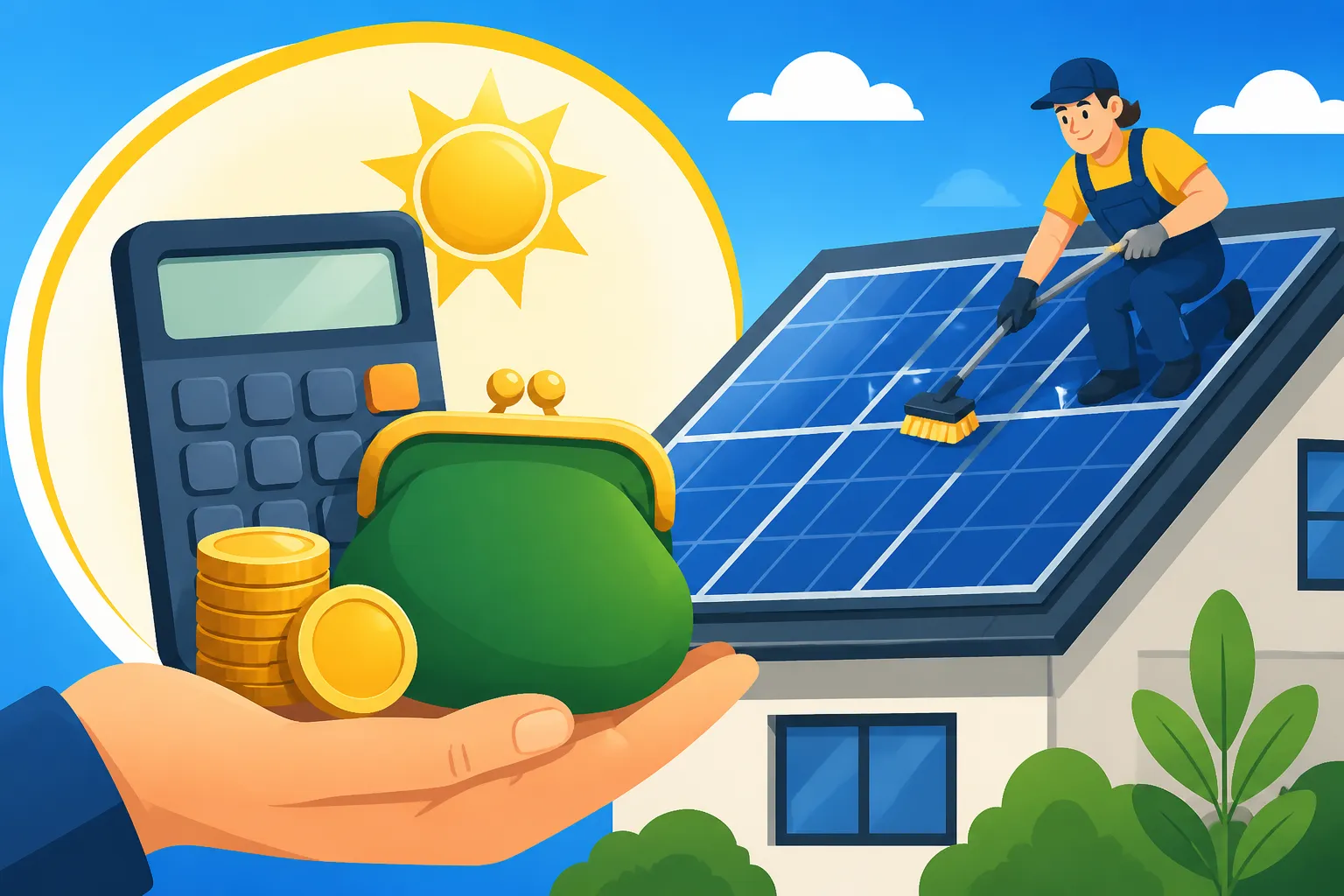
You can often clean the panels yourself using a hose and a soft brush, much like washing your car, provided you can safely access them from the ground or a secure ladder. If you’re not comfortable on your roof, or if your roof pitch is steep, hiring a professional cleaning service is a smart move. Professional solar panel cleaning typically costs anywhere from $150 to $500, depending on the size of your system and the complexity of your roof. For example, a standard 6 kW system on a single-story home might cost on the lower end, while a larger, multi-story installation could easily be on the higher side. Many homeowners find they only need this service every 1-2 years, or even less frequently if natural rainfall is abundant. Curious about how to approach this task? Check out our article on Solar Panel Maintenance & Cleaning.
Performance Monitoring and Inspections
This is where the "set it and forget it" aspect of solar really shines, but with a slight caveat. Most modern solar systems come with monitoring software that allows you to track your panel's energy production in real-time, often through a smartphone app. This kind of system, whether it uses microinverters like those from Enphase or optimizers from SolarEdge, makes it incredibly easy to spot if a panel or string of panels isn't performing as expected. If you notice a sudden drop in output, it could indicate a problem, such as shading, a faulty component, or even just significant dirt buildup.
Beyond self-monitoring, some homeowners opt for a professional inspection every few years. This usually involves a visual check of the panels, wiring, and mounting hardware, ensuring everything is secure and free from damage. An electrical check of the inverter and connections might also be included. A comprehensive inspection can range from $200 to $600, and while not always strictly necessary annually, it can provide peace of mind and catch minor issues before they become major problems. Reputable installers often include a basic system health check as part of their warranty or service agreements, so be sure to ask about this when you’re comparing quotes. Many platforms, like Modernize, can help you connect with qualified local solar professionals who can provide these services.
Unexpected Repairs and System Upgrades
While solar panels are robust, no system is entirely immune to the unexpected. Understanding potential repair costs for key components and when upgrades might be needed is crucial for long-term planning.
Inverter Replacements
The inverter is arguably the hardest-working component in your solar system. It's the brains, converting the direct current (DC) electricity from your panels into alternating current (AC) that your home appliances use and that can be fed back into the grid. Because of this constant work, inverters typically have a shorter lifespan than the solar panels themselves. A string inverter might last 10-15 years, while microinverters or power optimizers (which often come with longer warranties) could last 20-25 years.
When an inverter needs replacing, the cost can vary significantly based on the type and size of your system. A replacement string inverter for a typical residential system could cost anywhere from $1,500 to $4,000, including labor. For systems with microinverters, the cost is usually per unit, which might be lower if only one unit fails, but higher if many fail outside of warranty. For detailed information on these components, our guide on Solar Inverters: String vs Microinverter vs Optimizer offers a great overview. Most reputable brands, like Enphase and SolarEdge, offer excellent warranties, often covering parts for 12 to 25 years, which can significantly reduce your out-of-pocket expenses during that period.
Battery Maintenance and Replacement
If you've decided to add a solar battery to your system – perhaps for backup power during outages or to maximize self-consumption under less favorable net metering policies – you'll need to consider its maintenance and eventual replacement. The good news is that modern solar batteries, like the Tesla Powerwall or Enphase IQ Battery, are largely maintenance-free once installed. They’re designed to be sealed units with sophisticated battery management systems that handle charging and discharging automatically.
However, like all batteries, they have a finite lifespan, typically warranted for 10-15 years or a certain number of charge cycles. When a battery reaches the end of its life, replacement costs can be substantial, often ranging from $8,000 to $15,000+ per battery, depending on capacity and brand. This is a significant consideration, and it's why it's crucial to factor in the long-term cost-benefit of a battery system when you're initially exploring options. Our article on Best Solar Batteries of 2026 can help you compare models and their expected lifespans.
Damage from Extreme Weather or Pests
While solar panels are built tough, extreme weather events can sometimes cause damage. Hailstorms, unusually strong winds, or even falling tree branches can impact panels, wiring, or mounting equipment. Similarly, pests like squirrels or birds can sometimes chew through wires or build nests under panels, leading to performance issues or damage.
Repair costs for such damage can vary widely, from a few hundred dollars for minor wiring fixes to several thousand for replacing a damaged panel or sections of your array. This is where your homeowner's insurance policy comes into play. Most policies cover solar panels as part of your dwelling, but it’s always a good idea to confirm your coverage and understand your deductible. Some solar installers also offer extended maintenance plans that might cover minor repairs or pest deterrents, which could be worth considering for additional peace of mind.
Long-Term Financial Considerations and Warranties
Understanding the long-term financial picture of solar goes beyond just the initial installation and occasional cleaning. It involves recognizing the power of warranties and knowing what to expect as your system ages.
Understanding Your Solar Warranties
Warranties are your best friend when it comes to mitigating unexpected costs over the long haul. Most solar systems come with three main types of warranties:
- Product Warranty: This covers the physical solar panels themselves, protecting against manufacturing defects and premature wear. Most panels offer a product warranty of 12-25 years.
- Performance Warranty: This guarantees that your panels will produce a certain percentage of their rated power output over time. For example, a common performance warranty might state that panels will still produce 80-85% of their original output after 25 years. This addresses the natural degradation of panels over time. Our article Solar Panel Warranties Explained dives deeper into this topic.
- Workmanship Warranty: This covers the installation itself, ensuring that the work was done correctly and free from defects (like roof leaks due to improper mounting). These typically range from 10 to 25 years, varying by installer.
Always review your warranties carefully before signing a contract. A strong warranty package from a reputable installer can save you thousands in potential repair or replacement costs down the line. It's also wise to choose an installer that has a long track record, so you know they'll still be around to honor their warranties years from now.
Anticipating Panel Degradation
Solar panels, like all electronics, experience a slight decrease in efficiency over time. This is known as degradation. On average, panels degrade by about 0.5% to 1% per year. This means that a panel rated at 400 watts might produce 398 watts in its second year, 396 watts in its third, and so on. This isn't a "failure" of the panel, but a natural, expected part of its lifecycle.
Most solar performance warranties account for this, guaranteeing a certain output level after 20 or 25 years. While it means your system will produce slightly less power over time, this degradation is typically slow and predictable, and usually won't necessitate replacing your entire array prematurely. Understanding this helps you set realistic expectations for your long-term energy production and savings. Our article on How Long Do Solar Panels Last? provides more detail on this natural process.
Comparing Long-Term Value and ROI
When you’re looking at the total cost of solar, including potential maintenance, it’s essential to consider the long-term return on investment (ROI). While there are some costs associated with upkeep, they are generally quite low compared to the significant savings you'll achieve on your electricity bills over 25+ years. Many homeowners find that their Solar Panel Payback Period Explained is still well within 8-15 years, even accounting for maintenance. After that, the electricity generated is essentially free.
Think about it this way: your home appliances, your car, your roof – all require ongoing maintenance and eventual replacement. Solar panels are no different in that they are an asset that needs occasional care. But because of their durable design and excellent warranties, their lifetime operational costs are often a fraction of what you'd spend on, say, replacing an aging furnace or air conditioning unit. Considering the rising cost of traditional electricity, the long-term value proposition of solar, even with minimal maintenance, remains incredibly strong. When comparing solar quotes, platforms like Modernize can help you connect with installers who prioritize transparent pricing and comprehensive warranty packages, helping you understand your total investment and potential savings.
Here’s a table summarizing typical solar panel maintenance costs and frequency:
| Maintenance Task | Description | Recommended Frequency | Estimated Cost (DIY) | Estimated Cost (Professional) |
|---|---|---|---|---|
| Panel Cleaning | Removing dirt, dust, pollen, bird droppings, or leaves that reduce efficiency. | 1-2 times per year (as needed) | $0 (hose, brush) | $150 – $500 |
| Visual Inspection | Checking for physical damage, loose wiring, signs of pests, or shading issues. | Annually (self) / Every 2-5 years (pro) | $0 | $200 – $600 |
| Performance Monitoring | Checking system output via app or online portal for anomalies. | Daily/Weekly | $0 (included) | Included with system |
| Inverter Replacement | Replacing the unit that converts DC to AC power when it reaches end of life or fails. | Every 10-15 years (string) / 20-25 years (micro) | N/A | $1,500 – $4,000+ |
| Battery Replacement | Replacing solar battery when it reaches end of life (if applicable). | Every 10-15 years (if installed) | N/A | $8,000 – $15,000+ per battery |
| Pest Control | Installing mesh or barriers to prevent birds/squirrels nesting under panels. | As needed | $50 – $200 | $200 – $800+ |
| System Upgrade | Adding more panels or storage, or replacing older components with newer, more efficient ones. | Varies based on need | N/A | Varies significantly |
It's clear that the average annual cost for routine solar panel maintenance is remarkably low for most homeowners, often less than what you might spend on a single utility bill in a high-usage month. The larger potential costs like inverter or battery replacements are infrequent and often covered partially or fully by comprehensive warranties. By taking a proactive approach to monitoring and understanding your warranty coverage, you can ensure your solar investment continues to deliver significant savings for decades.
Disclaimer
The information provided in this article is for general informational purposes only and does not constitute financial, tax, or legal advice. Solar panel costs, incentives, and regulations can vary significantly by location and change over time. It is highly recommended to consult with qualified solar professionals, financial advisors, and tax experts to get personalized advice tailored to your specific situation.