Do Solar Panels Work in Cloudy Weather?
It's a common and totally understandable concern: if the sun isn't shining brightly, do solar panels even do anything? Many homeowners hesitate to go solar, especially if they live in areas known for their grey skies or frequent cloud cover, thinking their investment would be a waste. We've all looked up at a heavily overcast day and wondered how a system powered by sunlight could possibly generate electricity. This guide will walk you through the realities of solar panel performance on cloudy days, demystifying how they work when the sun plays hide-and-seek, and exploring the technologies that help maximize their output even when the skies aren't perfectly clear.
The Science Behind Solar Panels and Cloudy Skies
Let's clear up a common misconception right away: solar panels don't magically stop working the moment a cloud drifts overhead. While direct, unobstructed sunlight is definitely the gold standard for peak energy production, your panels are far from useless on a cloudy day. The physics of how photovoltaic (PV) cells convert light into electricity is a bit more nuanced than just "sun = power, no sun = no power."
Understanding Diffused Sunlight
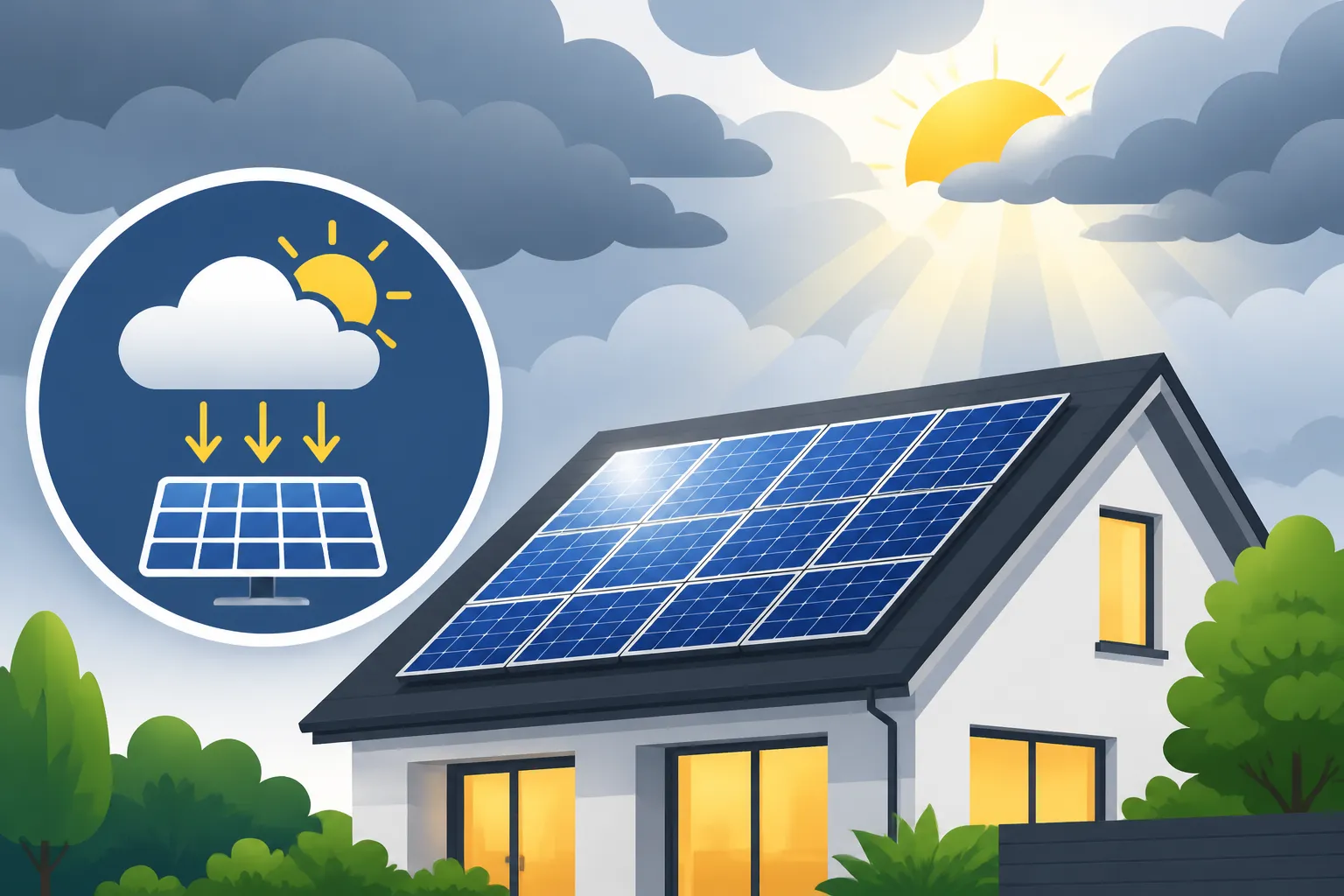
Solar panels are designed to capture photons from sunlight and convert them into electrons, creating an electrical current. When the sun is shining directly, you get a concentrated stream of these photons, leading to maximum power output. However, light doesn't just travel in a straight line from the sun to your roof. The atmosphere, dust, and especially clouds act like giant diffusers, scattering sunlight in all directions.
This scattered light is what we call "diffused sunlight." Think about how a room still feels bright even on a cloudy day; that's diffused light at work. Your solar panels are capable of absorbing this diffused light. They're not just looking for a direct beam; they're hungry for any light. So, while a cloudy day might feel dim to us, there's still a significant amount of solar radiation reaching your panels, albeit spread out and less intense than direct sunlight. It's like trying to fill a bucket with a strong hose versus a sprinkler system – both still deliver water, just at different rates.
How Efficiency Changes with Cloud Cover
Naturally, the performance of your solar panels will decrease when clouds roll in, but the extent of that decrease depends on several factors, including the thickness and type of cloud cover. On a lightly overcast or hazy day, your solar panels might still produce a respectable 40-60% of their peak output. This is because thin clouds still allow a good amount of diffused light to pass through.
However, on a day with heavy, thick storm clouds, that production can drop significantly, sometimes down to 10-25% of what you'd see on a perfectly sunny day. It's a significant dip, but it's crucial to understand that it's not zero. Your system is still generating some power, helping to offset your energy consumption, even if it's not enough to fully power your home at that moment. The key takeaway here is that solar panels act more like a dimmer switch than an on/off switch when it comes to cloud cover. The goal is consistent, year-round production, and diffused light plays a vital role in that overall average.
Factors Influencing Cloudy Day Performance
The overall effectiveness of your solar system on less-than-sunny days isn't just about the clouds themselves; it's also heavily influenced by the technology you choose and how your system is designed. Investing in the right components can make a noticeable difference in how well your system performs when the sun isn't at its brightest.
Panel Technology and Construction
Not all solar panels are created equal when it comes to handling cloudy conditions. Different panel technologies have varying sensitivities to low light. Generally, higher-efficiency panels, particularly those with monocrystalline cells, tend to perform a bit better in diffused light compared to their polycrystalline counterparts. Monocrystalline panels, often recognizable by their uniform, dark appearance, are made from a single silicon crystal, which allows electrons to flow more freely. If you're comparing your options, exploring the differences between "Monocrystalline vs Polycrystalline Solar Panels" can give you a deeper understanding.
Beyond the basic cell type, advancements in panel design, such as Passivated Emitter Rear Cell (PERC) technology, are designed to capture more light, including diffused light, by reflecting unused light back into the cell for a second pass. Bifacial panels, which can capture light from both the front and back, also show promise in scenarios where light might be bouncing off a light-colored roof or the ground, contributing to overall output on less ideal days. When you're looking at various brands, check their specifications for low-light performance to ensure you're getting panels optimized for your local conditions. Reputable brands like Qcells, REC, and Maxeon (SunPower) are often highlighted for their strong performance across various light conditions.
Inverter Types and Their Role
While the panels capture the light, it's the inverter that converts the raw DC (direct current) electricity into usable AC (alternating current) power for your home. The type of inverter you choose can significantly impact your system's performance, especially in partially shaded or cloudy environments.
Traditional string inverters connect multiple panels in a series. If even one panel in that string is heavily shaded (by a cloud, a tree branch, or even bird droppings), the output of the entire string can be dragged down to the level of the weakest panel. This is often referred to as the "Christmas light effect."
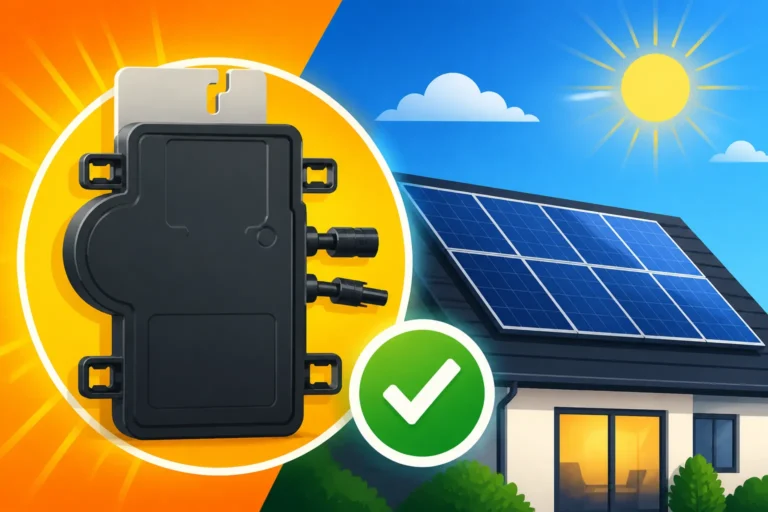
Microinverters, on the other hand, are installed on each individual solar panel. This means each panel operates independently. If one panel is shaded by a cloud, the others continue to produce at their maximum potential, unaffected. This independent operation is a huge advantage for maximizing output in real-world conditions where shade and clouds are common. Brands like Enphase are leaders in microinverter technology.
Power optimizers offer a hybrid solution, combining aspects of both. Each panel has an optimizer that conditions its DC power before sending it to a central string inverter. This also allows individual panels to perform optimally, mitigating the impact of partial shading or cloud cover on the rest of the system. SolarEdge is a prominent brand in power optimizers. Understanding "Solar Inverters: String vs Microinverter vs Optimizer" and "Enphase vs SolarEdge: Which Inverter Is Better?" can help you decide which technology is best suited for your home.
System Sizing and Location
It might seem counterintuitive, but a larger solar array can actually be a strategic choice in areas with frequent cloud cover. If you know your panels will produce less on certain days, oversizing your system slightly can help ensure you still meet your overall energy needs. For instance, if you live in a state like Washington or Oregon, where sunny days can be less frequent, an experienced solar installer will factor this into their system design recommendations. They'll aim to install enough panels to achieve a satisfactory annual production, even if daily peaks are less frequent. To figure out your optimal system size, check out our guide on "How Many Solar Panels Do I Need for My Home?".
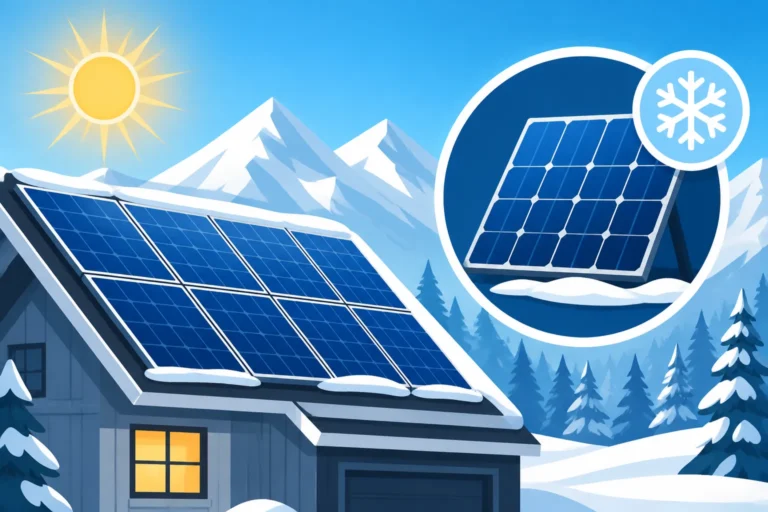
Moreover, it's worth noting that while clouds reduce direct sunlight, cooler temperatures can actually improve solar panel efficiency. Solar panels, like most electronics, perform better when they're not overheating. So, a cooler, partly cloudy day might sometimes yield better results than a scorching hot, hazy one. This unique characteristic can sometimes offset some of the challenges posed by cloudier climates, making solar viable in regions that some might traditionally write off.
| Condition | Typical Output Range (as % of peak) | Key Considerations | Best Panel/Inverter Combo |
|---|---|---|---|
| Bright Sunny Day | 80-100% | Optimal conditions, highest production. | All panel types perform well; string inverters are often cost-effective. |
| Partly Cloudy | 40-70% | Frequent fluctuations due to moving clouds; "edge of cloud" effect can boost output. | Microinverters or optimizers excel due to individual panel optimization. |
| Overcast (Thin) | 20-40% | Consistent diffused light, moderate production; minimal "flash" effect. | High-efficiency monocrystalline, PERC, or bifacial panels. |
| Overcast (Thick) | 10-25% | Heavily diffused light, lowest production; significantly reduced output. | High-efficiency panels; consider oversizing for consistent baseline. |
| Heavy Rain/Storm | 0-10% | Minimal to negligible production due to extreme cloud cover and precipitation. | Solar batteries are essential for energy independence and backup. |
Maximizing Solar Output in Less-Than-Perfect Weather
You've chosen your panels and your inverter, but the strategy for getting the most out of your solar system on cloudy days doesn't stop there. Several other components and practices can further enhance your system's performance and ensure you're making the most of every bit of available sunlight.
Integrating Solar Batteries for Energy Storage
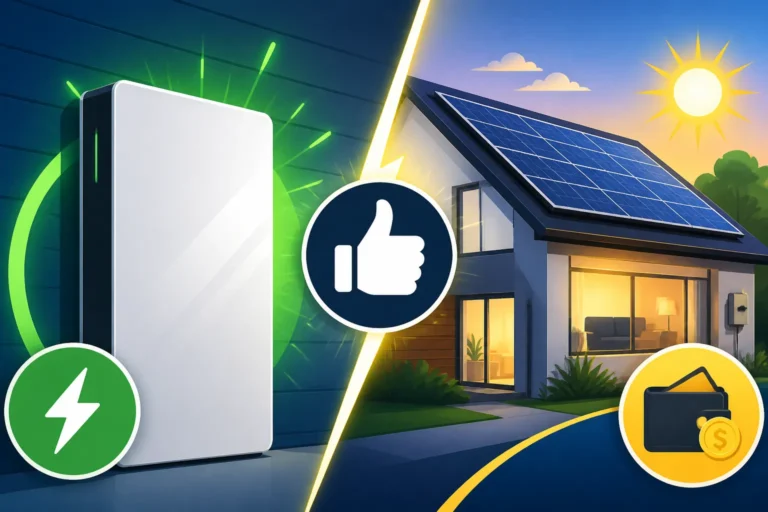
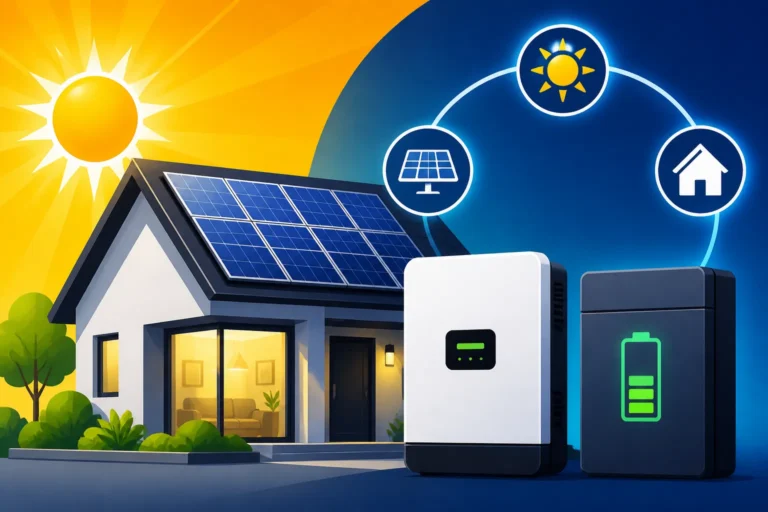
One of the most effective ways to mitigate the variability of solar production due to cloudy weather is by adding a solar battery storage system. A battery, like a Tesla Powerwall or an Enphase IQ Battery, stores any excess energy your panels produce during periods of high generation – whether that's a perfectly sunny afternoon or a surprisingly productive stretch on a partly cloudy day.
When the clouds roll in thick and fast, or once the sun sets, your home can draw power from the battery instead of relying solely on your panels or the grid. This smooths out your energy supply, providing consistent power even when your panels aren't producing much. It’s like having an energy savings account that you can dip into whenever needed. Batteries are becoming increasingly popular, especially in areas with less favorable net metering policies, and often qualify for incentives themselves. Dive into "Do I Need a Battery With Solar?" and explore "Solar Battery Incentives in 2026" to see how this option might work for you.
Smart Monitoring and Maintenance
Even the most advanced solar system benefits from a bit of attention. Regular maintenance, while generally minimal for solar panels, can help ensure they're always performing their best. While rain often does a good job of washing away surface dust, occasional cleaning can be beneficial, especially if you live in an area with a lot of pollen, dust, or heavy bird activity. You can often find affordable solar panel cleaning kits or automated brushes on online marketplaces like Amazon, making it easier to keep your panels spotless.
Crucially, most modern solar systems come with sophisticated monitoring software, often accessible via a smartphone app. This software allows you to track your system's real-time energy production, historical data, and even individual panel performance (especially with microinverters or optimizers). By regularly checking your system's output, you can identify any dips in performance that might indicate an issue beyond just cloudy weather, like accumulated debris or a malfunctioning component, allowing you to address it promptly.
Understanding Local Incentives and Net Metering
Even if your local climate leans towards the cloudier side, a robust incentive landscape can significantly boost your solar investment's value. Many states and utilities offer various programs designed to make solar more financially attractive.
Net metering, for example, is a policy that allows you to send any excess electricity your panels produce back to the grid in exchange for credits on your utility bill. This means if your panels overproduce on a sunny day, those credits can offset the power you draw from the grid on a cloudy day or at night. Understanding "Net Metering Explained: How It Works by State" is crucial. Some regions, like California with its NEM 3.0, have adapted their policies, making battery storage even more important for maximizing savings. Additionally, many states offer their own "State Solar Incentives: Complete 2026 Guide" which can include rebates, performance-based incentives, or property tax exemptions that further improve your return on investment, making solar viable even where the sun isn't constant.
Setting Realistic Expectations and Long-Term Value
Going solar is a long-term investment, and understanding its value in the context of varying weather conditions is essential. It’s about more than just day-to-day fluctuations; it’s about overall performance and the cumulative benefits over decades.
Average Annual Production vs. Daily Fluctuations
It's easy to get fixated on daily production numbers, especially on a dreary, rainy Tuesday. However, the true measure of your solar system's success lies in its average annual production. Solar installers use sophisticated software that factors in historical weather patterns, including cloudy days, to predict your system's output over a year. They design your system based on these long-term averages, not just peak sunny days.
So, while one day might only yield 10% of your system's potential, another might yield 95%, and over a year, these figures balance out to provide substantial savings. Even states known for their cloudiness, like parts of the Northeast, can still have strong overall solar economics because the sheer number of daylight hours over a year, combined with various incentives, makes the investment worthwhile. Our guide on "How Much Can You Save With Solar Panels?" really dives into these long-term savings.
The Economics of Solar in Cloudy Regions
The financial viability of solar in a cloudy area isn't solely dependent on the amount of sun. It's also heavily influenced by your local electricity rates. In places where utility rates are exceptionally high (e.g., parts of California, New England, or New York), even a system that produces less energy on average due to cloud cover can still lead to significant savings. The cost of buying electricity from the grid is so high that any amount of self-generated power results in substantial savings on your bill.
Consider the "Are Solar Panels Worth It in 2026?" question in a holistic way. When you factor in the rising cost of traditional electricity, potential for Solar Property Tax Exemptions by State, and the increased home value solar panels can bring, the financial picture often remains very positive. Moreover, the lifespan of modern solar panels is typically 25 to 30 years, often with a performance warranty guaranteeing at least 80% of original output even after 25 years. Over such a long period, those intermittent cloudy days become less impactful on the overall return on investment.
Evolution of Solar Technology
The solar industry is constantly innovating. Today's solar panels are far more advanced than those from even a decade ago. Manufacturers are continually developing new technologies aimed at improving efficiency, durability, and, importantly, low-light performance. Technologies like n-type TOPCon and heterojunction (HJT) cells, which you can learn more about in "Solar Panel Technology: TOPCon, HJT & PERC," are becoming more common, offering better performance across a wider spectrum of light conditions, including diffuse light.
This ongoing innovation means that solar is becoming increasingly viable in more regions and under more challenging weather conditions. What might have been considered a "poor" location for solar years ago might now be perfectly suitable thanks to these advancements. When evaluating "Best Solar Panels of 2026," you'll often find that many top-tier brands are focusing on these very improvements, making solar a more robust and reliable energy solution for almost everyone, regardless of whether their skies are consistently sunny or frequently grey. Many of these cutting-edge panels are reviewed on manufacturer websites, and consumer insights can even be found on e-commerce platforms like Amazon, offering a broader perspective on their real-world performance.
Disclaimer
Please note that the information provided in this guide is intended for general informational purposes only and does not constitute professional financial, tax, or energy advice. Solar panel performance, incentives, and regulations can vary significantly by location, utility, and specific system design. Always consult with qualified solar professionals, tax advisors, and your local utility provider to determine the best solar solution and financial approach for your individual circumstances.