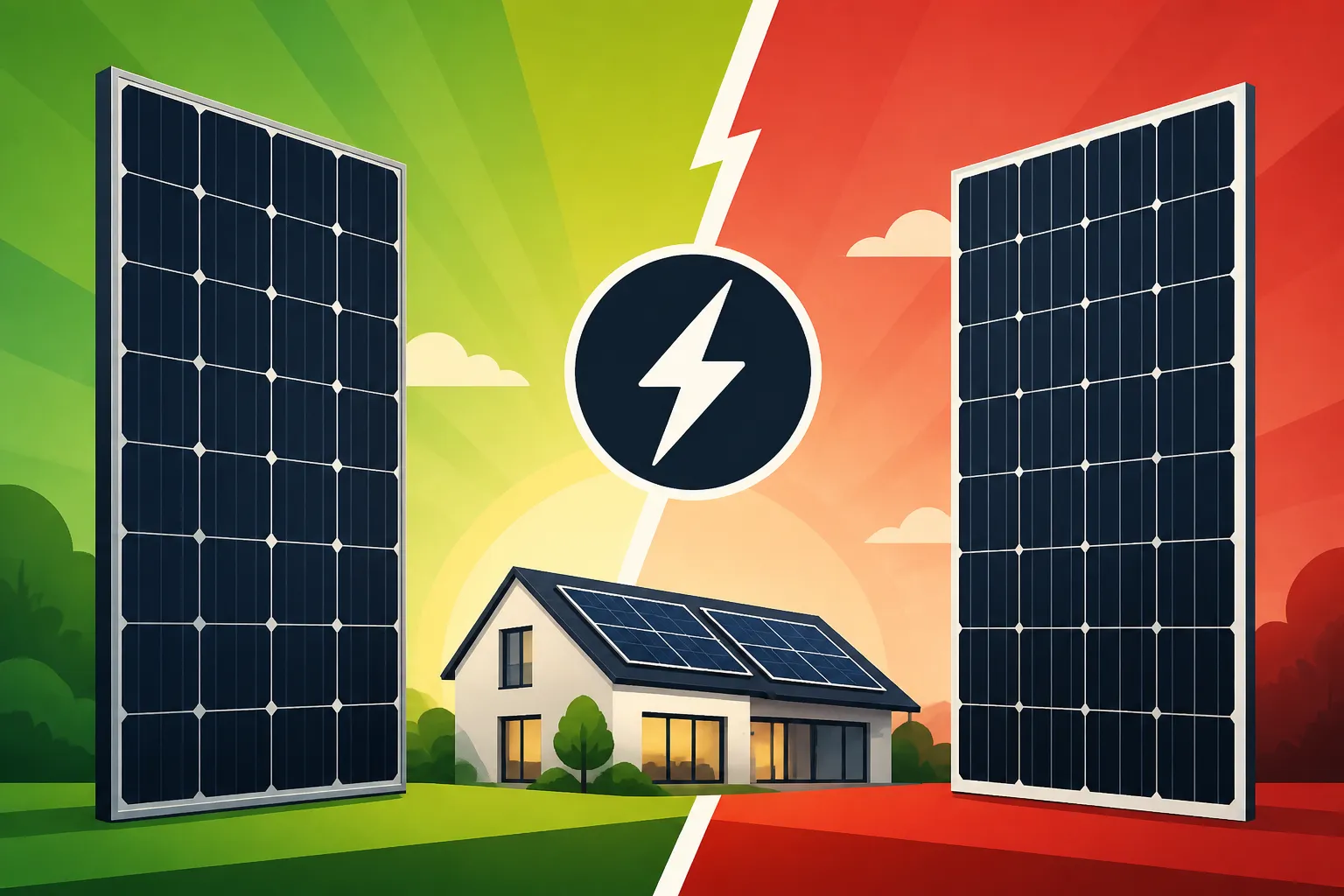
Jinko Solar vs LONGi Solar Panels
Choosing the right solar panels for your home can feel like a massive puzzle, especially when you're wading through the sea of reputable manufacturers, each promising top-tier performance and savings. It's easy to get overwhelmed by technical jargon and marketing claims, leaving you wondering if you're truly making the best long-term investment. This comprehensive guide will meticulously break down two industry giants, Jinko Solar and LONGi Solar, helping you understand their core differences, strengths, and what they mean for your home solar journey.
Understanding Jinko Solar and LONGi Solar as Industry Leaders
When you're looking into solar panels, you'll quickly discover that not all manufacturers are created equal. Jinko Solar and LONGi Solar aren't just any players; they are consistently ranked among the world's largest and most innovative solar panel manufacturers. They've earned their stripes through massive production scale, continuous research and development, and a significant global presence. This means they have the financial backing and established infrastructure to stand by their products for the long haul, which is a huge comfort when you're making a 25-year investment. They both specialize in high-efficiency monocrystalline PERC (Passivated Emitter Rear Cell) technology, a standard in the industry for maximizing energy capture.
A Brief Look at Jinko Solar
Jinko Solar has carved out a formidable reputation as one of the largest solar panel manufacturers globally, consistently shipping a significant volume of modules each year. They are well-known for their continuous innovation and their expansive reach across various markets, including residential, commercial, and utility-scale projects. When you talk about market share and annual production, Jinko is almost always at the top of the list, a testament to their operational efficiency and widespread adoption.
The company has a strong focus on research and development, constantly pushing the boundaries of solar cell technology. They've been pioneers in advancing various technologies, including their Tiger Neo series, which incorporates N-type TOPCon technology, offering improved efficiency and performance, particularly in lower light conditions and at higher temperatures. This dedication to innovation translates into products that often feature competitive efficiency ratings and robust performance metrics, making them a popular choice for homeowners looking to get the most out of their rooftop space. Their global presence also means they have established sales and support networks in many regions, which can be a definite plus for service and warranty claims.
A Brief Look at LONGi Solar
LONGi Solar is another titan in the solar industry, celebrated specifically for its deep specialization in monocrystalline silicon wafers, cells, and modules. Unlike some companies that diversify across various renewable technologies, LONGi has a singular, intense focus on monocrystalline technology, which has allowed them to achieve remarkable efficiencies and cost reductions. This concentrated expertise means they've become a benchmark for quality and innovation in the monocrystalline segment, a critical factor given that most high-performance residential panels today utilize this technology.
LONGi has been instrumental in driving down the cost of high-efficiency monocrystalline panels, making solar more accessible to homeowners worldwide. They are also known for their strong emphasis on sustainability and ethical manufacturing practices, which is an increasingly important consideration for environmentally conscious consumers. Their Hi-MO series of modules, for example, often features cutting-type technology and advanced PERC cell structures to deliver excellent power output and reliability. For many, LONGi represents a solid, dependable choice from a company that lives and breathes monocrystalline solar innovation, offering a powerful combination of efficiency and value.
Key Differences in Panel Technology and Performance
While both Jinko Solar and LONGi Solar are leaders in monocrystalline PERC technology, they do have subtle differences in their approaches to cell design, module construction, and overall performance characteristics. These nuances might seem small on paper, but they can translate into meaningful variations in how much electricity your system produces over its lifespan, especially under specific environmental conditions. Understanding these technical distinctions can help you align your panel choice with your home's unique energy needs and local climate.
Cell Technology and Efficiency
Both Jinko and LONGi extensively utilize monocrystalline PERC (Passivated Emitter Rear Cell) technology, which has become the industry standard for high-efficiency solar panels. However, their innovation paths diverge slightly. Jinko Solar has heavily invested in N-type TOPCon (Tunnel Oxide Passivated Contact) cell technology, prominently featured in their Tiger Neo series. TOPCon cells generally offer higher efficiency ratings, often reaching above 22.5%, and exhibit superior performance in low-light conditions and at elevated temperatures. This means a Jinko TOPCon panel might start producing power earlier in the morning, continue longer into the evening, and maintain better output during hot summer days compared to a standard PERC panel.
LONGi, on the other hand, has primarily focused on perfecting its P-type PERC technology, pushing its boundaries with innovations like gallium-doped wafers to mitigate Light-Induced Degradation (LID) and achieve high efficiencies in their Hi-MO series. While their latest P-type PERC panels are incredibly efficient, often in the 21-22% range, they may not quite reach the peak efficiencies seen in the newest N-type TOPCon offerings from Jinko. However, LONGi's meticulous manufacturing processes and focus on quality control ensure very consistent performance and reliability, making them a powerhouse in the P-type segment. For homeowners, this means considering whether the absolute highest peak efficiency of N-type is crucial for limited roof space, or if the proven consistency and value of high-end P-type PERC is more appealing.
Performance in Real-World Conditions
Beyond peak efficiency numbers, how a panel performs in real-world conditions is what truly matters for your electricity bill. One key metric to consider is the temperature coefficient, which tells you how much a panel's output degrades as its temperature rises. Both Jinko and LONGi offer excellent temperature coefficients, typically around -0.30% to -0.35% per degree Celsius. However, with Jinko's N-type TOPCon technology, there's often a slight edge, sometimes seeing coefficients as low as -0.29% to -0.30%, meaning they might lose a fraction less power when your roof is baking in the summer sun. This difference, while small per panel, can add up to noticeable gains over an entire system's lifetime, especially in hotter climates like Arizona or Florida.
Another factor is low-light performance. Jinko's N-type TOPCon panels are often lauded for their enhanced performance during cloudy days, early mornings, and late afternoons. This is due to the inherent properties of N-type cells that make them more responsive to diffuse light. LONGi's panels are also strong performers in varied light conditions, but the advantage typically leans towards the N-type technology for capturing more energy during less-than-ideal sunlight. If you live in a region with frequent overcast skies, such as parts of the Pacific Northwest, the improved low-light performance might nudge you towards an N-type panel. Factors like how many Solar Panels You Need For Your Home or your Solar Panel Cost Per Watt Explained are significantly influenced by these real-world performance metrics.
Durability and Construction
When you're installing solar panels on your roof, you want them to withstand everything Mother Nature throws at them – hail, heavy snow, strong winds, and extreme temperatures. Both Jinko Solar and LONGi Solar manufacture panels with robust construction, typically featuring strong aluminum frames and tempered glass front sheets. They are designed to meet stringent international standards for mechanical load ratings, meaning they can handle significant snow loads and wind pressures.
Jinko, with its diverse product lines, often incorporates advanced glass and frame designs, including options for thinner, lighter modules in some series, while maintaining structural integrity. Their quality control processes are rigorous, ensuring that each panel leaving the factory is built to last. LONGi's reputation for quality is equally strong, stemming from their deep expertise in monocrystalline manufacturing. They often use high-purity silicon and meticulously engineered cell layouts, which contributes to the overall stability and long-term performance of their modules. For instance, their panels are designed to minimize micro-cracks and other potential degradation issues over time. Ultimately, you can expect excellent durability from either brand, with both committed to long product lifespans. For more on what impacts longevity, check out our guide on Solar Panel Efficiency & Degradation Explained.
| Feature | Jinko Solar (e.g., Tiger Neo) | LONGi Solar (e.g., Hi-MO series) |
|---|---|---|
| Primary Cell Technology | N-type TOPCon (also P-type PERC) | P-type PERC (with gallium doping) |
| Peak Efficiency | Often 22.5% – 23.2% (N-type) | Often 21.5% – 22.5% (P-type) |
| Temperature Coefficient | -0.29% to -0.30% / °C (better in heat) | -0.34% to -0.35% / °C |
| Low-Light Performance | Excellent (N-type generally superior) | Very Good |
| LID/LETID Resistance | Inherently strong due to N-type (no boron-oxygen degradation) | Minimized with gallium doping (P-type) |
| Product Warranty | Typically 15-25 years | Typically 12-25 years |
| Performance Warranty | 30 years (with higher output guarantee for N-type) | 25-30 years |
| Market Focus | Global, all segments (residential, commercial, utility) | Global, strong focus on high-efficiency monocrystalline |
Warranties, Reliability, and Customer Support
When you're making a substantial investment like a home solar system, the warranty and the manufacturer's reliability are just as crucial as the panel's performance. Solar panels are built to last for decades, and you need to be confident that the company behind them will be around to honor their commitments should anything go wrong. Both Jinko Solar and LONGi Solar, being top-tier global manufacturers, generally offer competitive warranties and have a strong track record of reliability, but it's always worth looking at the specifics. For a deeper dive, read our article on Solar Panel Warranties Explained.
Product and Performance Warranties
Solar panel warranties typically come in two main types: a product warranty and a performance warranty. The product warranty covers defects in manufacturing, materials, and workmanship, usually for 12 to 25 years. Jinko Solar often offers product warranties ranging from 15 to 25 years, particularly for their premium N-type TOPCon modules, reflecting their confidence in the manufacturing quality. This longer product warranty provides significant peace of mind, knowing that if a panel itself fails due to a manufacturing flaw within that timeframe, it will be replaced.
LONGi Solar also offers strong product warranties, typically in the 12 to 25-year range, depending on the specific model. Their commitment to quality manufacturing is evident in these robust warranties. The performance warranty guarantees that the panels will produce a certain percentage of their initial rated power output over time, usually for 25 to 30 years. For instance, a common performance warranty guarantees 90% of original output after 10-12 years and 80-85% after 25 years. Jinko's N-type TOPCon panels frequently come with a 30-year linear performance warranty, guaranteeing a higher output (e.g., 87.4% after 30 years) due to their lower degradation rates. LONGi's performance warranties are also excellent, usually guaranteeing over 84% output after 25 years, and often extend to 30 years for specific models. This is a critical factor when considering the long-term Solar Panel Payback Period Explained and overall value.
Industry Reputation and Longevity
The longevity and financial stability of a solar panel manufacturer are paramount. You don't want to invest in a brand only for them to go out of business years later, leaving you with an un-honored warranty. Both Jinko Solar and LONGi Solar are publicly traded companies with strong financial standings and massive global operations. They consistently rank as "Tier 1" manufacturers, a classification often used in the industry to denote companies that have invested heavily in automated manufacturing, have a high level of vertical integration, and have been vetted by financial institutions for project financing. This Tier 1 status isn't a guarantee of quality per se, but it does indicate a robust and reliable business.
Jinko Solar has been a top global shipper for many years, showcasing their consistent production capabilities and market acceptance. Their significant investment in advanced R&D and diversified product portfolio helps secure their position for the future. Similarly, LONGi Solar's sharp focus on monocrystalline technology, combined with its massive production scale and commitment to innovation, underscores its stability. For instance, their panels are frequently used in large-scale solar farms, demonstrating the trust that major utility companies and investors place in their products. This strong industry presence and financial health mean that, should you need to file a warranty claim decades down the line, these companies are highly likely to still be around to support you. You won't find major components for these systems directly on marketplaces like Amazon, but the scale of their operations is comparable to how global distributors operate in other consumer electronics sectors, ensuring broad availability through authorized installers.
Cost, Availability, and Value Proposition
When it comes down to making a final decision, the practical considerations of cost and availability often play a significant role. While it's tempting to focus solely on the technical specifications, the overall value proposition—what you get for your money, including the panels themselves, warranties, and potential savings—is what truly dictates a smart investment. Both Jinko Solar and LONGi Solar offer excellent value, but their market strategies and pricing can differ slightly. Looking at the broader picture helps clarify which brand might be the better fit for your budget and specific project needs. For general cost insights, our guide on How Much Do Solar Panels Cost? 2026 Guide is a great resource.
Price Comparison
Generally speaking, both Jinko Solar and LONGi Solar panels are considered premium, high-performance options, but they often fall within a similar competitive price range. You're typically looking at panels that offer a very good balance between efficiency and cost, rather than being the absolute cheapest or most expensive on the market. The exact price per panel will vary based on the specific model (e.g., standard PERC vs. N-type TOPCon), power output (e.g., 400W, 450W & More wattages), the size of your system, your location, and the installer you choose.
Jinko's N-type TOPCon panels, with their slightly higher efficiency and advanced technology, might come in at a slightly higher price point per watt compared to LONGi's mainstream P-type PERC offerings. However, this marginal difference can often be justified by their improved low-light performance and better temperature coefficient, which can lead to greater energy production over time, effectively reducing your long-term energy costs. LONGi, with its incredible scale and focus on cost-efficient monocrystalline production, often offers very competitive pricing for its high-quality PERC modules. They aim to make high-efficiency solar accessible, and their pricing strategy reflects this, often presenting a very strong cost-to-performance ratio. When getting quotes from installers, be sure to ask for the "all-in" Solar Panel Cost Per Watt Explained to compare apples to apples.
Market Presence and Accessibility
Both Jinko Solar and LONGi Solar have a vast global market presence, meaning their panels are widely available through numerous solar installers across North America, Europe, Asia, and other regions. Their sheer production volumes ensure a consistent supply chain, which minimizes delays for your installation project. This widespread availability is a significant advantage, as it means most reputable local and national solar installers will likely have access to their products or can easily source them.
You’ll find these brands carried by major distributors like BayWa r.e., CED Greentech, and Soligent, which in turn supply directly to installers. This means you won't typically purchase individual panels for a grid-tied system directly through consumer platforms like Amazon, but rather through a certified installer who handles the entire procurement, design, and installation process. The wide market presence of both Jinko and LONGi also fosters competition among installers, which can sometimes lead to more favorable pricing for you, the homeowner. Always get multiple quotes and ask about the specific panel brands they offer to ensure you’re getting the best deal on a quality product. Finding a reputable installer is key, and their ability to easily source components from these leading brands contributes to a smooth installation process.
Making Your Choice: Jinko Solar or LONGi Solar
Deciding between Jinko Solar and LONGi Solar ultimately comes down to a few key factors specific to your situation. Both companies are undeniably top-tier, offering high-quality, efficient, and reliable solar panels that will serve your home for decades. You genuinely can't go wrong with either, as they both represent the pinnacle of modern solar manufacturing. The choice often hinges on whether certain minor advantages align better with your priorities and your unique energy production environment.
When Jinko Solar Might Be the Better Fit
Jinko Solar often stands out when you're prioritizing the absolute bleeding edge of efficiency and performance, especially under less-than-ideal conditions. If you have limited roof space, and every square inch needs to generate as much power as possible, Jinko's N-type TOPCon modules, like those in their Tiger Neo series, could be a compelling choice. Their superior efficiency ratings (often above 22.5%) mean you might need fewer panels to reach your desired energy offset.
Furthermore, if you live in a climate with very hot summers or frequently cloudy weather, Jinko's N-type technology offers a slight edge due to its better temperature coefficient and enhanced low-light performance. This could translate into marginally higher energy production throughout the year, maximizing your long-term savings. The slightly longer product warranties on some of their premium lines also add an extra layer of reassurance for an investment that lasts a quarter-century or more. Ultimately, if you're looking to squeeze every last electron out of your system and are willing to potentially pay a small premium for those advanced features, Jinko Solar often delivers. You might also consider them if you're aiming for the highest possible Solar ROI & 25-Year Savings Breakdown.
When LONGi Solar Might Be the Better Fit
LONGi Solar shines when you're looking for an incredibly reliable, high-efficiency panel with a strong focus on consistent, proven technology, often at a very competitive price point. While their latest P-type PERC panels might not always hit the absolute highest peak efficiency numbers of Jinko's newest N-type, they deliver exceptional performance and value. LONGi's deep specialization in monocrystalline silicon has allowed them to master the manufacturing process, resulting in highly consistent and durable modules.
If you have ample roof space and your primary goal is to achieve excellent energy production at a great price-to-performance ratio, LONGi panels are an outstanding option. They're particularly suitable for homeowners who value a company's singular focus and expertise in a specific technology, ensuring meticulous quality control throughout the production process. For those who appreciate robust, dependable technology that has proven itself in countless installations worldwide, LONGi is an incredibly strong contender. Their global scale means reliable availability, and their commitment to driving down the cost of high-efficiency solar benefits everyone. For a broader understanding of overall system costs, consider reading our piece on What Affects the Cost of Solar Panels?
Ultimately, your best course of action is to gather quotes from multiple reputable solar installers in your area. Ask them to include system designs and pricing for both Jinko Solar and LONGi Solar panels, if possible. Carefully review the details, comparing not just the raw panel cost but also the estimated annual production, the warranty terms for each specific model, and the overall system design. Consider how Is Solar Worth It In 2026? for your specific region, as local incentives can change the equation. This personalized approach, factoring in your home's unique characteristics and your energy goals, will help you make the most informed decision between these two industry leaders.
Disclaimer
Please remember that the information provided in this guide is intended for general informational purposes only and does not constitute professional financial, tax, or engineering advice. Solar panel technology, incentives, and pricing can change rapidly. We strongly recommend consulting with certified solar professionals and tax advisors to get personalized advice tailored to your specific situation and local regulations before making any decisions related to solar energy installation.