California NEM 2.0 vs NEM 3.0 Explained
The landscape of solar energy in California has always been a beacon for innovation and sustainability, but recent changes to net energy metering policies have left many homeowners feeling confused and even frustrated about their potential savings. Trying to figure out if solar is still a smart move when the rules keep shifting can feel like a daunting task. This comprehensive guide will walk you through the critical differences between California's NEM 2.0 and NEM 3.0, helping you understand how these changes impact your solar investment and what you can do to maximize your benefits in this evolving environment.
The Shifting Sands of California Solar Incentives: A Homeowner's Dilemma
For years, California led the nation in solar adoption, partly thanks to robust incentive programs that made going solar an attractive financial proposition. However, the energy landscape is always evolving, and with that evolution comes policy adjustments that can feel jarring to the average homeowner just trying to do their part for the environment and save some money. The transition from NEM 2.0 to NEM 3.0 is one such significant shift that has sparked considerable debate and concern among current and prospective solar owners across the Golden State. It's completely normal to feel a bit overwhelmed by the technical jargon and the implications for your wallet; many homeowners are in the same boat, wondering if they missed their window of opportunity.
Understanding the Basics of Net Energy Metering
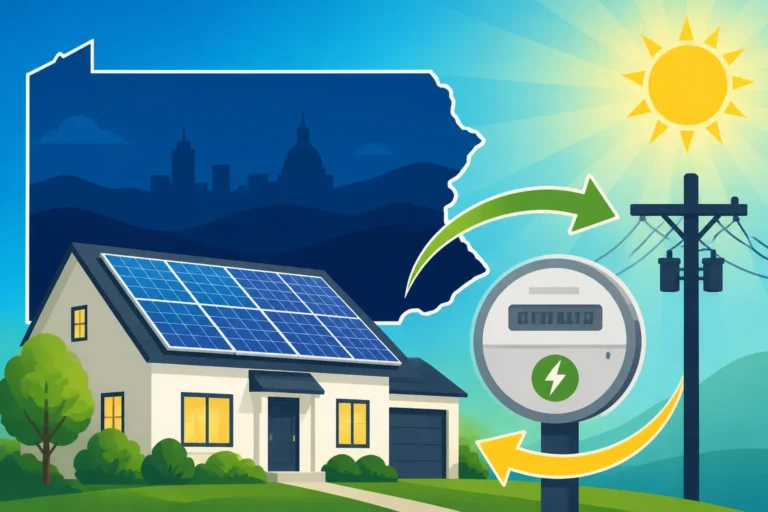
Before we dive into the nitty-gritty of NEM 2.0 and NEM 3.0, it's essential to grasp the fundamental concept of Net Energy Metering (NEM) itself. At its core, NEM is a billing mechanism that allows solar energy system owners to receive credit for the excess electricity their panels generate and send back to the grid. Think of it like a bank account for your electricity. When your solar panels produce more power than your home needs, that surplus energy is exported to the utility grid, and your utility meter effectively spins backward or records the export. When your panels aren't producing enough power—say, at night or on a cloudy day—you draw electricity from the grid, just like any other customer. The "net" part means you only pay for your net consumption, which is the difference between the electricity you use from the grid and the excess electricity your solar panels produce. This system has been crucial for making solar economically viable, as it allows homeowners to essentially "store" their excess solar production for later use, even without a physical battery, and get compensated for it. If you want a deeper dive, check out our guide on Net Metering Explained: How It Works by State.
Under a strong net metering policy, the credit you receive for exporting electricity is often at the full retail rate, meaning you get compensated the same amount for the power you send to the grid as you would pay to buy power from the grid. This one-to-one exchange was a massive driver for solar adoption, making it easy to see the financial benefits of offsetting your entire electricity bill. Without it, the economics of solar would look vastly different, pushing homeowners to consume all their generated power directly or invest in expensive battery storage.
Why the Change? The Rationale Behind NEM 3.0
The California Public Utilities Commission (CPUC) initiated the move to NEM 3.0, also known as Net Billing, with a stated goal of addressing several key concerns within the state's energy ecosystem. One of the primary drivers was the argument that NEM 2.0 disproportionately benefited solar homeowners at the expense of non-solar customers. Utilities and some policymakers contended that solar customers, while contributing clean energy, were not paying their fair share for maintaining the grid infrastructure, leading to what they termed a "cost shift" to other ratepayers. This perspective suggests that everyone uses the grid, regardless of whether they have solar, and therefore everyone should contribute to its upkeep.
Another significant factor was the desire to incentivize battery storage systems. As more and more solar panels were installed, particularly during midday peaks, the grid sometimes experienced an oversupply of solar energy. This surplus could lead to curtailment (where solar production is reduced because there's nowhere for the power to go) and put strain on grid stability. By reducing the compensation for exported solar energy and introducing charges for using the grid, NEM 3.0 aims to encourage homeowners to store their excess solar production in batteries for use during peak demand hours or when the sun isn't shining. This shift would ideally flatten the demand curve, make the grid more resilient, and maximize the value of solar energy by using it when it's most needed. The intention, from the CPUC's standpoint, was to evolve the solar policy to better reflect the changing grid needs and promote a more equitable and sustainable energy future for all Californians.
Diving Deep into NEM 2.0: The Golden Era for Solar Homeowners
Many long-time solar advocates and homeowners often refer to the NEM 2.0 era as the "golden era" for solar in California, and for good reason. This policy offered a relatively straightforward and highly beneficial financial model that made the decision to go solar a no-brainer for countless residents. If you installed solar under NEM 2.0, you likely experienced significant savings and a clear path to recouping your investment. It truly democratized solar energy by making it accessible and financially rewarding for a broad spectrum of homeowners.
Key Benefits and Financial Structure of NEM 2.0
Under NEM 2.0, the primary benefit was receiving near-full retail rate credit for excess solar electricity sent back to the grid. This means that if your solar panels generated a kilowatt-hour (kWh) of electricity and sent it to the utility, you received a credit roughly equivalent to what you would pay to buy a kWh from the utility. This one-to-one or near one-to-one exchange was incredibly powerful. It allowed homeowners to effectively eliminate a large portion, if not all, of their electricity bill, depending on their system size and energy consumption. For example, if your utility charged $0.25 per kWh, and you exported a kWh, you'd get $0.25 in credit against your future usage. This made sizing a solar system relatively simple: aim to offset as much of your annual electricity usage as possible.
The financial structure also included what's known as "non-bypassable charges" (NBCs). While most of your energy charges could be offset by your solar production credits, a small portion of your bill, relating to specific utility programs and services, still applied. However, these charges were typically minor compared to the overall savings. The annualized billing cycle was another major perk. Instead of settling up monthly, NEM 2.0 allowed for an annual true-up period, usually at the end of 12 months. This meant that any excess credits accumulated during sunny months (like summer) could be used to offset usage during less sunny months (like winter) or when your consumption was higher. Any remaining net surplus generation at the end of the true-up period would be compensated at a lower, wholesale rate, but the goal for most homeowners was to size their system to minimize or zero out this surplus. This predictability and generous compensation made the Solar Panel Payback Period Explained much more attractive.
The "Grandfathering" Clause: What It Means for Existing Systems
One of the most crucial aspects of the NEM transition for existing solar owners in California is the "grandfathering" clause. If you applied for and received permission to operate (PTO) your solar system under NEM 2.0 before the NEM 3.0 effective date (which was April 15, 2023, though the application deadline was earlier), your system is generally "grandfathered" into the NEM 2.0 rules for 20 years from your PTO date. This means that your existing solar system will continue to operate under the more favorable NEM 2.0 compensation structure for two decades, providing a significant advantage compared to new installations.
This grandfathering provision offers peace of mind and continued financial benefits for thousands of California solar homeowners. However, it's not without caveats. Certain actions, such as significantly expanding your system size, might trigger a move to NEM 3.0. For example, if you decide to add a substantial number of new panels to your existing NEM 2.0 system, your utility might require the entire system to transition to NEM 3.0. The specific rules for system modifications can vary slightly between utilities like Pacific Gas & Electric (PG&E), Southern California Edison (SCE), and San Diego Gas & Electric (SDG&E), so it's always wise to consult with your utility or a reputable solar installer if you're considering any changes to a grandfathered system. Understanding these rules is vital to preserve your existing benefits and ensure you don't inadvertently lose your NEM 2.0 status.
Unpacking NEM 3.0: A New Reality for Solar Savings
The introduction of NEM 3.0 has undeniably reshaped the economics of going solar in California. For homeowners considering solar today, or those who installed after the NEM 3.0 effective date, the financial incentives and operational considerations are distinctly different from the NEM 2.0 era. While the fundamental goal of reducing your carbon footprint remains, the path to financial savings now requires a more strategic approach. It's not necessarily worse, just different, and understanding these differences is key to making an informed decision. For a more direct overview, you can also look into What Is NEM 3.0 (California Net Billing)?.
The Shift from Net Metering to Net Billing
The most significant change under NEM 3.0 is the transition from "net metering" to "net billing." While both mechanisms involve sending excess solar power to the grid, the value of that exported power is where they diverge dramatically. Under NEM 3.0, the compensation for excess solar energy exported to the grid is no longer at the full retail rate. Instead, it's based on an "avoided-cost" rate, which is significantly lower and varies depending on the time of day and the season. This rate reflects the wholesale value of the electricity to the utility, rather than the retail price you pay as a consumer.
Imagine this: under NEM 2.0, if you exported a kWh, you got a credit of, say, $0.25. Under NEM 3.0, exporting that same kWh might only get you a credit of $0.05 to $0.10, depending on when it was exported. This means that simply exporting power back to the grid during the middle of the day, when solar production is highest and grid demand might be lower, will yield much less financial benefit than it used to. The goal here is to incentivize self-consumption and storage, encouraging homeowners to use the power they generate directly or store it for later, rather than just sending it to the grid for a high credit. This fundamental shift requires a recalculation of what makes a solar investment worthwhile.
Export Rates, Grid Benefit Charges, and the Impact on ROI
Beyond the reduced compensation for exported energy, NEM 3.0 also introduces new charges and considerations. One significant element is the concept of "Electrification Rates" or "Time-of-Use" (TOU) rates, which are now even more critical. Utilities like PG&E, SCE, and SDG&E have varying TOU rate structures where electricity prices change throughout the day, often being highest in the late afternoon and early evening (when solar production is dropping but demand is peaking). NEM 3.0's export rates also fluctuate based on these TOU periods, further complicating the financial model. This means that exporting power during the most valuable peak hours will still yield higher compensation than exporting during off-peak hours, but even those peak export rates are much lower than NEM 2.0's retail rates.
Another new factor in the NEM 3.0 calculation is the introduction of a "Grid Participation Charge" or "Fixed Charge," though its implementation has seen some shifts. The idea behind this charge is to ensure all solar customers contribute to the fixed costs of maintaining the grid, regardless of how much electricity they net from the utility. While the CPUC initially approved a monthly fixed charge based on system size, there has been ongoing legislative debate and reconsideration of this specific charge, with proposals to modify or eliminate it. This uncertainty adds another layer of complexity for prospective solar owners trying to project their long-term savings. The combined effect of lower export credits and potential fixed charges means that the Solar Panel Payback Period Explained is generally longer under NEM 3.0 compared to NEM 2.0, making the upfront investment feel a bit more substantial.
Comparing NEM 2.0 and NEM 3.0 Side-by-Side
Understanding the nuances of NEM 2.0 and NEM 3.0 is crucial for anyone involved with solar in California. The table below provides a quick, at-a-glance comparison, but the real implications stretch beyond these bullet points, affecting your long-term savings, system design choices, and overall return on investment. It's not just about what changed, but how those changes ripple through the entire solar experience for a homeowner.
| Feature | NEM 2.0 (Grandfathered Systems) | NEM 3.0 (New Systems) |
|---|---|---|
| Export Compensation | Near-full retail rate for excess energy sent to the grid. | Avoided-cost rate, significantly lower than retail, varying by time of day/season. |
| Primary Goal | Maximize bill offset by sending excess energy to the grid. | Maximize self-consumption; incentivize battery storage. |
| Annual True-Up | Yes, annual billing cycle with credits rolled over. | Yes, but with significantly lower export credits. |
| Fixed Charges | Minimal non-bypassable charges. | Initially proposed fixed charge based on system size (currently under review/re-evaluation). |
| Battery Incentive | Less critical, as grid acts as a "virtual battery." | Highly incentivized; crucial for maximizing savings. |
| System Design | Focus on offsetting annual usage. | Focus on aligning production with consumption, often with battery integration. |
| Payback Period | Generally shorter, more predictable. | Generally longer, requiring more strategic system design. |
| Eligibility | Systems with PTO before April 15, 2023. | New systems applying for interconnection after April 15, 2023. |
Financial Implications for Different Homeowner Profiles
The shift to NEM 3.0 has distinct financial implications depending on a homeowner's energy usage patterns and their willingness to integrate new technologies like solar batteries. For homeowners with high daytime energy consumption, such as those working from home or charging electric vehicles during the day, the impact of lower export rates might be less severe. They are already consuming a significant portion of their self-generated power, which is still the most valuable kilowatt-hour. For these households, solar can still provide substantial savings, especially if coupled with smart energy management practices to shift high-load activities to solar production hours.
However, for homeowners who historically have low daytime usage and primarily export their solar production to the grid—perhaps they're at work all day—the financial outlook is considerably different. Under NEM 3.0, the value of that exported energy is significantly diminished. This means their monthly savings from solar alone will be lower, and their payback period will be extended. For this profile, adding a solar battery becomes almost essential to recover lost value. By storing excess solar power instead of exporting it for a low credit, they can use that stored energy during the expensive evening peak hours, dramatically improving their economic returns. This is where a detailed discussion about Solar Plus Battery Cost becomes crucial.
Strategies for Maximizing Savings Under NEM 3.0
Given the new rules of the game under NEM 3.0, maximizing your solar savings requires a more proactive and strategic approach. It's no longer just about putting panels on your roof; it's about smart energy management.
One of the most effective strategies is to pair your solar system with a home battery storage solution. Batteries allow you to capture that valuable excess solar energy produced during the day, when export credits are low, and then use it during the evening peak hours when electricity rates from the utility are at their highest. This "arbitrage" of energy—charging when power is cheap (or free from your solar) and discharging when it's expensive—is the cornerstone of maximizing savings under NEM 3.0. Companies like Enphase and Tesla offer excellent battery solutions that integrate seamlessly with solar systems. Consider exploring the Best Solar Batteries of 2026 to find the right fit for your home.
Another critical strategy involves optimizing your energy consumption habits. If you can shift high-energy-consuming tasks like running the dishwasher, doing laundry, or charging your EV to the middle of the day when your solar panels are producing abundantly, you're directly consuming your own free solar power. This reduces the amount of power you need to draw from the grid during expensive peak hours and also minimizes the amount you export for low credit. Smart home devices and energy management systems can help automate these shifts, making it easier to adapt to the new TOU rate structures. Finally, ensure your system is properly sized. While NEM 2.0 encouraged oversizing slightly, under NEM 3.0, you want to be more precise to avoid generating too much excess power that gets compensated poorly.
Making the Transition: Key Considerations for Homeowners
For those homeowners just starting their solar journey in California, the transition to NEM 3.0 presents a new set of choices and considerations that weren't as prominent under the previous policy. It's not about whether to go solar, but how to go solar smartly in this new environment. The good news is that solar technology continues to advance, and installers are becoming increasingly adept at designing systems that thrive under NEM 3.0.
The Critical Role of Solar Batteries in a NEM 3.0 World
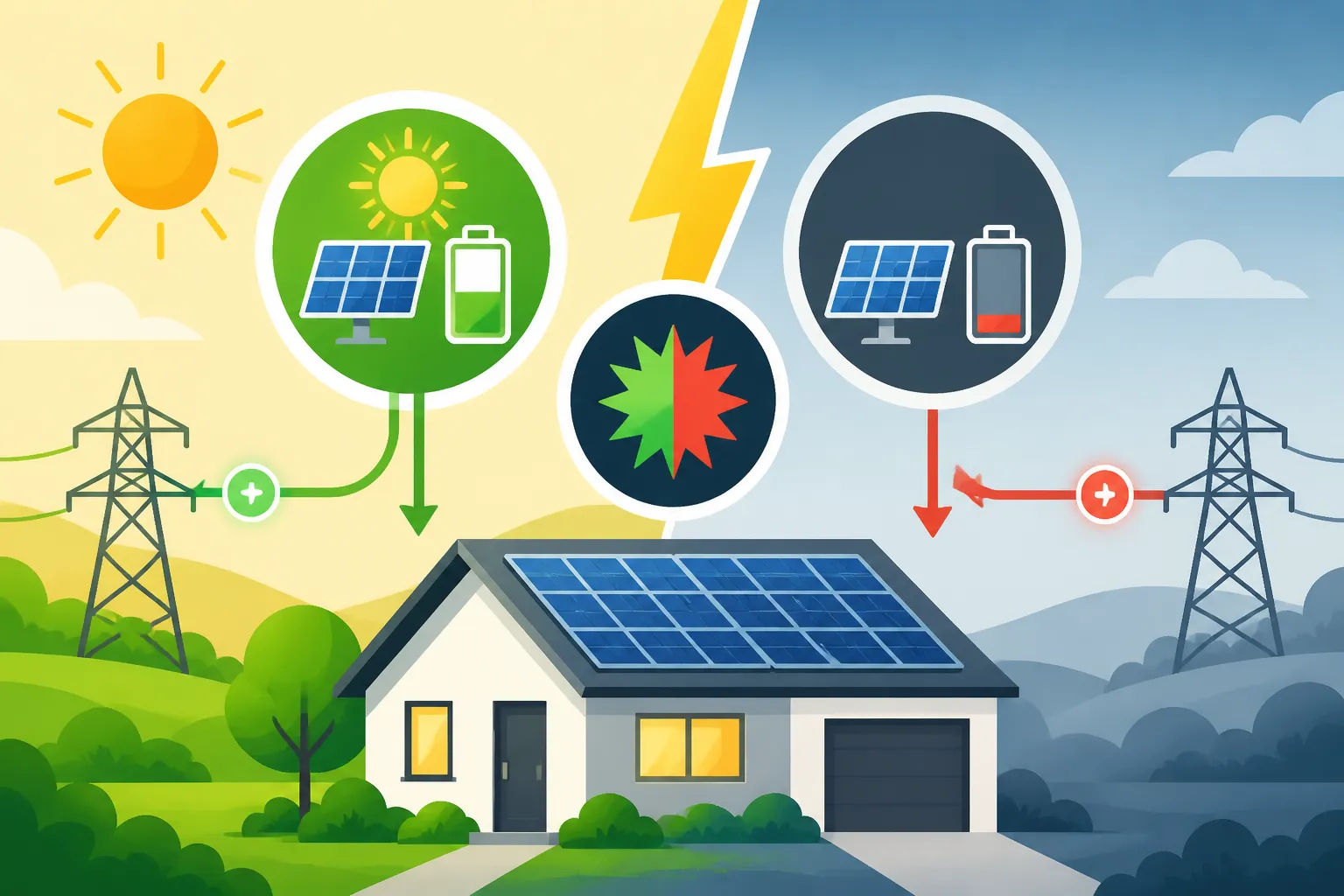
Under NEM 3.0, the discussion around solar invariably leads to battery storage, and for good reason. As mentioned, the reduced export compensation fundamentally changes the value proposition of simply sending excess power back to the grid. A solar battery transforms your system from a grid-tied generator into a more self-sufficient energy hub. Instead of exporting power for a few cents per kWh, you can store that power and use it to offset consumption during those expensive peak evening hours, effectively turning low-value exports into high-value self-consumption.
Beyond the financial benefits, batteries also offer unparalleled energy independence and resilience. With a battery, your home can have backup power during grid outages, a feature increasingly valuable in areas prone to Public Safety Power Shutoffs (PSPS) or extreme weather events. This added peace of mind is a significant draw for many Californian homeowners. While the upfront Solar Plus Battery Cost is higher, the long-term savings and enhanced functionality often make it a wise investment under NEM 3.0. Deciding whether Do I Need a Battery With Solar? is a critical step in planning your new system.
Navigating the Application and Installation Process
Even with NEM 3.0, the fundamental steps to going solar remain largely the same, but with added emphasis on system design and financial modeling. The process typically begins with obtaining multiple quotes from reputable solar installers. This is where you'll want to discuss your energy consumption, roof characteristics, and, crucially, how a battery might integrate into your system to maximize savings under NEM 3.0. An experienced installer will be able to model your potential savings accurately, taking into account the new export rates and your specific utility's Time-of-Use schedule.
Once you've selected an installer and finalized your system design, the application process for interconnection to the grid begins. This includes obtaining necessary permits from your local municipality (e.g., the City of Los Angeles Department of Building and Safety or the City of San Diego Development Services Department) and then getting approval from your utility (PG&E, SCE, or SDG&E) for "Permission to Operate" (PTO). While the core steps of How Are Solar Panels Installed? Step by Step haven't changed, the financial calculations leading up to that decision certainly have. The Solar Installation Timeline: What to Expect might also include a longer battery installation phase.
The Future of California Solar and What It Means for You
The transition to NEM 3.0 is a significant chapter in California's solar story, but it's important to remember that the energy landscape is continuously evolving. Policies can be refined, new technologies emerge, and the market adapts. While the immediate impact of NEM 3.0 has prompted a re-evaluation of solar economics, the long-term commitment to renewable energy in California remains strong. It's certainly a different world than the NEM 2.0 days, and it's understandable to feel a bit of uncertainty about what's next.
Potential Policy Changes and Advocacy Efforts
The journey to NEM 3.0 was not without controversy, and the conversation around fair compensation for solar energy continues. Various advocacy groups and solar industry associations are actively working to influence future policy decisions, pushing for adjustments that they believe will better support rooftop solar growth while still addressing grid stability and equity concerns. For instance, there have been ongoing discussions and legislative efforts aimed at modifying or even reversing some aspects of NEM 3.0, particularly concerning the fixed charges and the value of exported energy. While any significant changes would require extensive regulatory processes, the very existence of these ongoing efforts highlights that the policy framework is not necessarily set in stone forever.
Furthermore, state legislators and the CPUC continue to explore other incentives and programs that could complement NEM 3.0. This might include new initiatives for battery storage deployment, especially in disadvantaged communities, or programs focused on demand response, where customers are incentivized to reduce their energy consumption during peak grid stress. Staying informed about these potential developments through reliable sources and local solar advocacy groups can provide valuable insights into the future direction of California's solar policy. This continuous evolution means that for homeowners, the question of Are Solar Panels Worth It in 2026? is always a moving target.
Long-Term Outlook for Solar Investment in California
Despite the shifts introduced by NEM 3.0, the long-term outlook for solar investment in California remains positive, albeit with a refined strategic focus. The underlying drivers for going solar—rising electricity rates, the desire for energy independence, and environmental concerns—are still very much present. California's commitment to clean energy goals means that solar will continue to play a pivotal role in the state's energy mix. The key is to approach solar installation with a comprehensive understanding of the current policies and to design a system that optimizes for them.
The continued innovation in solar and battery technology also bodes well for future investments. Solar panels are becoming more efficient, and battery storage solutions are becoming more affordable and sophisticated. As the Solar Panel Cost Per Watt Explained continues to trend downward and battery costs become more competitive, the economics of solar plus storage under NEM 3.0 will only improve. For homeowners, this means that while the immediate payback might be different than under NEM 2.0, the long-term benefits of reduced electricity bills, protection against future rate hikes, and increased home value still make solar a sound investment. The market is adapting, and so can you, ensuring your solar journey is a successful one, even in this new era.
Disclaimer
Please note that the information provided in this article is intended for general informational purposes only and does not constitute financial, legal, or professional advice. Solar incentives, policies, and utility rates are subject to change and can vary based on location and individual circumstances. It is highly recommended to consult with a qualified solar professional, tax advisor, and your local utility provider to get the most accurate and up-to-date information specific to your situation before making any decisions about solar energy systems.