How Much Cheaper Is DIY Solar?
The upfront cost of going solar can feel like a huge mountain to climb, even with all the talk about long-term savings and environmental benefits. Many homeowners, just like you, look at those initial quotes and immediately start wondering, "Is there a way to cut down on this expense?" This often leads to the question of DIY solar installation: can you really save a significant chunk of change by doing it yourself? This guide will dive deep into the financial realities, challenges, and true savings potential of taking the do-it-yourself route for your home solar project.
Understanding the Cost Breakdown of a Professional Solar Installation
Before we can even begin to talk about how much cheaper DIY solar is, it's really important to grasp what exactly you're paying for when you hire a professional solar installer. It’s not just the panels themselves; there's a whole ecosystem of costs involved that many homeowners don't realize until they see that first detailed quote. Breaking down these components helps clarify where your money goes and, subsequently, where you might be able to save by going DIY.
Equipment Costs vs. Labor and Soft Costs
When you get a quote for a professionally installed solar system, you'll notice it’s much higher than simply the price of the solar panels, inverters, and racking you see listed online. That's because equipment, while a significant portion, isn't the whole story. On average, the actual solar equipment—panels, inverters, mounting hardware, and wiring—might account for roughly 25-40% of your total project cost. Brands like Qcells, REC, or Maxeon offer high-quality panels, but their cost is just one piece of the puzzle.
The remaining 60-75% is often attributed to what are called "soft costs" and labor. Soft costs include things like customer acquisition (marketing and sales expenses), system design, engineering, permitting, inspections, and project management. Labor, of course, covers the actual hands-on work of installing the panels, wiring the system, and connecting it to your home's electrical grid and the utility. These costs vary wildly by region, local regulations, and the complexity of your specific installation. For instance, getting a solar permit in California might involve different fees and processes than in Texas. These are the areas where DIY promises the biggest savings because you're essentially providing your own labor and navigating many of the soft costs yourself.
The "Hidden" Value of Professional Services
While those labor and soft costs might seem steep, they represent a considerable amount of expertise, time, and risk mitigation that a professional installer brings to the table. When you hire a company, you're not just paying for someone to screw panels onto your roof. You're paying for their licensed electricians to ensure your system is up to code and safe, for their structural engineers to confirm your roof can handle the load, and for their project managers to handle all the paperwork, from local permits to utility interconnection applications. They often have established relationships with utility companies, which can smooth out the often-frustrating process of getting your system connected.
Moreover, professional installations often come with comprehensive warranties that cover not just the equipment (which usually has its own manufacturer warranty) but also the labor and system performance. If a panel fails or a leak develops due to installation error, the installer is typically on the hook to fix it. DIY means you become the warranty for your labor, and any mistakes could be costly. Companies like Modernize often connect homeowners with reputable installers who offer these protections, making the investment feel much more secure. This "hidden" value of peace of mind, proper installation, and ongoing support is a huge factor many DIY enthusiasts overlook when solely focused on dollar figures.
The Potential Savings with DIY Solar Installation
Now, let's get to the exciting part for many homeowners: how much money can you actually save by taking on a DIY solar project? The allure of significantly reducing your initial investment is powerful, and for the right person, it can indeed lead to substantial savings. However, it’s crucial to understand that "cheaper" doesn't mean free, and the savings come with their own set of demands and potential trade-offs.
Calculating Your DIY Savings Potential
The most direct way DIY solar installation saves you money is by eliminating labor costs. As discussed, labor and soft costs can account for anywhere from 50% to 75% of a full-service solar installation. By doing the physical work yourself, you could theoretically cut a huge chunk off the total price. For an average 6 kW solar system, which might cost between $15,000 and $25,000 professionally installed (before incentives), a DIY approach could bring the cost down to $7,500-$12,500, purely from labor savings. This is a massive difference and often the primary driver for considering DIY.
Beyond labor, you also save on many of those "soft costs." You won't be paying a sales commission or covering the marketing overhead of a large company. You'll be managing your own project, handling your own paperwork, and perhaps even sourcing your own components at wholesale or discounted rates. This means that while you're still paying for the physical solar panels, inverters (like those from Enphase or SolarEdge), and racking, you're cutting out almost all the intermediary costs associated with a full-service provider. For instance, if a system costs $3.50 per watt installed, and you can reduce the non-equipment costs by 60%, your DIY cost might drop to around $1.40 per watt for equipment, plus any tools or professional consultation you might need.
Factors Influencing DIY Solar Cost Reductions
The actual amount you save with DIY solar isn't a fixed percentage; it heavily depends on several variables:
- System Size and Complexity: Smaller, simpler systems installed on easily accessible roofs will naturally offer lower overall savings but also lower risk and effort. A large, multi-array system on a complex roof with shading issues will demand more time, specialized tools, and expertise, potentially diminishing your savings if you need to hire help for certain parts.
- Your Skill Level and Existing Tools: If you're already an experienced electrician, roofer, or general contractor, you'll possess many of the skills and tools required, maximizing your savings. If you're starting from scratch, you'll need to invest in safety gear, specialized electrical tools, and perhaps even rent equipment, which eats into your savings.
- Equipment Sourcing: Savvy DIYers can often find good deals on solar panels and inverters through online retailers, liquidation sales, or by purchasing directly from distributors. However, ensuring these components come with valid warranties and are compatible with each other is crucial. If you can negotiate better pricing than what an installer might offer, your savings increase.
- Local Regulations and Permitting Fees: While you save on the cost of someone else doing the permitting, you still have to pay the fees. These vary widely. Some municipalities have straightforward processes and reasonable fees, while others are notoriously complex and expensive. Investigating your local permit process early can reveal potential hurdles and costs.
It's also worth noting that states with strong solar markets often have more resources and clearer guidelines for DIYers, but the regulations can also be more stringent. For example, if you're looking at solar panel costs in California, you'll find a mature market with many suppliers but also strict building codes.
What You're Trading for DIY Savings: Risks and Challenges
While the idea of significant savings through DIY solar is compelling, it's vital to have a realistic understanding of what you're actually trading for that reduced upfront cost. This isn't just about money; it’s about time, effort, expertise, and a substantial amount of responsibility that a professional installer would typically shoulder. Many homeowners underestimate these factors, leading to frustration, delays, and potentially even higher costs in the long run if things go wrong.
The Intangible Costs: Time, Effort, and Expertise
The biggest "cost" in DIY solar that doesn't show up on a receipt is your time and effort. A professional installation team can often complete the physical mounting and wiring in a matter of days. For a DIYer, this process can stretch into weeks or even months, especially if you're balancing it with a full-time job and family responsibilities. You'll spend countless hours researching components, understanding electrical diagrams, studying local building codes, filling out permit applications, and coordinating with utility companies. This learning curve is steep, and rushing through it can lead to costly mistakes.
Beyond the time commitment, there's the demand for diverse expertise. You'll need to be a part-time electrician, roofer, structural engineer, and project manager. Understanding voltage, amperage, grounding, and wiring schematics is non-negotiable for electrical safety. You'll need to know how to securely mount panels to various roof types without compromising structural integrity or creating leaks. This isn't just about reading a manual; it often requires practical experience and a deep understanding of construction and electrical principles. If you're not comfortable with heights, heavy lifting, or complex electrical work, the "savings" might not be worth the stress and potential danger.
Potential Financial Pitfalls and Safety Concerns
One of the most significant risks of DIY solar is the potential for financial pitfalls stemming from errors. An incorrectly installed system might not perform optimally, leading to lower-than-expected energy production and longer payback periods. Worse, it could fail inspections, requiring expensive rework or even professional intervention to fix. Imagine installing an entire array only to find out your wiring doesn't meet code, and you have to take it all down and redo it. The cost of rectifying such mistakes can quickly erode any initial savings.
Safety is another paramount concern. Working on a roof, especially with heavy, bulky solar panels, presents significant fall hazards. Dealing with high-voltage electricity is inherently dangerous and can lead to severe injury or even death if not handled correctly. Proper personal protective equipment (PPE), adherence to safety protocols, and a thorough understanding of lockout/tagout procedures are critical. Professional installers have extensive training and insurance to cover these risks, which you would be solely responsible for as a DIYer. Furthermore, improper installation could void equipment warranties from manufacturers like Enphase or Tesla, leaving you without recourse if a component fails prematurely.
Navigating Permits, Inspections, and Interconnection
Many homeowners who jump into DIY solar underestimate the bureaucratic maze they'll have to navigate. It's not enough to simply buy the equipment and put it on your roof. You'll need to apply for and secure various permits from your local building department, which often requires submitting detailed engineering plans and diagrams. This process can be confusing, time-consuming, and frustrating, particularly if you're not familiar with architectural drawings or electrical codes.
Once installed, your system will need to pass rigorous inspections by local authorities to ensure it complies with all safety and building codes. If your system doesn't pass, you'll be responsible for making all necessary corrections, which can involve significant rework. Finally, you must go through the utility interconnection process, which involves applying to your electric company to connect your system to the grid and often installing a new net meter. This is where programs like net metering come into play, but the process can be lengthy and require specific documentation. A professional installer typically handles all of this on your behalf, leveraging their experience to streamline the process. As a DIYer, this entire administrative burden falls squarely on your shoulders, often requiring multiple phone calls, emails, and follow-ups.
Is DIY Solar Right for You? A Realistic Assessment
After understanding the potential savings and the significant challenges, the big question remains: Is DIY solar actually the right choice for you? It's not a one-size-fits-all answer. For some, it's a deeply rewarding and financially savvy move; for others, it's a recipe for headaches and unexpected expenses. A realistic assessment of your skills, resources, and risk tolerance is essential before committing to such a substantial project.
Ideal Candidates for DIY Solar
DIY solar is best suited for a very specific type of homeowner. You might be an ideal candidate if:
- You Possess Strong Technical and Electrical Skills: If you're a licensed electrician, a seasoned general contractor, or someone with extensive experience in home electrical systems and roofing, you're already ahead of the curve. Your existing knowledge drastically reduces the learning curve and the risk of critical errors.
- You Have Abundant Time and Patience: This isn't a weekend project. You need to have significant free time for research, planning, permitting, installation, and troubleshooting. Patience is key, especially when dealing with bureaucratic processes or unexpected technical challenges.
- You Are Comfortable with Heights and Physical Labor: Installing solar panels involves working on your roof, often in various weather conditions, and handling heavy, fragile equipment. You must be physically fit, have a good sense of balance, and be comfortable with safety equipment like harnesses.
- You Have a Simple Roof and System Design: Homes with simple, unobstructed south-facing roofs (or west/east in some cases) are much easier to work with. Complex rooflines, multiple angles, or significant shading from trees can make a DIY installation much more difficult and less efficient, impacting your overall solar return on investment.
- You're Budget-Conscious but Capable: If maximizing savings is your absolute top priority and you genuinely have the skills to execute the project safely and correctly, DIY offers the most direct path to cutting labor costs.
For these individuals, the sense of accomplishment and the financial savings can be incredibly gratifying. For those who enjoy hands-on projects and solving complex problems, it's a worthwhile endeavor.
When to Seriously Consider a Professional Installation
On the flip side, for many homeowners, a professional installation is simply the smarter, safer, and ultimately less stressful option. You should seriously consider hiring a professional if:
- You Lack Experience in Electrical or Construction Work: If wiring a new outlet gives you pause, or if you've never been on your roof, DIY solar is likely beyond your current skill set. The risks of injury or incorrect installation are too high.
- Your Roof is Old, Complex, or Difficult to Access: If your roof needs repairs or replacement soon, or if it has multiple angles, steep pitches, or tricky access points, a professional team with proper safety equipment and roofing experience is invaluable. You might want to consider getting a new roof before solar anyway, so tackling solar yourself on top of that is a huge undertaking.
- You Don't Have Significant Free Time: If your work or family schedule is already packed, trying to squeeze in a demanding solar project will lead to delays, frustration, and potential burnout. The time commitment for a professional installation is usually much shorter for the homeowner, typically just a few days of actual installation after the planning and permitting.
- You Prioritize Warranties and Peace of Mind: Professional installers offer comprehensive warranties on their labor and often assist with equipment warranties. If something goes wrong years down the line, you have a single point of contact for support. With DIY, you're responsible for troubleshooting and repairs yourself. Understanding how warranties work is crucial here.
- You Want to Maximize Incentives and Financing: Many state and local incentives, as well as favorable financing options like specific solar loans, are often easier to access with a professionally installed, fully permitted system. While DIY systems still qualify for the federal tax credit, navigating other incentives can sometimes be smoother with an installer who knows the ropes.
- You Prefer a Turnkey Solution: If you simply want to enjoy the benefits of solar without the hands-on involvement, paying for professional service provides a convenient, start-to-finish solution. Companies like Modernize can help you get multiple quotes from vetted installers, making the process of choosing a professional much easier.
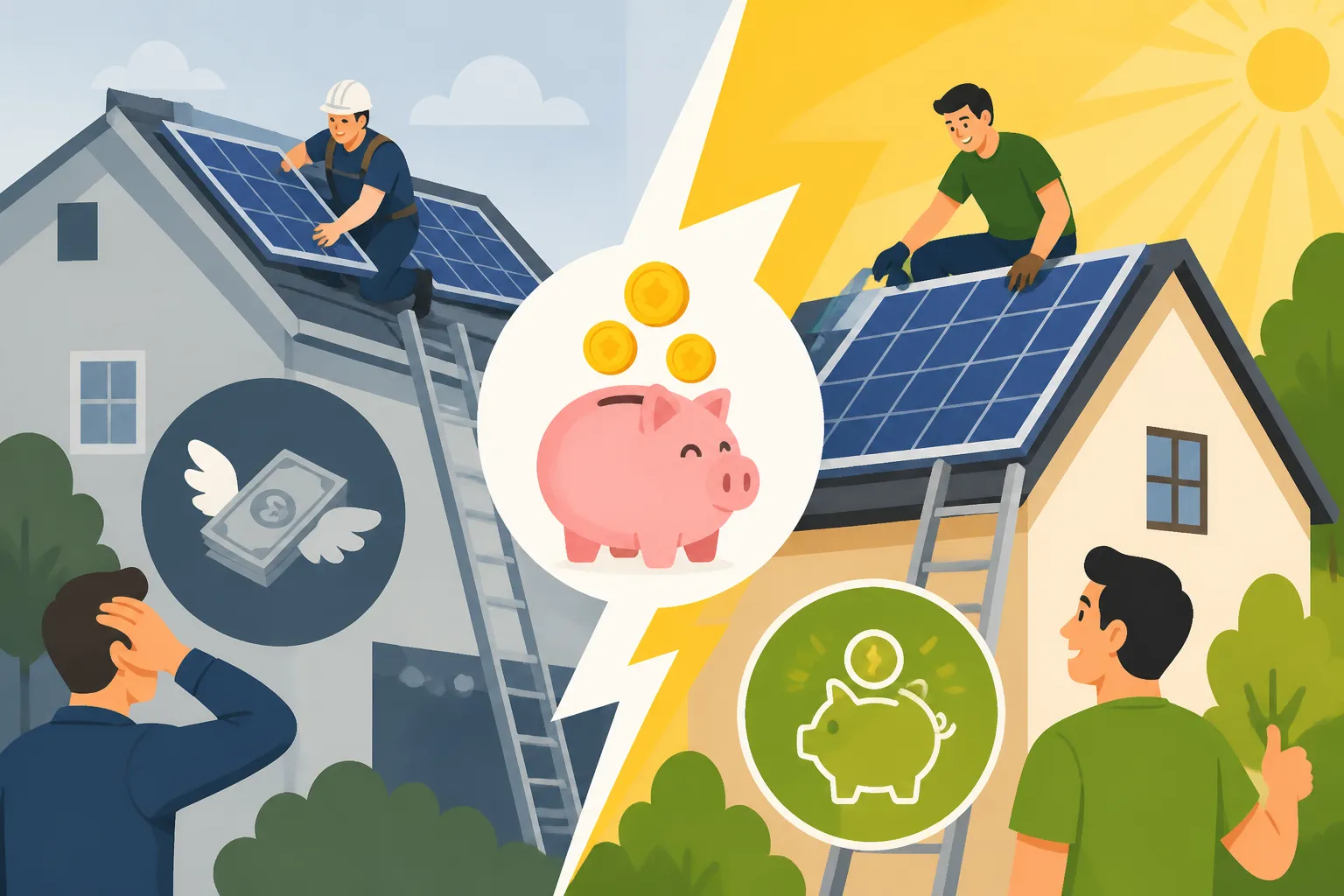
Ultimately, the decision comes down to a careful weighing of cost savings against personal capacity, risk tolerance, and the value you place on your time and peace of mind. While DIY can be significantly cheaper in terms of direct dollar outlay for labor and soft costs, it demands a steep investment of your personal resources and carries greater personal risk.
| Feature | DIY Solar Installation | Professional Solar Installation |
|---|---|---|
| Upfront Cost | Potentially 50-75% cheaper (excluding equipment) | Higher upfront cost (includes labor, soft costs, project management) |
| Labor | Provided by homeowner; requires significant physical effort | Provided by experienced, certified technicians |
| Soft Costs | Handled by homeowner (permits, design, interconnection) | Managed entirely by the installer |
| Time Commitment | Extensive (weeks to months) for research, planning, installation, permits | Minimal for homeowner; installer handles most steps and timeline |
| Expertise Needed | High (electrical, roofing, structural, project management) | Provided by installer's specialized teams |
| Safety Risks | Higher for homeowner (falls, electrical hazards) | Managed by trained professionals with safety protocols |
| Warranties | Equipment warranties only (if purchased new); no labor warranty | Comprehensive (equipment, labor, performance) |
| Permitting | Homeowner responsible for all applications and compliance | Installer manages all permit applications and inspections |
| Interconnection | Homeowner responsible for utility applications and coordination | Installer handles utility liaison and final connection |
| Financing | Fewer specialized solar loan options; cash or personal loans | Access to dedicated solar financing, PACE programs, leases, PPAs |
| Resale Value | Can be positively impacted if installed correctly and permitted | Positively impacts home value, often seen as a premium feature |
| Peace of Mind | Lower due to self-reliance and responsibility | Higher due to professional expertise and guarantees |
Disclaimer
The information provided in this article is for general informational purposes only and does not constitute professional advice. Solar energy system design, installation, and related financial decisions involve complex factors and should be undertaken with careful consideration and, often, professional consultation. Local regulations, permitting requirements, incentive programs, and utility policies vary significantly by location and can change. Always consult with qualified solar professionals, licensed electricians, and tax advisors before making any decisions regarding your solar project.