Solar Sales Tax Exemptions by State
One of the biggest anxieties for homeowners considering solar energy is often the upfront cost, and it's easy to overlook some hidden fees that can inflate that number. Many people don't realize that sales tax on a major purchase like a solar energy system can add thousands of dollars to their bill, making the dream of energy independence feel a little further out of reach. This comprehensive guide is here to shed light on solar sales tax exemptions by state, detailing where these crucial savings exist and how you can benefit.
Understanding Solar Sales Tax Exemptions
Diving into the world of solar can feel like navigating a maze of acronyms, incentives, and costs. One area that often surprises homeowners is sales tax. Just like buying a new car or a big appliance, solar panels and their associated equipment are typically subject to sales tax in many states. However, thankfully, many states have recognized the significant environmental and economic benefits of solar energy and have implemented sales tax exemptions to make it more affordable for residents.
What is a Sales Tax Exemption for Solar?
Simply put, a solar sales tax exemption means that when you purchase a solar energy system, you are exempt from paying the state sales tax on that equipment and often on the labor involved in its installation. Imagine buying a brand-new car, but not having to pay the 6% or 7% sales tax on the sticker price – that's essentially what an exemption does for your solar investment. It directly reduces the cash outlay required, making solar more financially accessible. This exemption typically applies to all components of the solar energy system, including the solar panels themselves, inverters, racking, wiring, and even batteries if they are part of the initial installation.
Why Do States Offer These Exemptions?
States don't just hand out tax breaks without a reason. Solar sales tax exemptions are a powerful policy tool designed to stimulate the adoption of renewable energy. By lowering the upfront cost, states encourage more homeowners and businesses to go solar, which in turn helps achieve various goals. These goals include reducing reliance on fossil fuels, cutting carbon emissions, creating local green jobs, and stabilizing the energy grid. It's a win-win: homeowners save money, and the state moves closer to its clean energy targets. Think of it as a subtle but effective nudge from policymakers to help you make the eco-friendly choice.
How Sales Tax Impacts Your Overall Solar Cost
Let's talk numbers because that's where the real impact lies. The average residential solar system in the U.S. might cost anywhere from $15,000 to $30,000, depending on its size and your location. Now, imagine you're in a state with a 6% sales tax. On a $25,000 system, that's an extra $1,500 that would be added to your total bill without an exemption. That's not a small chunk of change! That $1,500 could cover a significant portion of your inverter upgrade or even a few extra panels, potentially boosting your system's output. Understanding these exemptions, or the lack thereof, is crucial for an accurate budget when you're exploring the overall How Much Do Solar Panels Cost? 2026 Guide.
States with Full Solar Sales Tax Exemptions
It's truly exciting to see a growing number of states recognizing the value of solar by offering comprehensive sales tax exemptions. These are the places where the financial burden of going solar is noticeably lessened right from the start. Knowing which states provide these benefits can be a huge motivator and a significant factor in your decision-making process.
Key States and Their Policies
Many states have embraced full sales tax exemptions for solar energy systems, making them incredibly attractive for homeowners considering the switch. For example, Florida has a robust sales tax exemption that applies to solar energy devices, which includes all the equipment necessary for a photovoltaic system. This means homeowners in the Sunshine State can save a substantial amount on their installation costs. Similarly, New York offers a full sales tax exemption for residential solar energy systems, which is a big deal given the state's sales tax rates. Residents there can expect to save around 4% on state sales tax alone, not to mention any local sales taxes that are also typically exempted.
Other notable states with comprehensive sales tax exemptions include Massachusetts, Texas, Arizona, and North Carolina. These states have made a clear policy decision to remove sales tax as a barrier to solar adoption. For instance, in Texas, solar and wind energy devices are exempt from sales tax, which is a major benefit in a state with varying local sales tax rates that can stack up quickly. This commitment to renewable energy is designed to encourage wider participation, ultimately contributing to a cleaner energy grid and more resilient communities.
How to Verify and Claim the Exemption
While many states offer these exemptions, the process of claiming them is generally straightforward, largely because the exemption is often applied directly by your solar installer at the point of sale. Reputable solar companies are well-versed in the local and state incentive programs and will typically factor the sales tax exemption into your initial quote. They handle the necessary paperwork to ensure you don't pay the sales tax.
However, it's always smart to verify. When you're receiving quotes, explicitly ask your solar installer to confirm that the sales tax exemption has been applied and that your quote reflects the net cost without sales tax. You can also visit your state's department of revenue or energy office websites for official documentation on the solar sales tax exemption. This due diligence ensures you're getting all the benefits you're entitled to and can confidently compare proposals from different installers, knowing the sales tax impact is accounted for. This is part of thoroughly researching all available State Solar Incentives: Complete 2026 Guide.
Real-World Impact on System Costs
Let's revisit the financial impact with a hypothetical. Consider a homeowner in Miami, Florida, installing a 7 kW solar system, which might cost around $20,000 before any incentives. Florida's state sales tax is 6%. With the exemption, this homeowner immediately saves $1,200. This saving is instantaneous and doesn't require waiting for a tax credit or rebate.
Compare this to a homeowner in a state without an exemption, who would have to budget that extra $1,200 from the start. That upfront saving can be the difference between stretching your budget for a slightly larger system, adding a smart home energy monitor, or simply keeping more money in your pocket. The sales tax exemption is one of the most direct and immediate financial benefits you'll receive, making the overall cost of solar considerably more attractive. This immediate saving complements other long-term benefits and helps shorten your Solar Panel Payback Period Explained.
States with Partial or Limited Sales Tax Exemptions
Not all states offer a blanket sales tax exemption for solar, and some approach it with specific conditions, caps, or carve-outs. It's crucial to understand these nuances to accurately calculate your potential savings and avoid any surprises. A partial exemption is still a great benefit, but it requires a bit more homework.
States with Specific Conditions or Caps
Some states have programs that offer a sales tax reduction rather than a full exemption, or they might cap the amount of the exemption. For instance, a state might exempt only a certain percentage of the sales tax, or only apply the exemption to specific components of the solar energy system, like the panels but not the inverters or batteries. In some cases, a state might have a maximum dollar amount for the exemption, meaning that if your system costs above a certain threshold, you'll still pay sales tax on the amount exceeding the cap.
These conditions are often in place to balance state revenue needs with renewable energy promotion. They still provide a significant financial incentive, but they necessitate a close look at the fine print. It's not uncommon for these rules to be updated, so always check the most current information for your specific state.
Navigating Local vs. State-Level Differences
This is where things can get a little tricky. Even if your state offers a sales tax exemption for solar, local jurisdictions – like counties or cities – might have their own sales taxes that are not covered by the state exemption. This means you might still end up paying a portion of sales tax, even with a state-level exemption in place.
For example, in a state like Georgia, while there isn't a statewide sales tax exemption for solar, individual municipalities or counties might have their own local incentives or rules. It's a patchwork approach, and it requires homeowners to research not just state policies but also local ordinances. Your solar installer should be able to provide clear guidance on both state and local tax implications for your specific address, as they deal with these varying regulations regularly. Always make sure their quote specifies exactly what taxes are included or excluded.
Examples of Partial Exemptions in Practice
Let's imagine a scenario in a state that offers a partial exemption. Suppose a state has a 5% sales tax, but only offers a 50% exemption on solar equipment. This means you'd still pay 2.5% sales tax on your system. On a $25,000 system, that's $625 in sales tax you'd still owe. While not as good as a full exemption, it's still a saving of $625 compared to paying the full sales tax.
Another example might involve an exemption that only applies to certain types of solar energy systems, perhaps residential but not commercial, or systems below a certain capacity. These limitations highlight why it's so important to get detailed, itemized quotes from installers and to discuss these tax implications thoroughly. Don't assume anything; always ask for clarification on how sales tax is being handled in your specific solar proposal.
States Without Specific Solar Sales Tax Exemptions
While many states are actively promoting solar through sales tax exemptions, it's important to acknowledge that not every state has this particular incentive in place. For homeowners in these areas, it doesn't mean solar isn't a good investment, but it does mean you'll need to look at other avenues for financial savings.
Where Exemptions Are Not Currently Available
In some states, there simply isn't a specific statewide sales tax exemption for solar energy systems. This means that when you purchase your solar panels and associated equipment, you will pay the standard state and local sales taxes, just as you would for most other goods. States like Pennsylvania, Indiana, and Missouri, for instance, do not currently offer a statewide sales tax exemption for solar installations.
This absence doesn't reflect a negative stance on solar, but rather that these states might be focusing their incentive efforts elsewhere, or they simply haven't prioritized this type of tax break. For residents in these areas, it means the upfront cost of solar will include the sales tax, which can be a significant addition depending on the state's tax rate. Understanding this reality from the outset is crucial for accurate budgeting and expectation setting.
Other Incentives to Consider in These States
If your state doesn't offer a sales tax exemption, don't despair! There are often numerous other financial incentives available that can significantly offset the cost of going solar. For instance, almost all homeowners across the U.S. can still benefit from the federal solar tax credit, which is a substantial percentage of your system cost. You can learn more about the Federal Solar Incentives That Still Exist in 2026.
Beyond the federal incentive, many states without sales tax exemptions still offer strong programs such as Net Metering Explained: How It Works by State, utility rebates, or even performance-based incentives (PBIs). For example, even if a state doesn't have a sales tax exemption, a robust net metering program can drastically reduce your monthly electricity bills, leading to significant long-term savings. Utility companies might also offer direct rebates for installing solar, reducing your initial outlay. It's always a good idea to research every available incentive package in your area.
The Importance of Comprehensive Incentive Research
This brings us to a critical point: never focus on just one incentive in isolation. When considering solar, you need to look at the entire landscape of financial benefits available to you. This includes not only sales tax exemptions (if applicable) but also property tax exemptions, state income tax credits, Solar Renewable Energy Credits (SRECs) Explained: Selling Solar Renewable Energy Credits, utility rebates, and the federal tax credit.
A homeowner in a state without a sales tax exemption but with excellent net metering policies, a strong state tax credit, and a valuable SREC market might still find solar incredibly attractive and financially beneficial. The key is to get multiple quotes from reputable installers who can provide a detailed breakdown of all applicable incentives for your specific location and calculate your estimated savings over the lifetime of the system. This comprehensive view allows you to determine if Are Solar Panels Worth It in 2026? for your home, regardless of whether a sales tax exemption is part of the package.
How to Navigate Solar Sales Tax Exemptions During the Purchase Process
Successfully applying solar sales tax exemptions isn't usually something you, as the homeowner, have to do manually, but understanding the process empowers you to ask the right questions and ensure you're getting all the benefits. The key is to work closely with your chosen solar installer, as they are the primary navigators of these financial waters on your behalf.
Working with Your Solar Installer
Your solar installer is your best resource when it comes to sales tax exemptions and other local incentives. A reputable installer will have an in-depth understanding of the specific rules and regulations in your state and even your local municipality. When you receive a quote, it should clearly indicate whether sales tax has been applied or exempted. Don't hesitate to ask for clarification.
For instance, when an installer from Sunrun or Tesla Solar provides a proposal in a state like Florida that has a full sales tax exemption, their quote should reflect the system cost without sales tax. They are responsible for ensuring that the sales tax is correctly handled on the invoice and with the state tax authorities. If you're comparing quotes, ensure that all installers are consistent in their application of sales tax exemptions, or lack thereof, to get an apples-to-apples comparison. This collaboration is crucial for a smooth solar journey, right through to Solar Permitting & Interconnection (PTO) Explained.
Required Documentation and Application Steps
For most residential solar sales tax exemptions, the process is quite streamlined for the homeowner. Generally, you won't need to fill out a separate application or submit forms to the state's tax department yourself. Instead, your solar installer will typically handle this on their end. They will either purchase the equipment tax-free directly from their suppliers (if the exemption applies to the vendor) or they will charge you without sales tax, documenting the exemption on your invoice as required by state law.
The documentation for claiming the exemption usually rests with the installer, who must keep records to justify why they didn't collect sales tax from you. However, it's a good practice for you to keep a copy of your sales agreement and any invoices that clearly state the sales tax exemption was applied. This protects you in case of any future audits or questions.
Common Pitfalls and How to Avoid Them
Even with straightforward processes, a few common pitfalls can trip homeowners up.
One pitfall is simply assuming an exemption exists when it doesn't, or assuming it's a full exemption when it's only partial. This can lead to unexpected costs. Always verify the exact nature of the exemption for your specific location.
Another potential issue arises if your installer is unfamiliar with the current state and local tax laws. While rare for established companies, it can happen, especially with newer or less experienced firms. This is why choosing a highly rated and experienced installer is critical. If something seems off in your quote regarding sales tax, don't just accept it. Get a second opinion or cross-reference the information with your state's official tax resources. Ensure you review every detail in your solar contract to avoid any unpleasant surprises.
Beyond Sales Tax: Other Key Solar Financial Incentives
While sales tax exemptions are fantastic for reducing upfront costs, they are just one piece of the larger puzzle of solar incentives. To truly understand the financial benefits of going solar, you need to consider a broader range of programs that can significantly impact your long-term savings and return on investment.
Property Tax Exemptions for Solar
Many homeowners worry that adding a valuable solar energy system to their home will cause their property taxes to skyrocket. Thankfully, a significant number of states offer Solar Property Tax Exemptions by State. These exemptions typically exclude the value added by your solar energy system from your home's assessed value for property tax purposes. This means that even though your home's market value increases due to solar, your property tax bill won't necessarily go up because of it.
For example, in California, the active solar energy system exclusion prevents the added value of solar panels from being included in a property's assessment for property taxes. This is a huge benefit, as installing a solar system can add thousands of dollars to your home's value. Without such an exemption, those added thousands would directly translate into higher annual property tax payments. This makes solar an even more attractive investment that enhances your home without increasing your fixed costs.
The Role of Net Metering and SRECs
Beyond tax exemptions, two other powerhouse incentives are Net Metering Explained: How It Works by State and SRECs Explained: Selling Solar Renewable Energy Credits. Net metering policies allow you to send any excess electricity your solar panels produce back to the grid, and your utility company credits your account for that power, usually at the full retail rate. This effectively allows your home to act as a tiny power plant, running your meter backward when you're over-producing.
SRECs, or Solar Renewable Energy Credits, are another valuable incentive in certain states. In an SREC market, you earn one credit for every megawatt-hour (MWh) of electricity your solar system generates. These credits can then be sold on a market to utility companies that need to meet renewable energy mandates. The price of SRECs fluctuates, but they can provide a significant additional income stream for solar homeowners in states like New Jersey, Massachusetts, Illinois, and Maryland.
Understanding Utility Rebates and State Credits
Don't overlook the impact of direct utility rebates and state-specific tax credits. Many utility companies offer upfront rebates to customers who install solar, which can immediately reduce the installation cost. These are often one-time payments or credits applied to your account shortly after your system is interconnected and operational. You can discover more about Utility Solar Rebates: How to Find Yours.
Additionally, many states offer their own income tax credits, which function similarly to the federal solar tax credit but at a state level. For instance, New York has a state solar tax credit of 25% of the system cost, capped at $5,000, which is applied against your state income tax liability. These state credits, combined with the federal credit and any sales or property tax exemptions, create a powerful financial package that makes solar exceptionally affordable and beneficial. Always investigate these layers of incentives to maximize your savings.
The Future of Solar Sales Tax Exemptions
The landscape of solar incentives is dynamic, constantly evolving with legislative changes, shifts in energy policy, and advancements in technology. While current sales tax exemptions offer significant advantages, it's wise to consider how these might change in the future and how to stay informed.
Potential Policy Changes and Updates
Solar sales tax exemptions, like any other tax policy, are subject to review and change by state legislatures. Economic conditions, state budget priorities, and evolving energy goals can all influence whether these exemptions are maintained, modified, or even eliminated. For example, a state that has met its renewable energy targets might reduce certain incentives, while a state lagging behind might introduce new ones.
It's also possible to see shifts in the scope of exemptions. A state with a partial exemption might expand it to a full one, or conversely, a full exemption might become partial. These changes typically don't happen overnight, and there's usually a legislative process involved, allowing for public input and notification periods. However, staying aware of these potential shifts is part of being a savvy solar homeowner.
Staying Informed About Legislative Developments
How do you keep up with these potential changes? A few strategies can help. First, regularly check your state's Department of Revenue or Public Utilities Commission websites. These are official sources that will publish updates on tax laws and energy policies. Second, follow local and state renewable energy advocacy groups. These organizations often track legislative developments closely and can provide early warnings about proposed changes.
Finally, stay in touch with your solar installer. Reputable solar companies have a vested interest in staying current with all incentives that benefit their customers. They can often provide insights into upcoming changes or clarify existing policies. While you don't need to become a legislative expert, a general awareness of the political and economic factors influencing solar policy is beneficial for long-term planning.
Advocacy for Solar Incentives
If you're passionate about solar energy and the incentives that support it, consider becoming an advocate! Local and state clean energy organizations are always looking for support in demonstrating the public demand for renewable energy policies. Participating in public hearings, contacting your elected officials, or simply signing petitions can make a difference.
The continued existence and expansion of incentives like solar sales tax exemptions often depend on sustained public and industry support. By engaging in advocacy, you can help ensure that these valuable financial tools remain available for future homeowners, continuing to drive the adoption of clean, sustainable energy. These efforts are crucial in fostering a supportive environment for initiatives like Solar Tax Credit 2026: What Happened to the Federal Credit at a federal level, and similar benefits locally.
State-by-State Solar Sales Tax Exemption Overview
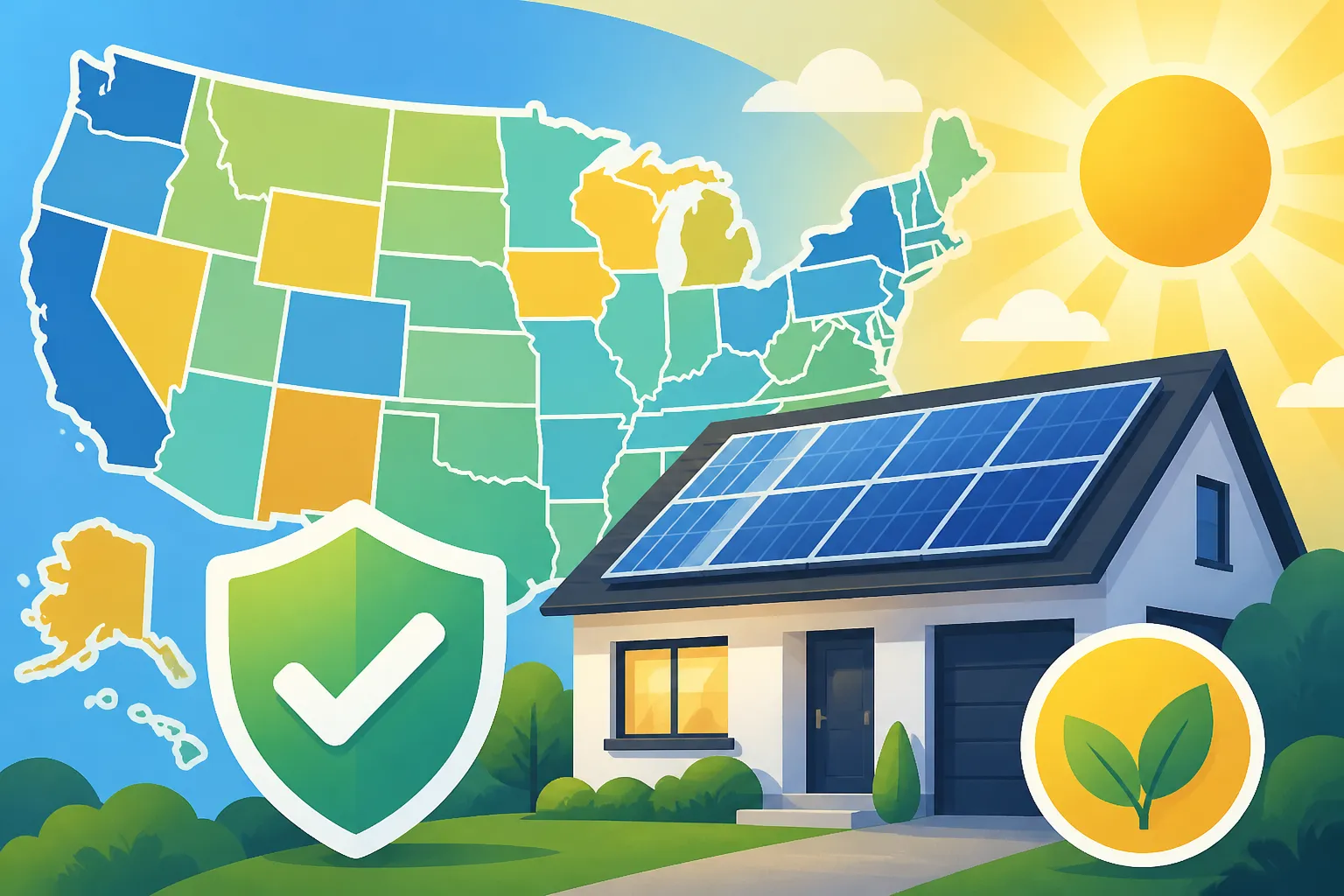
To make it easier, here's a quick reference table for many states and their current status regarding sales tax exemptions for residential solar systems. Please remember that this information can change, and it's always best to verify with local authorities or your solar installer.
| State | Sales Tax Exemption Status (Residential Solar) | Notes |
|---|---|---|
| Arizona | Full Exemption | Applies to solar energy devices. |
| California | Full Exemption | Exempts active solar energy systems. |
| Colorado | Full Exemption | Exempts sales and use tax on renewable energy systems. |
| Connecticut | Full Exemption | Applies to solar electric generating systems. |
| Florida | Full Exemption | Exempts solar energy devices from sales tax. |
| Georgia | None (Statewide) | Check local ordinances; some local incentives may exist. |
| Illinois | Full Exemption | Exempts solar energy systems. |
| Indiana | None | No statewide sales tax exemption for solar. |
| Massachusetts | Full Exemption | Exempts renewable energy equipment. |
| Maryland | Full Exemption | Exempts solar energy generating systems. |
| Michigan | None | No statewide sales tax exemption for solar. |
| Missouri | None | No statewide sales tax exemption for solar. |
| Nevada | Full Exemption | Applies to certain renewable energy equipment. |
| New Hampshire | None (No state sales tax) | New Hampshire does not have a general sales tax. |
| New Jersey | Full Exemption | Exempts solar energy equipment. |
| New Mexico | Full Exemption | Exempts receipts from selling, leasing, or installing solar equipment. |
| New York | Full Exemption | Exempts residential solar energy systems. |
| North Carolina | Full Exemption | Exempts sales and use tax for renewable energy equipment. |
| Ohio | None | No statewide sales tax exemption for solar. |
| Oregon | None (No state sales tax) | Oregon does not have a general sales tax. |
| Pennsylvania | None | No statewide sales tax exemption for solar. |
| South Carolina | Full Exemption | Exempts solar energy equipment. |
| Texas | Full Exemption | Exempts solar and wind energy devices. |
| Utah | Full Exemption | Exempts renewable energy systems. |
| Vermont | Full Exemption | Exempts residential renewable energy systems. |
| Virginia | Full Exemption | Exempts solar energy equipment. |
| Washington | Full Exemption | Exempts sales and use tax on solar energy systems. |
| Wisconsin | Full Exemption | Exempts sales of certain renewable energy equipment. |
This table is a starting point, and it's always recommended to double-check the most current information for your specific location.
Disclaimer
Please note that the information provided in this article is for informational purposes only and should not be considered tax advice. Tax laws and incentive programs are subject to change and can vary significantly by state and local jurisdiction. It is highly recommended to consult with a qualified tax professional and a reputable solar installer to understand the specific incentives available for your situation and to ensure compliance with all applicable laws. We strive to provide accurate and up-to-date information, but we cannot guarantee its completeness or accuracy at all times.