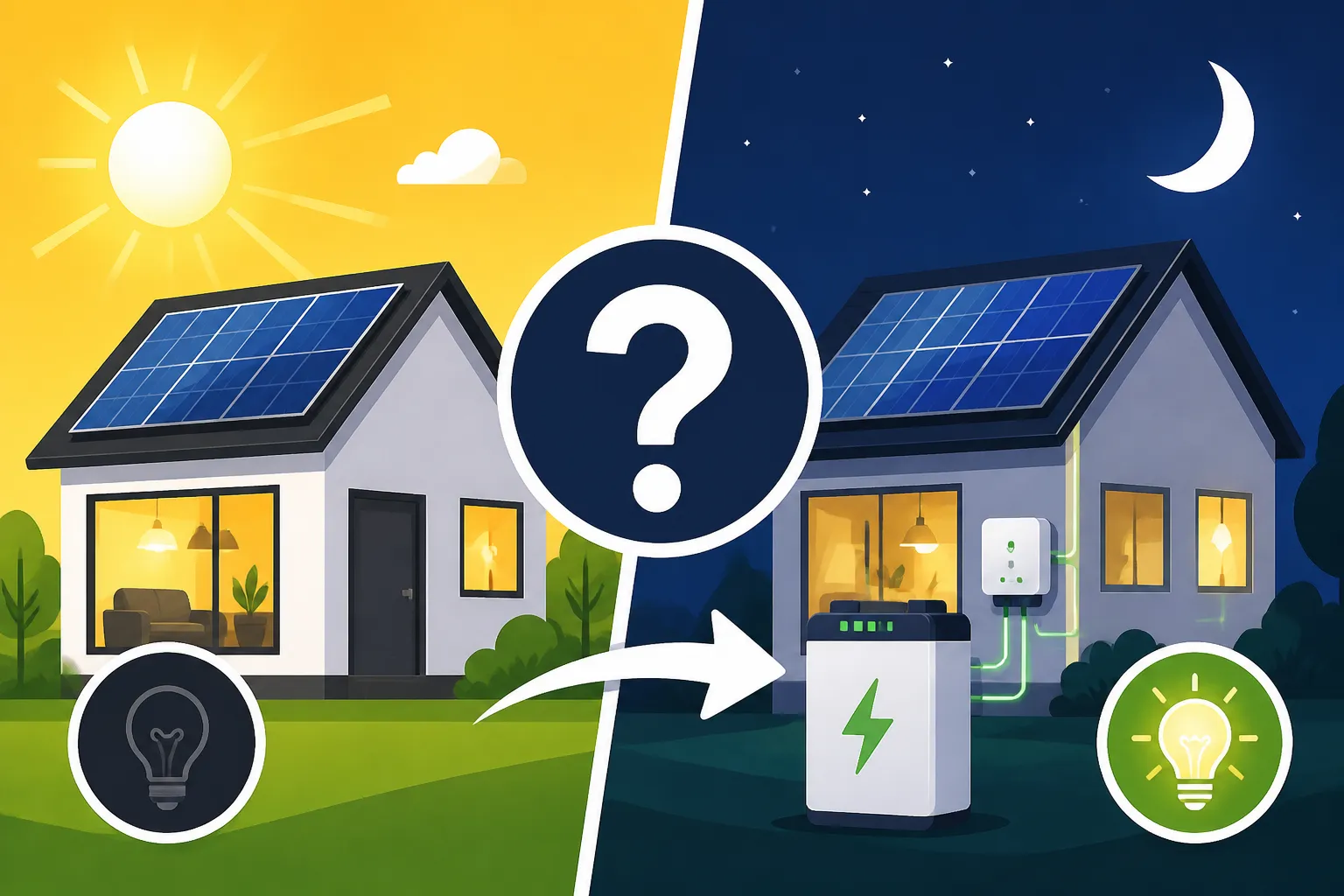
Is It Worth Adding a Battery to My Solar System?
Many homeowners who've already made the leap to solar power, or are just starting their journey, often find themselves wondering if they've truly gone "all in" on energy independence. The frustration of seeing your solar panels produce abundant electricity during the day, only for that excess to be sent back to the grid for minimal credit (or worse, no credit at all!) can be incredibly disheartening. And what about those dreaded power outages? Your expensive solar system sits idle while your neighbors' homes go dark. This comprehensive guide will walk you through the practicalities, costs, and genuine benefits of adding a battery to your existing or planned solar system, helping you decide if it's the right next step for your energy goals and your wallet.
Understanding Solar Batteries: What They Are and Why People Consider Them
At its core, a solar battery is a device that stores electricity generated by your solar panels for later use. Think of it like a personal energy bank account. Instead of all your excess solar production being immediately exported to the grid, or solely relying on the grid for power when the sun isn't shining, a battery allows you to capture and store that valuable energy right on your property. This concept has become increasingly appealing as homeowners seek greater control over their energy supply and costs.
The Frustration of Grid Dependence
For many years, the primary benefit of solar was simply offsetting your electricity bill by reducing the amount of power you pulled from the utility grid. If your panels produced more than you used, most states had some form of Net Metering Explained: How It Works by State, which would credit you for that excess energy. However, the landscape is changing. Utilities are increasingly pushing for policies like California's NEM 3.0 (Net Billing), where the credit you receive for exporting power is significantly less than the retail price you pay to buy it back. This creates a real financial pain point: you're selling low and buying high.
This shift has left many solar owners feeling frustrated and undervalued by their utility companies. They invested in solar for savings and independence, only to find themselves still heavily reliant on the grid and its fluctuating policies. Furthermore, a standard grid-tied solar system doesn't provide power during a blackout for safety reasons (to prevent backfeeding into the grid while utility workers are trying to fix lines). So, while you're technically producing your own power, you're still beholden to your utility's reliability, or lack thereof. This is a huge driver for people looking into battery storage, as it offers a tangible solution to both these monetary and practical frustrations.
Different Types of Solar Batteries
When we talk about solar batteries for home use, we're primarily referring to rechargeable lithium-ion batteries. These are the same basic technology found in your smartphone or electric vehicle, just on a much larger scale. However, there are nuances in how they're packaged and integrated into a solar system.
The most common and popular residential batteries today are integrated units designed to work seamlessly with solar PV systems. Brands like Tesla Powerwall 3 and Enphase IQ Battery are leading the charge, offering sleek designs, robust performance, and user-friendly monitoring apps. These batteries are typically designed to connect to your existing (or new) solar inverter setup and an automatic transfer switch, which allows them to safely disconnect your home from the grid during an outage and power essential loads.
Some systems might use lead-acid batteries, especially in older or completely off-grid setups, but these are far less common for modern grid-tied residential solar due to their lower energy density, shorter lifespan, and more involved maintenance. For the vast majority of homeowners considering adding a battery, it will be a high-performance, maintenance-free lithium-ion unit built for longevity and efficiency. It's a significant investment, so understanding the technology behind it, and comparing options like a Tesla Powerwall vs Enphase IQ Battery, is crucial.
Key Factors to Consider Before Adding a Battery
Deciding to add a battery isn't a snap decision; it involves a careful evaluation of your personal circumstances, energy habits, and local market conditions. Just like buying a car, there are many variables that impact whether it's the right fit for you.
Your Energy Consumption Patterns
The way you use electricity throughout the day is one of the most critical factors in determining a battery's value. If you're typically out of the house during the day when your solar panels are generating peak power, and then your energy consumption spikes in the evenings when you return home, cook dinner, and run appliances, a battery can be incredibly beneficial. This is a classic "peak shifting" scenario. Your solar panels charge the battery during the day, and then you draw from the stored energy in the evening, reducing the amount of expensive electricity you pull from the grid during those high-rate hours.
However, if your household has fairly consistent energy use throughout the day, or if you work from home and use most of your solar production in real-time, the financial benefit of a battery for daily energy management might be less pronounced, especially if you have favorable net metering. For example, a home in Arizona with a family that runs AC all day might use most of its solar production directly. But a home in California, where peak rates hit in the evening, would see huge advantages from battery storage. An installer from a service like Modernize can help analyze your specific usage data to project potential savings.
Local Net Metering Policies
This is perhaps the single most important policy factor influencing a battery's worth. As mentioned, net metering policies vary wildly by state and even by utility. In states with robust, full-retail Net Metering Explained: How It Works by State (where you get a 1:1 credit for exported energy), the financial incentive to store your own power is often lower. Why store it if you can essentially "sell" it back to the grid for the same price you'd buy it?
However, in areas with unfavorable net metering or "net billing" policies (like California's NEM 3.0), or states with time-of-use (TOU) rates, a battery suddenly becomes a game-changer. With TOU rates, electricity is more expensive during certain peak hours (often late afternoon/early evening). A battery allows you to strategically discharge stored solar energy during these peak times, avoiding the high utility rates. If you're in an area where your utility offers very little for your exported solar, then learning how to maximize self-consumption becomes key, and this is where a battery truly shines. This makes considering "Is Solar Worth It if I Don't Have Net Metering?" a very different calculation with a battery in the mix.
Existing Solar System Compatibility
If you already have solar panels, you need to verify if your current system is compatible with battery storage. Many newer solar inverters, especially hybrid or "battery-ready" models, are designed to integrate seamlessly with batteries. However, older systems might require additional components, such as a new hybrid inverter or an AC-coupled battery system. An AC-coupled battery, like an Enphase IQ Battery, can often be added to almost any existing solar system, as it has its own inverter to convert the stored DC power to AC for your home.
It's vital to have a qualified solar professional assess your current setup, including your existing inverter, electrical panel capacity, and available space for the battery. This assessment will help determine the feasibility and the specific components needed to ensure a smooth and safe integration. Sometimes, the cost to upgrade an older system to be battery-compatible can be significant, impacting the overall return on investment. You'll want to get a clear breakdown of the Solar Plus Battery Cost for your specific situation.
Budget and Financing Options
Let's be realistic: adding a solar battery is a substantial investment. The Solar Battery Cost: Full Breakdown can range anywhere from $10,000 to $20,000 or more for a single battery unit and installation, depending on capacity and brand. This is on top of your existing solar system cost. You'll need to consider how this fits into your overall budget.
There are several ways to finance a battery. You could pay cash upfront, which provides the quickest return on investment by avoiding interest. Alternatively, many homeowners opt for solar loans that can include the battery cost. It's important to scrutinize loan terms, as some come with hidden dealer fees that can significantly increase the total amount you pay over the loan's life. Sometimes, state or local incentives are available for batteries, and you should also check if Are Solar Batteries Still Eligible for Incentives in 2026? in your area. These incentives can help offset the upfront cost, making the investment more palatable. Don't forget to look into programs like the federal clean energy credit, which often applies to battery storage as well. This is where getting multiple quotes and understanding all financial implications, potentially through a service like Modernize, becomes paramount.
The Real Benefits and Drawbacks of Solar Batteries
While the idea of energy independence is alluring, it's essential to look at the tangible benefits and potential downsides of adding a battery to your solar system with a clear and practical eye.
Enhanced Energy Independence and Backup Power
This is often the primary motivator for homeowners. With a solar battery, you gain a significant degree of energy independence from the utility grid. You're no longer just feeding your excess power into a system that might not adequately compensate you; you're owning and managing that energy for your own use. This means less reliance on fluctuating electricity prices and less vulnerability to grid instability.
The most tangible benefit for many is having reliable backup power during outages. When the grid goes down due to severe weather, equipment failures, or other emergencies, a battery-equipped solar system can automatically disconnect from the grid and continue to power your home's essential circuits. Imagine keeping your lights on, your refrigerator cold, and your phone charged while your neighbors are fumbling for flashlights. For homeowners in areas prone to outages, like parts of Texas or California, this peace of mind alone can be priceless. The backup power capability is often the deciding factor, even if the daily financial savings aren't massive.
Optimizing Self-Consumption and Time-of-Use Savings
Beyond backup, batteries are powerful tools for optimizing your daily energy usage, especially in areas with time-of-use (TOU) electricity rates. Your solar panels generate most of their power during midday when demand (and often prices) are lower. However, your household's energy demand typically peaks in the late afternoon and evening, precisely when solar production is declining, and electricity rates are at their highest.
A solar battery allows you to store that cheaper midday solar energy and then discharge it during the expensive peak hours, effectively shaving off the priciest portion of your electricity bill. This is known as "peak shifting" or "load shifting." For instance, in New York, where peak demand charges can be significant, using battery power during these times can lead to substantial savings. This strategy becomes even more impactful in regions where Net Metering Explained: How It Works by State is less favorable or non-existent, making self-consumption the most economically sound option. It's about taking back control of your energy flow and maximizing the value of every electron your panels produce.
The Financial Investment and Payback Period
No one wants to invest in something that doesn't eventually pay off. The financial investment in a solar battery is significant, and it's critical to understand the potential payback period. The average Solar Panel Payback Period Explained for solar panels alone typically ranges from 7 to 12 years, but adding a battery can extend this timeframe due to the additional upfront cost.
Several factors influence the payback period for a battery:
- Cost of the battery and installation: As discussed, this is the largest variable.
- Local electricity rates: Higher electricity rates mean greater potential savings when using stored solar.
- Net metering policies: Less favorable net metering makes a battery's daily savings more attractive.
- Time-of-use rates: Significant price differences between on-peak and off-peak rates accelerate payback.
- Incentives: Any state or local incentives, or federal tax credits, will shorten the payback period.
- Value of backup power: This is subjective but can represent significant intangible value for many.
For some, especially those in areas with poor net metering or frequent outages, a battery can be a fantastic investment with a reasonable payback. For others, particularly those with good net metering and stable grids, the payback might be longer, and the primary benefit might be the peace of mind and enhanced energy independence rather than purely financial returns. You also want to consider How Much Does It Cost to Add a Battery to Existing Solar? as this often differs from a brand-new combined install.
Here's a simplified table illustrating how battery value can shift based on grid conditions:
| Feature/Condition | Value of Battery for Homeowner (Financial & Intangible) | Primary Benefit |
|---|---|---|
| Full Retail Net Metering | Moderate to Low | Backup power, very slight TOU arbitrage (if applicable) |
| Reduced Export Credits | High | Maximizing self-consumption, backup power, TOU arbitrage |
| Time-of-Use (TOU) Rates | High | Peak shifting, backup power, significant bill reduction |
| Frequent Power Outages | Very High | Reliable backup power, peace of mind, continued operations |
| No Net Metering | Very High | Maximizing self-consumption, backup power, energy independence |
Is a Solar Battery Right for Your Home?
Ultimately, the decision to add a battery is a personal one, weighing financial considerations against your desire for energy independence and security. It's not a one-size-fits-all solution, and what makes sense for your neighbor in Florida might be entirely different from your needs in Massachusetts.
Scenarios Where a Battery Shines
A solar battery really comes into its own in specific situations:
- You Live in a State with Poor Net Metering or Net Billing: If your utility offers minimal credit for the excess solar power you export (think California with NEM 3.0), then storing that power for your own use becomes incredibly valuable. You avoid buying expensive grid electricity in the evening and maximize the value of your solar production. This scenario often makes the payback period for a battery much more attractive.
- Your Utility Has Time-of-Use (TOU) Rates: If electricity prices fluctuate significantly throughout the day, with much higher rates during peak evening hours, a battery allows you to strategically discharge stored solar energy during these expensive periods. This "arbitrage" can lead to substantial monthly savings on your electricity bill.
- You Experience Frequent Power Outages: If you live in an area prone to grid instability, severe weather events (hurricanes, wildfires, ice storms), or an aging electrical infrastructure, a battery provides essential backup power. This ensures critical appliances, lighting, and communication systems remain operational when the grid goes down, offering invaluable peace of mind.
- You Desire Maximum Energy Independence: For some homeowners, the primary driver isn't just financial, but the desire to be less reliant on external utility companies. A battery offers a tangible step towards greater self-sufficiency and control over your home's energy future.
- You Have Specific High-Demand Needs in the Evening: If your household has consistent high energy consumption in the evenings (e.g., charging an electric vehicle, running an EV charger, heavy use of appliances, or medical equipment), a battery can ensure you're powering these needs with your own stored solar energy rather than expensive grid power. Understanding What Size Solar Battery Do I Need? is crucial here.
When You Might Not Need a Battery Yet
Conversely, there are situations where adding a battery might not be the most immediate or financially savvy move:
- You Have Excellent Full-Retail Net Metering: If your utility provides 1:1 credit for every kilowatt-hour of excess solar you send back to the grid, the financial incentive to store that power yourself for daily use is significantly reduced. In this case, the grid essentially acts as your "virtual battery," storing your excess power and crediting you fairly. The main reason for a battery here would be backup power, if outages are a concern.
- Your Budget is Tight and Outages Are Rare: Batteries are a significant additional cost. If your primary goal is to save money on electricity and you live in a region with a very stable grid and infrequent power outages, the added expense of a battery might not justify the financial return compared to the savings from solar panels alone. It might be better to assess your immediate needs and then revisit the battery option when your budget allows or if grid conditions change.
- Your Energy Consumption is Mostly During the Day: If your household uses the majority of its electricity during daylight hours when your solar panels are actively producing (e.g., you work from home, run a home-based business, or have high daytime AC use), most of your solar production is consumed in real-time. In this scenario, there's less "excess" power to store, making the battery's value for daily self-consumption less impactful.
- You're Planning to Move Soon: If you anticipate selling your home in the next few years, the payback period for a solar battery might not materialize during your ownership. While solar panels can increase home value, the added value from a battery specifically might not fully offset its cost in a short timeframe. It's something to consider alongside "Does Solar Make Sense if I'm Moving Soon?".
Ultimately, the decision hinges on your priorities. Are you looking for maximum financial savings, energy independence, or critical backup power? A reputable solar installer can provide a detailed analysis of your specific energy usage, local utility rates, and available incentives to help you make an informed choice. Services like Modernize can connect you with qualified local installers who can assess your home and provide tailored recommendations for How Much Do Solar Panels Cost? 2026 Guide with or without battery storage.
Disclaimer
Please note: The information provided in this guide is intended for general informational purposes only and does not constitute financial, legal, or professional energy advice. Solar incentives, policies, and costs are subject to change and vary significantly by location. It is crucial to consult with qualified solar professionals and financial advisors to assess your specific situation and make informed decisions.