Is Leasing Solar a Bad Idea?
The idea of going solar sounds fantastic – lower electricity bills, helping the planet, energy independence! But then you start looking into it, and suddenly you’re hit with a barrage of financing options, each with its own pros and cons. One option that often sparks a lot of debate, and frankly, a good deal of confusion and anxiety, is the solar lease. Many people hear cautionary tales or are told outright that "leasing solar is a bad idea." It's enough to make anyone second-guess whether solar is even right for them. This comprehensive guide will peel back the layers on solar leases, explore why they get such a mixed reputation, and help you understand if this particular path to solar ownership, or rather, solar usage, might actually align with your personal circumstances and financial goals.
Deconstructing the Solar Lease: What It Really Means for You
Let's be real, the world of solar financing can feel like a labyrinth. You're trying to figure out if you'll save money, and suddenly you're drowning in jargon about kilowatt-hours, net metering, and various incentive programs. A solar lease, at its core, is pretty straightforward: you don't own the solar panels on your roof. Instead, a third-party company, the solar provider, owns and maintains the system, and you pay them a fixed monthly fee for the electricity generated. Think of it like renting your solar power system instead of buying it.
How a Solar Lease Agreement Works
When you enter a solar lease, you're essentially signing a contract with a solar company to host their equipment on your roof for a specific period, usually 20 to 25 years. They handle the installation, maintenance, and monitoring of the system. In return, you agree to pay them a fixed monthly amount for the power the system produces. This payment typically replaces or significantly reduces your utility bill. It’s a bit like having a smaller, more predictable "utility" bill directly from your solar provider, often with the added benefit of predictable rates.
This arrangement means that while you benefit from the clean energy and potential savings on your electricity bill, the solar company benefits from the various incentives, such as the federal solar tax credit or state-specific programs, because they are the system owner. For many homeowners, the appeal of a solar lease lies in its simplicity and the fact that it requires little to no upfront cost. You get solar without the large initial investment, and the provider takes on the responsibility for the system's performance.
The True Cost: Monthly Payments, Escalators, and Savings
One of the biggest questions people have is, "How much will I actually save?" With a solar lease, your savings come from generating your own electricity at a rate that's typically lower than what your utility company charges. The monthly lease payment is usually designed to be less than what you would have paid your utility for the equivalent amount of electricity, immediately putting some money back into your pocket. However, it's crucial to understand the nuances of these payments.
Many solar lease agreements include what's known as an "escalator clause." This means your monthly payment will increase by a small percentage each year, typically 1% to 3%. While this might seem small, over 20-25 years, it adds up. The idea behind escalators is that utility rates are also expected to rise over time, and the escalator aims to keep your solar cost competitive with future utility prices. It's vital to compare the proposed escalator rate with historical utility rate increases in your area. If your utility's rates have historically risen slower than the lease escalator, your savings might diminish over time. Make sure you read every line of that contract, or have an expert review it, to avoid any surprises down the line. If you're comparing options, you might also want to look into other financing models, such as exploring the differences between a solar lease vs PPA vs buy.
Maintenance, Monitoring, and Performance Guarantees
A significant benefit of a solar lease, and a definite point of attraction for many, is the hands-off nature of maintenance. When you lease, the solar provider is responsible for keeping the system running optimally. This means if a panel malfunctions, an inverter fails, or you even have questions about your system's performance, it's generally their responsibility to troubleshoot, repair, or replace components. This can be a huge relief, as you don't have to worry about unexpected repair costs or the technicalities of solar system upkeep.
Most lease agreements also come with performance guarantees. The solar company will commit to a certain level of electricity production over the course of the year. If the system underperforms due to equipment issues, they might owe you a credit. This offers a layer of protection, ensuring you're getting the value you're paying for. However, it's important to understand the specifics of these guarantees – what causes them to kick in, how performance is measured, and what remedies are available. Make sure to clarify these points before signing. This can be a great perk, especially for those who want the environmental benefits and bill savings without becoming an expert in solar maintenance.
Why People Say "Leasing Solar is a Bad Idea"
The strong opinions against solar leasing aren't born out of thin air. There are very real, often frustrating, scenarios that lead many homeowners and financial advisors to label it a less-than-ideal choice. Understanding these common pitfalls is key to making an informed decision for your own home and financial future.
The Financial Trade-Offs: Limited ROI and Missed Incentives
One of the biggest arguments against solar leasing centers on the financial return on investment (ROI). When you lease, you don't own the system, which means you don't get to claim the substantial federal solar tax credit, which could reduce the cost of a purchased system by a significant percentage. You also miss out on other potential incentives like SRECs (Solar Renewable Energy Credits) in states where they are available, or utility rebates. These incentives, designed to promote solar adoption, go directly to the system owner – in this case, the leasing company.
While you do save money on your monthly electricity bill, your overall long-term savings might not be as high as they would be if you owned the system outright or financed it with a solar loan. With a purchased system, once the initial investment is paid off, your electricity costs could drop to nearly zero (besides interconnection fees or minimum utility charges), yielding maximum savings for the remainder of the system's 25+ year lifespan. With a lease, you continue to pay that monthly fee, often with an escalator, for the entire duration of the contract. This significantly impacts your overall financial upside compared to truly owning your power generation. It’s worth checking if Does Leased Solar Still Get Incentives in 2026? is something that applies in your specific situation.
Navigating Home Sales and Property Value
This is a common headache for homeowners with leased solar systems. Many potential buyers are hesitant to take on an existing solar lease, as it adds a long-term financial obligation to their new home purchase. The process of transferring a lease can be complicated, requiring the new buyer to qualify with the solar company, sign a new contract, and essentially inherit the existing terms. If a buyer doesn't qualify or is simply unwilling to take on the lease, it can become a significant hurdle in selling your home, potentially delaying the sale or even forcing you to buy out the lease yourself, which can be an unexpected and substantial expense.
While Do Solar Panels Increase Home Value? is generally true for owned systems, the impact of a leased system is far less clear, and often negative. Appraisers might not factor a leased system into the home's value, and some buyers see it as a liability rather than an asset. This can be a particularly frustrating experience for homeowners who entered a lease assuming it would be a seamless addition to their property. If you're considering selling your home in the near future, it’s crucial to understand how Selling a House With Solar Panels works when those panels are leased.
Long-Term Commitments and Lack of Flexibility
Lease agreements are typically long-term contracts, often spanning 20 to 25 years. This is a significant commitment, and circumstances can change dramatically over two decades. What if your energy needs change? What if you want to make major roof repairs or upgrades? While some leases have provisions for these scenarios, they can often be restrictive or costly. For instance, if you need a new roof, the solar panels often have to be temporarily removed and reinstalled, and you'll typically bear that expense, even though you don't own the panels.
Furthermore, these contracts often have strict terms regarding early termination. Breaking a lease can come with substantial penalties, making it difficult to exit the agreement if your financial situation or living arrangements change unexpectedly. This lack of flexibility can feel suffocating for some homeowners who prefer more control over their property and finances. It’s a stark contrast to owning your system outright, where once paid off, the system is yours, free and clear, to do with as you please.
When a Solar Lease Could Be a Smart Move for Certain Homeowners
Despite the common criticisms, it's not fair to say that solar leasing is always a bad idea. For certain individuals and specific situations, a solar lease can actually be a very practical and beneficial solution, providing access to renewable energy and immediate savings without the typical barriers of entry.
Accessibility and Zero Upfront Cost Appeal
Let's face it: the upfront cost of purchasing a solar system, even with incentives, can be a significant barrier for many families. A typical residential solar system can cost tens of thousands of dollars, which isn't pocket change for most. This is where solar leases shine. They are designed to be "zero-down" or very low upfront cost options, meaning you can get solar panels installed on your home without having to dip into your savings or take out a large loan. This immediate financial accessibility opens the door to clean energy for a broader range of homeowners.
For those who prioritize immediate cash flow over long-term ownership benefits, or who may not qualify for a traditional solar loan due to credit scores or debt-to-income ratios, a lease can be a game-changer. It allows you to start saving on your electricity bills from day one, often with a predictable monthly payment that is lower than what you were paying the utility. For many, this immediate relief on their monthly budget is a huge win, making solar a reality instead of a distant dream. Companies like Modernize can help connect you with installers who offer various financing options, including leases, making it easier to explore these low-upfront-cost pathways.
Ideal for Shorter Residency or Alternative Motivations
While a long-term lease can be a hurdle when selling a home, if you know your residency in your current home is likely to be shorter than the full lease term, a lease might actually make sense. If you're only planning to stay in your house for 5-10 years, for example, the perceived downsides of a lease – like missing out on the full 25-year ROI – might not be as relevant to your personal timeline. You still get the benefits of lower electricity bills during your tenure, and then you'll simply transfer the lease when you sell. While transferring can be tricky, it might be less of a long-term burden than managing a solar loan or a full cash purchase for a property you're not staying in forever.
Moreover, not everyone's primary motivation for going solar is maximum financial ROI. Some homeowners are driven by environmental consciousness, a desire to reduce their carbon footprint, or simply the satisfaction of using clean energy. For these individuals, the zero-down aspect and maintenance-free operation of a lease can be perfectly aligned with their goals, even if the financial gains aren't as robust as a purchased system. The convenience and ethical considerations often outweigh the pure investment perspective.
The Appeal of Hands-Off Solar Ownership
Let's face it, homeownership comes with enough responsibilities. For many, the idea of adding "solar system maintenance technician" to their list of duties isn't appealing. With a solar lease, all the operational headaches fall on the leasing company. They monitor the system, handle any necessary repairs, and ensure it's performing as expected. This means no worrying about panel cleaning, inverter replacements, or warranty claims – it's all covered as part of your lease agreement.
This "set it and forget it" approach is a huge draw for busy professionals, elderly homeowners, or anyone who simply prefers to delegate the technical aspects of their home systems. You get the benefits of solar energy without the responsibilities of ownership. This peace of mind, knowing that a professional company is taking care of your system, can be a significant factor for many in deciding that a solar lease is, in fact, a smart and practical choice for their lifestyle. You could say it simplifies the experience of having solar.
Beyond Leasing: Exploring Your Other Solar Financing Options
While a solar lease offers distinct advantages, especially for those seeking minimal upfront costs and hands-off maintenance, it's essential to recognize that it's just one piece of the financing puzzle. Understanding the alternatives can help you determine the best path for your unique situation, giving you a full picture of How Much Do Solar Panels Cost? 2026 Guide and how you might pay for them.
Purchasing Outright with Cash
The most straightforward way to go solar is to buy the system outright with cash. This option offers the highest long-term savings and the quickest payback period. When you pay cash, you immediately own the system and can claim all available incentives, including the federal tax credit. This significantly reduces your out-of-pocket expenses and maximizes your return on investment. Once the system is installed and operational, your electricity bills can drop dramatically, often to just a minimum utility connection fee.
The main hurdle, of course, is the substantial upfront cost. A typical residential system can range from $15,000 to $30,000 or more, depending on its size and your location. However, if you have the liquid capital and prefer to avoid monthly payments and interest, paying cash offers unparalleled financial benefits. It also makes selling your home easier, as you're adding a valuable asset without any attached financial obligations. For homeowners looking to truly maximize their Solar Panel Payback Period Explained and long-term savings, cash purchase is often the undisputed champion. It's often debated if Is It Cheaper to Buy or Lease Solar in 2026? and for many homeowners, cash comes out on top for overall lifetime value.
The Ins and Outs of Solar Loans and PPAs
If paying cash isn't feasible, but you still want the benefits of ownership, a solar loan is a popular alternative. Similar to a home improvement loan, a solar loan allows you to finance the purchase of your system over a period, typically 10 to 20 years. You own the system from day one, which means you're eligible for the federal solar tax credit and any other state or local incentives. These incentives can then be used to pay down a portion of your loan, effectively reducing your principal balance and monthly payments.
Many homeowners find solar loans to be a good balance: lower monthly payments than a cash purchase, but with the ownership benefits of claiming incentives and enjoying full utility bill savings once the loan is repaid. Be sure to understand the terms of the loan, including interest rates and any potential dealer fees, which can sometimes be substantial. A good resource to explore this further is our guide on Solar Loans: Complete Guide.
Another option similar to a lease, but with key differences, is a Power Purchase Agreement (PPA). With a PPA, you don't pay a fixed monthly lease payment. Instead, you agree to buy the electricity generated by the panels at a fixed rate per kilowatt-hour (kWh) that is typically lower than your utility's rate. The solar company owns, installs, and maintains the system, and you only pay for the power it produces. This means if the system has a low production month due to weather or other factors, your bill to the solar company will be lower. PPAs often also include escalators, similar to leases. The main distinction between a lease and a PPA is that with a lease, you pay a fixed amount, whereas with a PPA, you pay for actual production. Both are $0-down options, but PPAs can offer more direct alignment with actual energy generated. Companies like Modernize can help you compare these options by providing quotes from various installers. When comparing, also consider Cash vs Financing Solar: Which Saves More?, as the total savings can vary significantly.
Weighing Your Options for Your Home
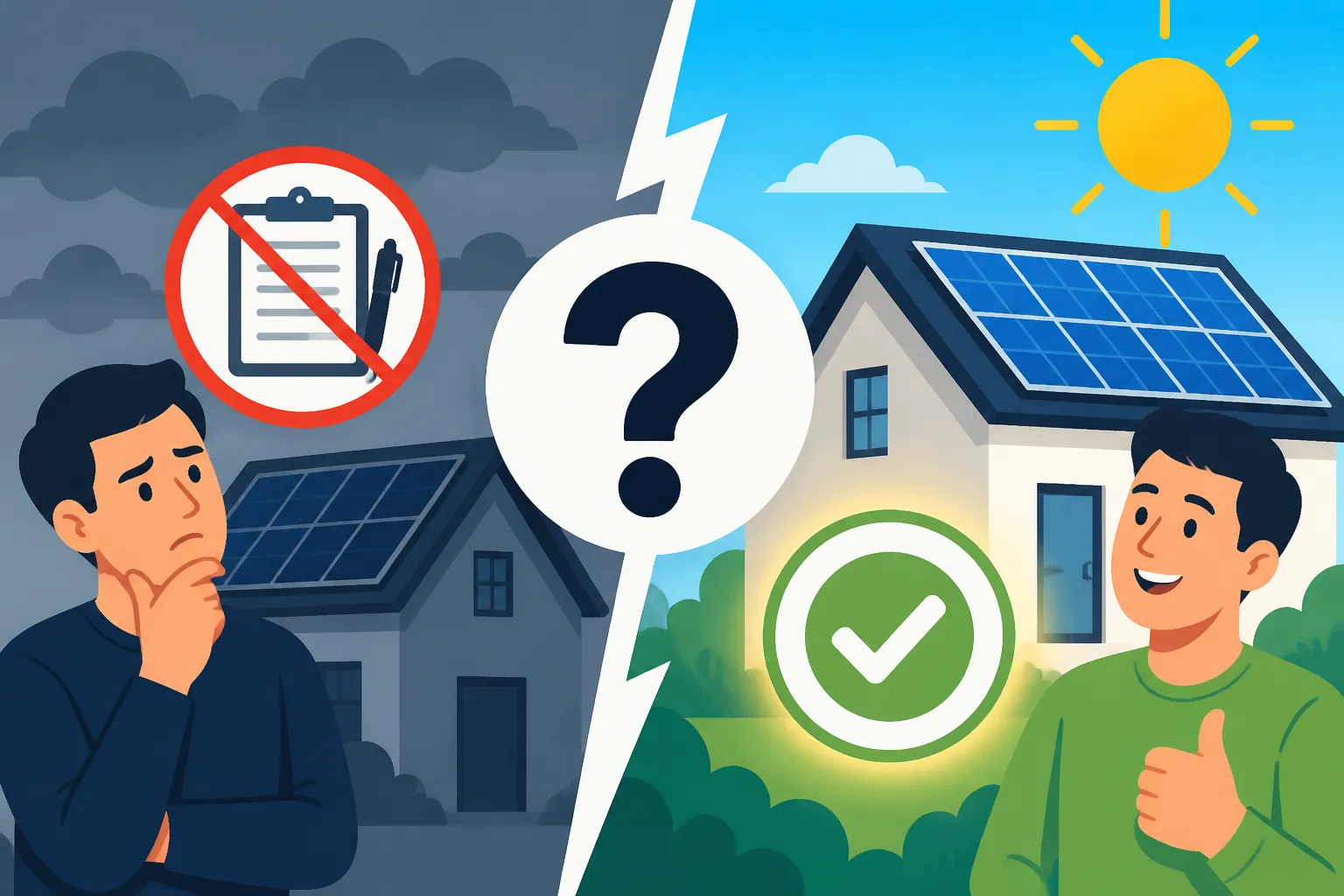
Ultimately, deciding whether a solar lease is a "bad idea" isn't a simple yes or no answer; it depends entirely on your personal financial situation, your goals for going solar, and how long you plan to stay in your home. For some, the undeniable benefits of zero upfront cost, guaranteed maintenance, and immediate bill savings make it an excellent choice, providing a stepping stone into renewable energy that might otherwise be out of reach. For others, the trade-offs in long-term savings, the complexities of selling a home, and the lack of ownership mean a lease just doesn't align with their financial aspirations.
The best approach is to thoroughly research all your options, get multiple quotes from different solar providers, and carefully read through every contract. Don't be afraid to ask questions, no matter how basic they seem. Consider consulting with a financial advisor to understand how each option impacts your personal finances. By understanding the nuances of leases, loans, and cash purchases, you can confidently choose the path that empowers you with solar energy in a way that truly benefits you and your household.
Disclaimer
Please note that this article is intended for informational purposes only and does not constitute financial, legal, or tax advice. Solar incentives, regulations, and market conditions can change, and individual circumstances vary greatly. Always consult with qualified professionals, such as a solar expert, financial advisor, or tax specialist, before making any decisions about solar energy systems for your home.