Solar Payback Period in Ohio
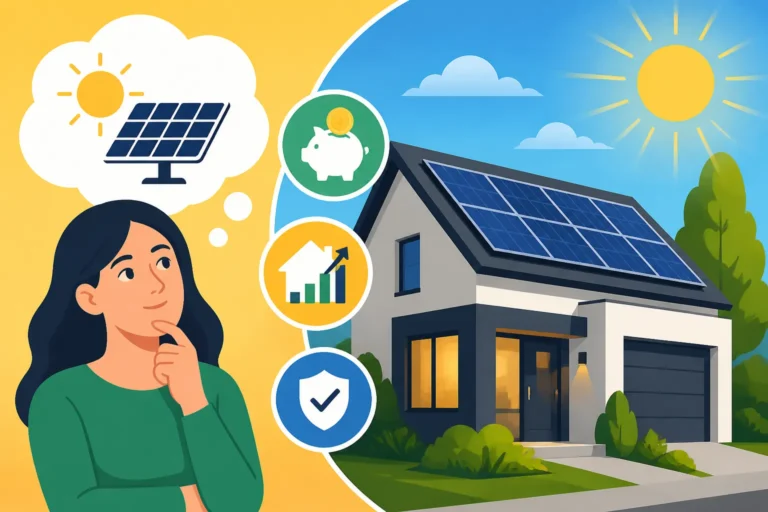
Figuring out if solar panels are a good financial move for your home can feel like trying to solve a complex puzzle, especially when you're looking at a big investment and a lot of conflicting information. Many homeowners in Ohio wonder not just about the upfront cost, but crucially, how long it will actually take before their solar system truly starts paying them back. This guide is here to cut through the jargon and give you a realistic, detailed look at the solar payback period in Ohio, helping you understand the real financial picture.
Understanding the Solar Payback Period in Ohio
When people talk about the "solar payback period," they're essentially asking: How long will it take for the money I save on electricity bills (and earn from any incentives) to equal the initial cost of installing my solar panel system? It’s a completely valid question and a huge factor in deciding whether going solar makes sense for your family. For many Ohio residents, the thought of energy independence is appealing, but the financial return is often what seals the deal.
What Does "Payback Period" Really Mean for Your Solar Investment?
The payback period, sometimes called the "break-even point," is the moment when your cumulative savings and earnings from your solar panels surpass the total amount you invested in them. Think of it like this: every month, instead of paying your utility company the full amount for your electricity, your solar panels are generating some or all of that power. The difference between what you would have paid and what you do pay (or what you earn by selling excess power back to the grid) is your monthly savings. Once these monthly savings add up to your system's initial cost, you've hit your payback period. From that point on, your solar panels are essentially generating "free" electricity, dramatically increasing your long-term savings and return on investment.
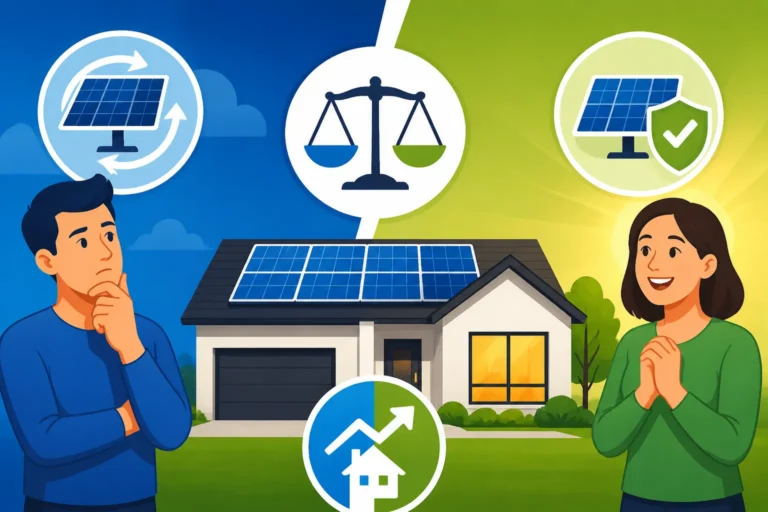
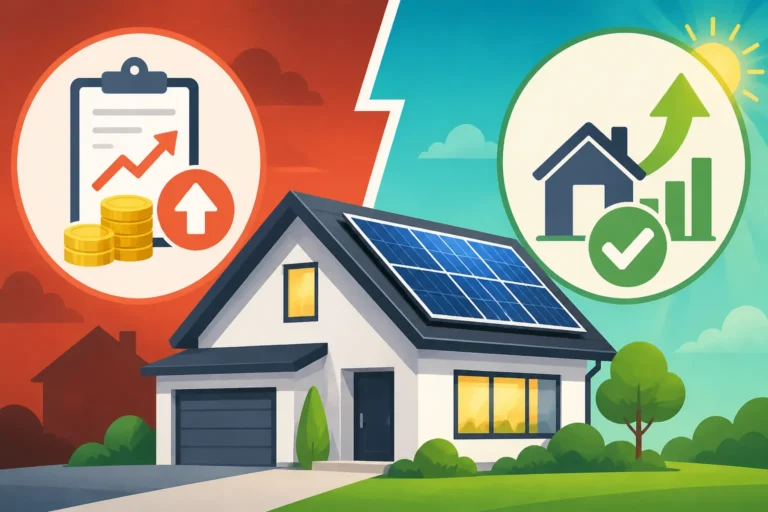
It's not just about the cost of electricity, either. The value of your home can also be affected. Many studies show that solar panels can increase home value, which is another form of return on your investment, though it's not typically factored into the direct payback calculation. You might be interested in exploring more about whether Do Solar Panels Increase Home Value? or even Selling a House With Solar Panels as part of your overall financial picture.
Factors Influencing Your Solar Payback Time
The length of your solar payback period in Ohio isn't a one-size-fits-all number. It's a dynamic figure influenced by a combination of factors, some universal and some specific to your location and situation.
First, the initial cost of your system is paramount. This includes the price of the panels, inverters, racking, labor, permits, and any other associated fees. Quality components from reputable brands like Qcells or REC Solar might have a higher upfront cost but often come with better efficiency and longer warranties, potentially leading to faster savings over time. You might want to look into How Much Do Solar Panels Cost? 2026 Guide for a broader understanding of pricing.
Second, your average electricity consumption and local utility rates play a massive role. If you use a lot of electricity and your utility company, like AEP Ohio or Duke Energy, charges higher rates, your monthly savings from solar will be greater, thus shortening your payback time. Conversely, if your electricity usage is low or your rates are cheap, the financial impact of solar will be smaller.
Third, available incentives and rebates are game-changers. While the federal solar tax credit has phased out, states and local utilities often offer various programs. Ohio, for instance, has varying net metering policies and often property tax exemptions for solar. These incentives directly reduce the net cost of your system or increase your savings, dramatically impacting how quickly you break even. Learning about Utility Solar Rebates: How to Find Yours can be incredibly beneficial.
Finally, the amount of sunlight your roof receives and the efficiency of your panels directly affect how much electricity your system generates. A south-facing roof with minimal shading will produce more power than a north-facing, heavily shaded one, accelerating your path to payback. Even factors like the local climate and weather patterns in Ohio can subtly influence your system's output throughout the year.
Calculating Your Solar Payback in Ohio
Let's get down to the brass tacks: what does the payback period actually look like for an Ohio homeowner? While a precise figure requires a personalized quote, we can explore the general landscape and what you can expect. This isn't just theory; it's about real numbers and real impact on your wallet.
Average Solar Costs and Savings in Ohio
As of late 2025/early 2026, the average cost of solar panels in Ohio generally falls within the range of $2.70 to $3.00 per watt. For a typical 7-kilowatt (kW) residential solar system – a common size for an average-sized Ohio home – this translates to an upfront cost of approximately $18,900 to $21,000 before any incentives. Keep in mind this is an average, and specific costs can vary widely based on your chosen installer, equipment quality, and installation complexity. For more detailed state-specific pricing, you can check out Solar Panel Cost in Ohio.
Now, for savings. Ohio's average residential electricity rate is around 14 to 15 cents per kilowatt-hour (kWh). If your 7 kW system is offsetting 100% of your usage (say, 900 kWh per month), you could be saving roughly $126 to $135 each month on your electricity bill. Over a year, that's about $1,512 to $1,620. This might seem like a straightforward calculation, but electricity rates tend to rise over time, meaning your savings actually grow each year. This is a crucial element when considering Is Solar Worth It in Ohio? and its long-term financial benefits.
Ohio-Specific Incentives That Shorten Payback
Unlike some states with very aggressive statewide incentives, Ohio's solar landscape relies more heavily on localized programs and the long-term savings from reduced electricity bills. However, there are still key programs that significantly impact your payback period:
- Property Tax Exemption: This is a big one for Ohio homeowners. Under Ohio Revised Code 5709.79, residential solar energy systems are exempt from property tax assessments. This means that while solar panels undoubtedly increase the value of your home, you won't be taxed extra for that added value. This directly impacts your long-term cost of ownership and helps shorten the payback period. Understanding Solar Property Tax Exemptions by State can really help you see the hidden savings.
- Net Metering: Most utilities in Ohio offer some form of net metering. This allows you to send any excess electricity your solar panels produce back to the grid in exchange for credits on your bill. These credits can then offset your usage at times when your panels aren't producing enough, like at night or on cloudy days. The specific rate at which you're credited varies by utility provider (e.g., AEP Ohio, Duke Energy, Toledo Edison, Cleveland Electric Illuminating, Ohio Edison), so it's vital to know your utility's specific policy. While it might not be as generous as full retail net metering in other states, it's still a significant financial benefit.
- Local and Utility Rebates: While a statewide rebate program is not currently in place, some individual utilities or municipal programs might offer rebates. These are often capacity-limited or time-sensitive, so it's worth checking with your specific utility provider or local energy initiatives. Tools like Modernize can help connect you with local installers who are familiar with all current and available programs in your specific area.
A Step-by-Step Calculation Example
Let's walk through a simplified example to illustrate how you might calculate a potential payback period in Ohio.
Assumptions for a Typical Ohio Home:
- System Size: 7 kW (7,000 watts)
- Average Cost per Watt: $2.85/watt
- Total System Cost (Before Incentives): $19,950
- Average Annual Production: 8,750 kWh (assuming 1,250 kWh/kW/year, which is typical for Ohio)
- Average Electricity Rate: $0.145/kWh
- Annual Electricity Savings (Gross): 8,750 kWh * $0.145/kWh = $1,268.75
Calculating the Payback Period:
- Determine Net System Cost: For this example, let's assume there are no significant utility rebates beyond net metering and the property tax exemption is a continuous saving rather than an upfront reduction. So, for the purpose of a simple payback period calculation (excluding the federal tax credit which has expired), your net cost is still $19,950.
- Calculate Annual Savings: Your initial annual savings are $1,268.75.
- Divide Net Cost by Annual Savings: $19,950 / $1,268.75 per year = approximately 15.7 years.
Important Considerations:
- Electricity Rate Increases: This calculation is static. Historically, electricity rates have risen, often by 2-4% annually. If rates increase, your annual savings grow, and your actual payback period shortens. For instance, if rates increase by 3% per year, your payback could drop to around 12-14 years.
- System Degradation: Solar panels do degrade slightly over time, typically losing 0.5% to 1% efficiency per year. This slightly extends the payback, though modern panels are very robust.
- Maintenance Costs: While solar panels require minimal maintenance, accounting for occasional cleaning or potential repairs (though most are covered by warranties) is wise.
- Financing Costs: If you finance your system with a solar loan, the interest payments will extend your effective payback period. Cash purchases typically offer the fastest payback. This is why it's worth looking at Solar Loans: Complete Guide and how they affect your overall ROI.
As you can see, even without a federal tax credit, a solar system in Ohio could realistically pay for itself in about 12 to 16 years. After that point, you're enjoying virtually free electricity for the remaining 10-15+ years of your system's lifespan.
| Factor | Impact on Payback Period (Ohio) | Notes |
|---|---|---|
| System Cost | Direct | Average $2.70-$3.00/watt. Higher cost = longer payback. |
| Electricity Rates | Direct | Higher Ohio utility rates (e.g., $0.145/kWh) lead to faster savings and shorter payback. Future rate increases shorten payback further. |
| Net Metering | Significant | Credits for excess generation reduce bills. Policies vary by AEP Ohio, Duke Energy, Toledo Edison, CEI, Ohio Edison. The more generous the policy, the shorter the payback. |
| Property Tax Exemption | Significant | Prevents increased property taxes due to solar installation, saving money annually and effectively shortening long-term payback. |
| Roof Orientation/Shading | Direct | Optimal south-facing, unshaded roofs generate more power, leading to higher savings and a quicker payback. |
| Panel Efficiency | Direct | More efficient panels (e.g., higher wattage, better technology) produce more power from the same footprint, increasing savings and shortening payback. |
| Financing Costs | Inverse | If you take out a solar loan, interest payments will extend the overall time until your total outlay (loan payments + system cost) is recouped. Cash purchases or low-interest loans offer quicker true financial payback. |
| Federal Solar Tax Credit | (No longer applicable for new systems in 2026) | Historically offered 30% of system cost, significantly reducing upfront investment and shortening payback. Its absence means state/local incentives and bill savings are even more critical now. For those who installed before 2026, understanding How to Claim Remaining Solar Tax Credit Carryforward is important. |
| System Degradation | Minor | Panels typically lose ~0.5-1% efficiency per year. Over a 25-year lifespan, this slightly extends the payback period, but it's often negligible compared to electricity rate increases. |
Beyond the Numbers: The Long-Term Value of Solar in Ohio
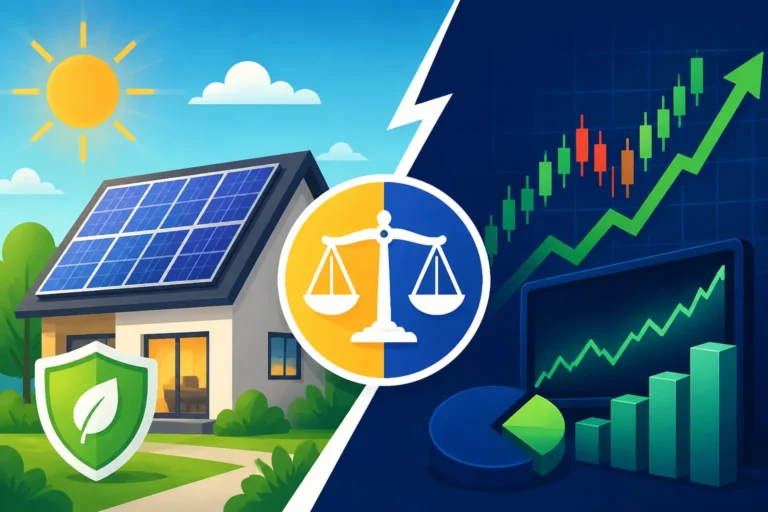
While the payback period is a critical metric, it's really just the beginning of your solar journey. Focusing solely on that number can sometimes cause you to miss the bigger picture of the long-term benefits and the peace of mind that comes with generating your own clean energy. Think about it: once your system has paid for itself, you're looking at years, often decades, of essentially free electricity.
Why Solar's Value Extends Past the Payback Point
The moment you hit that break-even point, your solar system transforms into an income-generating asset. Every kilowatt-hour it produces thereafter is pure savings in your pocket. Given that most quality solar panel systems come with performance warranties extending 25 years or more, and often last well beyond that, you're looking at a significant period of positive cash flow. Imagine not having to worry about utility rate hikes for decades – that's a powerful financial buffer.
Furthermore, solar energy insulates you from the volatile energy market. Ohio's electricity prices, like those across the nation, are subject to fluctuations due to fuel costs, infrastructure investments, and regulatory changes. By locking in a significant portion of your energy costs, you gain predictability in your household budget, which is an invaluable benefit that goes beyond a simple payback calculation. This stability is one of the main reasons many people ask, Are Solar Panels Worth It in 2026? even without the federal incentive.
Resale Value and Energy Independence
Beyond direct bill savings, a solar system significantly enhances the value and marketability of your home. Real estate studies consistently show that homes with owned solar panels sell faster and for a higher price than comparable non-solar homes. This added value isn't typically included in the simple payback calculation, but it's a huge component of your overall return on investment. If you decide to sell your home years down the line, a paid-off solar system can be a major selling point, making your property more attractive and often justifying a higher asking price.
Then there's the less tangible, but equally important, benefit of energy independence. For many, the ability to generate their own power, reduce their carbon footprint, and contribute to a cleaner environment is a powerful motivator. While Ohio might not face the same grid stability issues as, say, California, having a solar system – especially when paired with a battery – offers peace of mind during power outages. This sense of self-reliance and environmental stewardship is a significant aspect of solar's long-term value that financial models often can't fully capture. You can learn more about this by considering questions like, Do Solar Panels Work During a Power Outage?
Navigating the Ohio Solar Market
Embarking on your solar journey in Ohio means making informed decisions, especially when it comes to choosing your partners and understanding the nuances of the local market. Getting this right can significantly impact your financial returns and overall satisfaction.
Choosing the Right Installer and Equipment
Selecting a reputable solar installer is perhaps one of the most crucial steps. A good installer will not only provide quality equipment and installation but also guide you through the permitting process, explain your utility's net metering rules, and ensure you claim all eligible local incentives. Look for companies with a strong track record, positive customer reviews, and proper licensing and insurance. Don't be afraid to get multiple quotes and ask plenty of questions. This due diligence is paramount. Platforms like Modernize can be incredibly helpful for finding pre-vetted, local solar installers in Ohio who understand the specific incentives and regulations in your area.
When it comes to equipment, consider the balance between cost and quality. While budget-friendly options exist, investing in high-efficiency, durable panels from brands like Maxeon (SunPower), Qcells, or Jinko Solar and reliable inverters (such as Enphase microinverters or SolarEdge optimizers) often leads to greater long-term savings and a quicker effective payback. These higher-quality components typically come with better warranties, protecting your investment for decades. It's not just about the upfront price; it's about the performance and longevity you're getting.
Common Pitfalls to Avoid for a Quicker Payback
To ensure your solar payback period is as swift and beneficial as possible, be aware of common missteps:
- Ignoring Shading: Even minor shading from trees or nearby structures can significantly reduce your system's output. A good installer will perform a thorough site assessment to account for this. Don't just assume your roof is perfect; get an expert opinion.
- Not Understanding Net Metering: Policies vary. Make sure you fully grasp how your specific utility (like AEP Ohio or Columbus Southern Power) credits you for excess energy. Some utilities might offer less favorable rates than others, which could impact your payback. This research is crucial to maximizing your savings, especially since Net Metering Explained: How It Works by State can differ so much.
- Falling for High-Pressure Sales Tactics: Avoid installers who pressure you into signing on the first visit or make outlandish promises. A reputable company will provide detailed, transparent quotes and give you time to make an informed decision.
- Failing to Maintain Your System: While solar panels require little maintenance, occasional cleaning (especially after heavy pollen seasons or dust storms) and monitoring your system's performance can ensure it operates at peak efficiency. Neglecting this could slightly extend your payback time.
- Not Considering Future Energy Needs: If you plan on adding an electric vehicle, installing a heat pump, or expanding your home in the coming years, factor that into your system sizing now. Undersizing your system means you'll still have a significant electricity bill, delaying your full return.
By being diligent in your research, partnering with trusted professionals found through resources like Modernize, and understanding the local Ohio energy landscape, you can set yourself up for a successful solar installation with a strong financial return. Your solar investment is a marathon, not a sprint, and proper planning ensures you reach that profitable finish line sooner.
Disclaimer
This article provides general information about solar payback periods in Ohio and should not be considered financial or legal advice. Individual results will vary based on specific circumstances, including electricity usage, system size, actual installation costs, available incentives at the time of purchase, and utility rates. We strongly recommend consulting with multiple qualified solar professionals and financial advisors to obtain personalized estimates and understand all terms and conditions before making any purchasing decisions. All incentive programs are subject to change without notice.