Is Solar Installation Cheaper in Some States?
It can feel incredibly frustrating when you're trying to budget for a big home improvement like solar panels, only to find wildly different price tags depending on where you live. You might see a neighbor in another state bragging about low installation costs, while you're getting quotes that seem significantly higher. This guide is here to break down exactly why solar installation costs vary so much from state to state and what you can do to ensure you're getting a fair deal, no matter where your home is.
The Truth About Solar Costs Across State Lines
One of the biggest misconceptions about going solar is that there's a universal price tag for a system. If only it were that simple! The reality is, the cost of installing solar panels on your home is a dynamic figure, heavily influenced by your geographic location. Just like the price of a gallon of milk or a home's square footage, solar costs fluctuate significantly from state to state, and even within different regions of the same state.
Why Solar Pricing Isn't One-Size-Fits-All
Think about all the moving parts involved in a solar installation: the panels themselves, inverters, racking, labor, permits, interconnection fees, and even the marketing costs of the solar companies. Each of these components can have a different price point depending on where you live. For example, in a state with a high cost of living, like California or Massachusetts, labor rates for skilled electricians and installers are naturally going to be higher than in a state with a lower cost of living, like Arizona or Texas. This difference alone can add thousands to your overall project.
Then there's the local market competition. In states where solar is hugely popular and there are many installers vying for business, prices tend to be more competitive. Conversely, in areas where solar adoption is still relatively new, fewer installers might mean less competition and potentially higher prices. Furthermore, supply chain logistics play a role. Shipping panels and equipment to a remote area might incur higher costs than delivering to a bustling solar hub. All these variables combine to create a truly unique cost landscape for every homeowner.
General Trends: Where Solar is More (or Less) Expensive
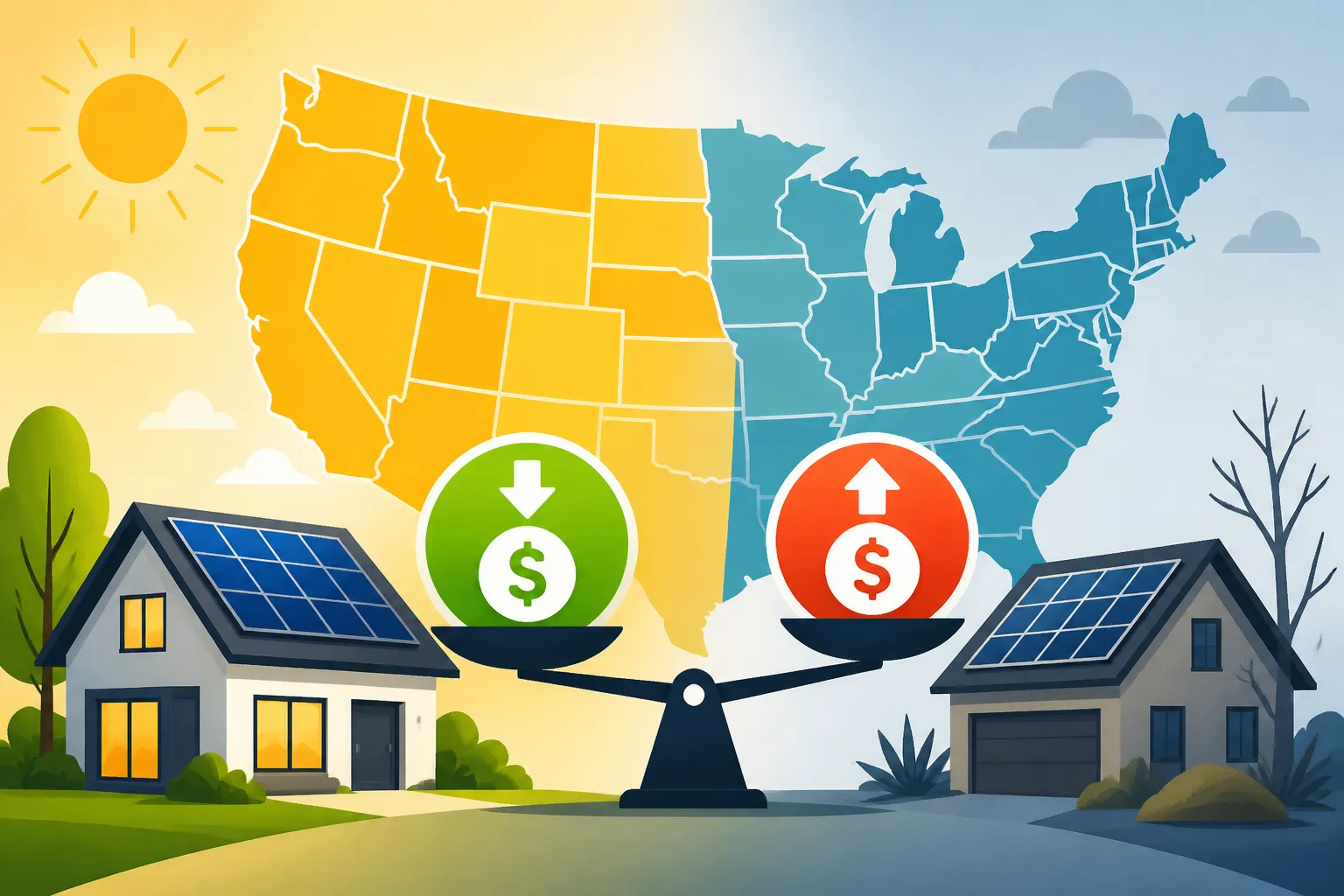
While exact prices fluctuate, we can observe some general trends. States with robust solar markets, often driven by strong state incentives and high electricity rates, tend to have lower net costs after incentives, even if the gross installation price is on the higher side. California, for instance, has a reputation for higher upfront costs due to labor and regulatory expenses, but it has historically offered significant incentives that brought the net price down for homeowners, though recent changes like California Net Metering Rules in 2026] have impacted savings models. Similarly, states in the Northeast, like New York and Massachusetts, often have higher gross costs but fantastic local programs like New York NY-Sun & State Solar Tax Credit (25%)] or Massachusetts SMART Program Explained] that can drastically improve the return on investment.
On the flip side, states with lower overall electricity costs or less aggressive incentive programs might see lower gross installation prices, but the financial savings over time might be less dramatic, extending the Solar Panel Payback Period Explained]. States like Florida and Texas, for example, have great solar potential due to abundant sunshine, and while their gross costs might be reasonable, the absence of strong statewide net metering or other incentives can affect the overall financial appeal. Understanding these general trends can help set realistic expectations as you begin your solar journey.
Key Factors Driving Solar Cost Differences by State
It's not just about sunshine; a multitude of factors contribute to the varied costs of solar installation across the United States. Delving into these specifics can help you understand why your neighbor in another state might be paying a different price.
State-Specific Incentives and Rebates
This is arguably the biggest differentiator when it comes to the final, out-of-pocket cost of solar. While the federal solar tax credit (the ITC) is a nationwide incentive, individual states, counties, and even utility companies offer their own unique programs. These can include state tax credits, property tax exemptions, sales tax exemptions, performance-based incentives (PBIs), and Renewable Energy Certificates (RECs). For example, a state might offer a significant state income tax credit that directly reduces your tax liability, or a property tax exemption that ensures your home's value increase from solar doesn't hike your annual property taxes. Looking into Solar Property Tax Exemptions by State] and Solar Sales Tax Exemptions by State] can reveal substantial savings.
Then there's the ever-important Net Metering Explained: How It Works by State] policy, which dictates how you're credited for excess solar energy you send back to the grid. Some states offer full retail net metering, giving you the same rate for your exported energy as you pay for imported energy. Others, like California with NEM 3.0, have moved to net billing or avoided-cost rates, which offer lower compensation for your excess power. These policies dramatically impact your long-term savings and thus the overall value proposition of solar. States with strong SREC markets, like New Jersey and Maryland, allow homeowners to sell SRECs Explained: Selling Solar Renewable Energy Credits] generated by their systems, adding another revenue stream that varies significantly by location. You'll find programs like New Jersey SREC-II / SuSI Program Guide] providing strong financial benefits.
Labor and Operational Costs
The cost of labor is a critical component of any solar installation, and it varies widely across the country. In urban areas with higher costs of living and stronger unionization, such as cities in California, New York, or the Pacific Northwest, labor rates for skilled electricians and installers will naturally be higher. This is simply due to the prevailing wage rates and general economic conditions in that region. Conversely, in more rural areas or states with lower costs of living, labor costs tend to be more modest.
Beyond direct labor, operational costs for solar companies differ. Things like office rent, insurance premiums, transportation expenses, and even marketing can be higher in certain states or metropolitan areas. An installer operating in Boston, Massachusetts, faces a different overhead structure than one in Phoenix, Arizona. These costs inevitably get factored into the overall price of a solar system, contributing to the state-by-state variations you observe in solar quotes.
Permitting and Regulatory Landscape
Navigating the local bureaucracy is an unavoidable part of going solar, and the complexity and cost of this process can vary significantly from one municipality or state to another. Every solar installation requires permits from local building departments, electrical inspections, and often approval from your utility company for interconnection. The fees associated with these permits can range from a few hundred dollars to well over a thousand, depending on your city or county.
Furthermore, some states and local jurisdictions have more stringent building codes or unique requirements that can add complexity and cost to an installation. For instance, areas prone to hurricanes or high winds might require more robust racking systems or specialized installation techniques. Even the speed and efficiency of the permitting office can affect costs. If an installer faces long delays in getting approvals, those administrative costs can subtly creep into the project price. Understanding the local Solar Permitting & Interconnection PTO Explained] process is crucial. You might find that the process in a city like Los Angeles is far more intricate and costly than in a smaller town in Oklahoma, simply due to the volume of applications and specific seismic or fire codes.
How to Navigate State-Specific Solar Costs
Given the wide range of factors influencing solar prices, it might feel overwhelming to figure out what's truly a good deal. But don't fret! There are concrete steps you can take to make an informed decision and ensure you're getting the best possible value for your investment.
Researching Local Incentives
Before you even start looking at panels or installers, dive deep into the specific incentives available in your exact location. This means looking beyond just federal programs and exploring state, county, city, and even utility-specific offerings. Websites like the Database of State Incentives for Renewables & Efficiency (DSIRE) are invaluable resources for finding up-to-date information on programs relevant to your address. Don't assume anything; what applies to a neighbor 50 miles away might not apply to you.
Check for state tax credits, which can be a direct reduction from your state tax bill, or grants that don't need to be repaid. Explore if your state offers Utility Solar Rebates How to Find Yours] from local power companies. These are often one-time cash payments or bill credits that reduce your upfront costs. For instance, in Maryland, beyond SRECs, residents might find specific utility rebates. Understanding these can profoundly impact your overall Solar ROI & 25-Year Savings Breakdown]. Remember to also check for programs designed for specific demographics, like Low-Income Solar Programs & Assistance], if they apply to your situation.
Getting Multiple Quotes
This is perhaps the single most important piece of advice anyone can give you when going solar. Never, ever settle for just one quote. The solar market is competitive, and prices can vary significantly between different installers, even within the same geographic area. By getting at least three to five quotes from reputable local companies, you can compare not only the bottom-line price but also the equipment being offered, the warranty terms, and the installer's reputation.
When comparing quotes, make sure you're looking at comparable systems: same system size (kW), similar panel efficiency, and inverter technology (e.g., microinverters vs. string inverters). Ask specific questions about what's included in the price – does it cover all permitting fees, interconnection applications, and potential electrical upgrades? Companies like Modernize can help simplify this process by connecting you with pre-screened installers in your area, making it easier to gather multiple competitive bids without having to do all the legwork yourself. This comparison helps you avoid Solar Dealer Fees Explained Hidden Loan Costs] and hidden costs.
Understanding Your Total Investment
A solar quote isn't just about the panels on your roof. It's a comprehensive package that includes design, equipment, labor, permitting, and often long-term monitoring. Beyond the initial installation cost, consider the long-term financial implications. Factor in potential electricity bill savings, the value of any incentives, and how those change over time. For example, if your state's net metering policy changes, how will that affect your savings? What's the projected Solar Panel Cost Per Watt Explained] for your system?
Also, think about the value solar adds to your home. Do Solar Panels Increase Home Value]? Absolutely, in most cases, they do, which is another form of return on your investment. Look at the total system cost, subtract any upfront incentives or rebates, and then consider your projected monthly savings. This holistic view will give you a clearer picture of your true investment and how it compares to your current electricity expenses, allowing you to answer the question, "Is Solar Worth It in 2026] for my specific situation?"
Here's a comparison of average gross solar costs and key influencing factors in a few different states:
| State | Average Gross Cost (per Watt) | Key Influencing Factors | Typical Incentives (beyond ITC) |
|---|---|---|---|
| California | $3.50 – $4.50 | High labor costs, stringent permitting, high electricity rates | NEM 3.0 (Net Billing), PACE financing, some local rebates |
| Texas | $2.80 – $3.80 | Lower labor costs, moderate permitting, strong sun, some local utility buyback programs | Local utility rebates (e.g., CPS Energy, Austin Energy), no statewide net metering/tax credits |
| Florida | $2.90 – $3.90 | Moderate labor, abundant sunshine, simple permitting | Sales tax exemption, property tax exemption, some local utility rebates |
| New York | $3.80 – $4.80 | High labor costs, complex permitting, cold weather considerations | NY-Sun program (declining block incentives), state tax credit (25%), property tax exemption, SREC program (NYSERDA) |
| Arizona | $2.70 – $3.70 | Lower labor costs, strong sun, competitive market | Property tax exemption, some utility rebates, net billing (less favorable than full net metering) |
Note: These are average gross costs per watt and can vary significantly based on system size, installer, equipment chosen, and specific location within the state.
Final Thoughts on State-by-State Solar Costs
As you can see, the question of "is solar installation cheaper in some states?" is a resounding yes! The price you pay for a solar energy system is a complex mosaic of labor costs, equipment prices, local regulations, and the ever-important state and local incentives. What might be a steep upfront investment in one state could be significantly offset by generous rebates or tax credits in another, ultimately leading to a lower net cost.
The key takeaway here is that your solar journey needs to be highly personalized. Don't get discouraged by high initial estimates if you're in a state with strong incentives. Conversely, don't assume a low gross price in a state with fewer incentives automatically means a better long-term deal. It's all about doing your homework, understanding the full financial picture, and getting multiple, detailed quotes. Use resources like Modernize to connect with local installers, ask plenty of questions, and compare every aspect of the proposals you receive. With careful planning, you can make solar work for your budget and your home, no matter where you live.
Disclaimer
Please note that the information provided in this article is for general guidance and informational purposes only. Solar incentives, costs, and regulations are subject to change rapidly and vary significantly by location and utility provider. It is highly recommended to consult with local solar professionals, tax advisors, and utility companies to get the most accurate and up-to-date information for your specific situation.