Can I Combine State and Local Solar Incentives?
When you start looking at the price tag of a home solar installation, it is completely normal to feel a bit of "sticker shock." You know the long-term savings are there, but the upfront cost can feel like a massive mountain to climb. This guide clears up the confusion surrounding whether you can combine state and local solar incentives to lower that mountain, helping you navigate the complex world of "incentive stacking" to maximize your financial return.
Understanding the Concept of Stacking Solar Incentives
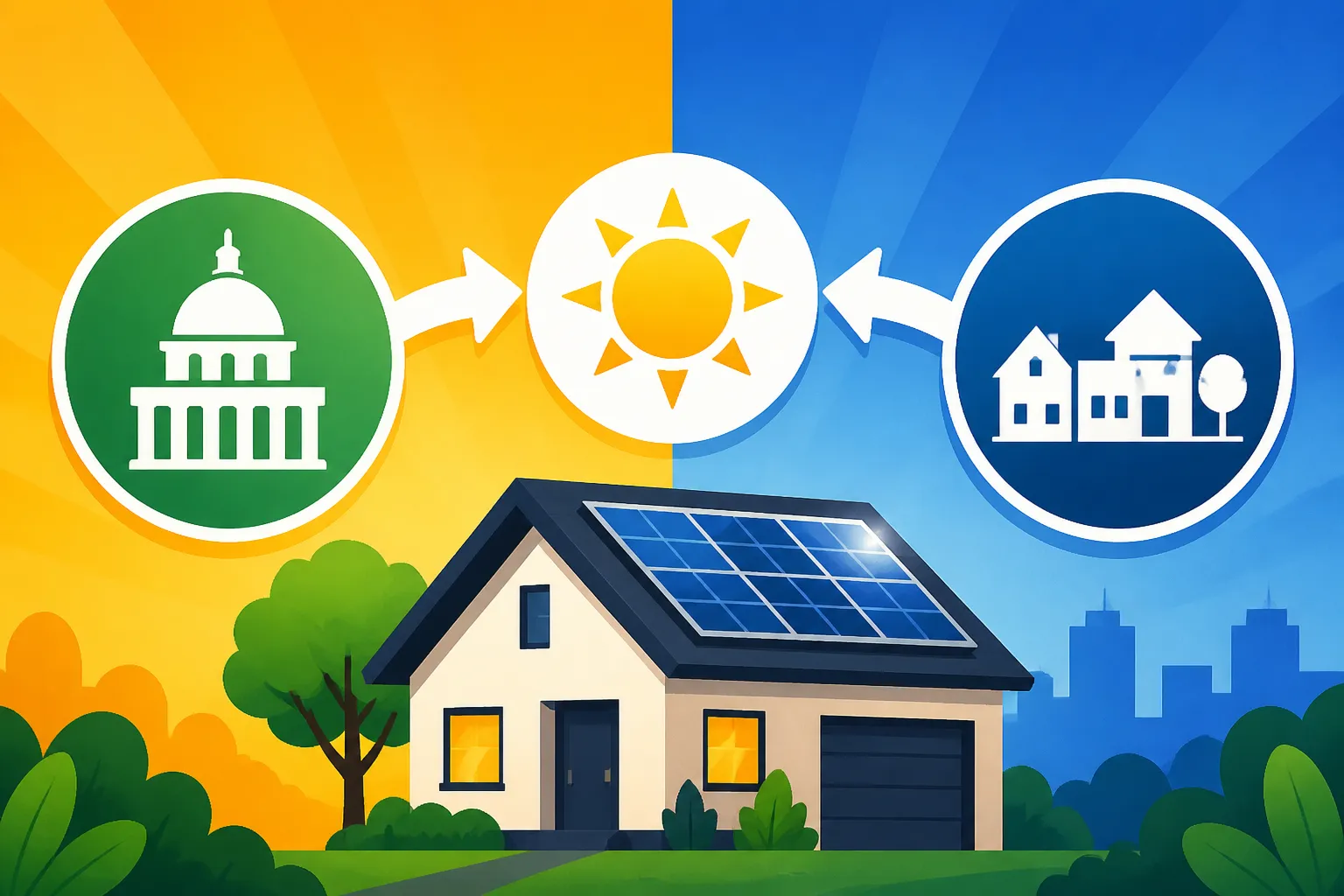
The short answer is a resounding yes—in almost every jurisdiction, you can absolutely combine, or "stack," different types of solar incentives. Think of it like using a manufacturer's coupon on top of a store sale. Most state governments and local municipalities designed these programs to work in tandem because their ultimate goal is the same: to get more clean energy onto the grid. However, the way these programs interact can be tricky, and if you don't play your cards right, you might leave thousands of dollars on the table.
The Difference Between State and Local Programs
State-level incentives are typically broader and managed by state energy offices or departments of revenue. These usually include things like state income tax credits or massive grant programs like the State Solar Incentives: Complete 2026 Guide. For example, if you live in a state with a robust renewable energy portfolio standard, the state might offer a flat rebate for every kilowatt of solar you install.
Local incentives, on the other hand, are much more "hyper-local." These are often provided by your specific city, county, or even your municipal utility provider. A city like Austin, Texas, might have its own specific rebate through Austin Energy that is completely separate from anything the state of Texas offers. These local perks are often designed to solve specific grid issues in a small geographic area, which is why they can sometimes be even more generous than state-level programs. When you use a platform like Modernize to find local installers, they are usually the ones who have the "boots on the ground" knowledge to tell you exactly which city-specific grants are currently funded and which are tapped out for the year.
Why Stacking Matters for Your ROI
If you only rely on one incentive, your "payback period"—the time it takes for the electricity savings to cover the cost of the system—might be 10 or 12 years. But when you start stacking, that number can drop significantly. Imagine getting a state tax credit, a local utility rebate, and then realizing you are also eligible for Solar Sales Tax Exemptions by State which saves you another 6% to 8% right at the point of purchase.
Suddenly, your net cost has dropped by 40% or 50%. This isn't just about saving money; it's about making the math work so that solar becomes an obvious financial "win" rather than a luxury purchase. I’ve seen homeowners in high-incentive areas like Massachusetts or New York get their systems down to a price point where the monthly loan payment for the panels is actually lower than their old electric bill from day one.
Common State-Level Incentives You Can Mix
State governments have become very creative in how they encourage solar adoption. The most common "stackable" state-level benefits include income tax credits and Performance-Based Incentives. Unlike a one-time rebate, these programs often provide value over several years, which can be a literal lifesaver if you are trying to manage a household budget while transitioning to clean energy.
State Tax Credits vs Performance-Based Incentives
A state solar tax credit is a direct reduction in the amount of state income tax you owe. If you owe $3,000 in state taxes and have a $2,000 solar credit, you only pay $1,000. It’s simple and effective. But many states are moving toward Performance-Based Incentives (PBI) Explained instead. With a PBI, the state pays you based on the actual energy your panels produce.
For instance, in some parts of the Northeast, you might earn a certain number of cents for every kilowatt-hour your system generates over a 10-year period. You can usually claim a state tax credit in the year you install the system and still collect PBI payments every month for a decade. This "stack" provides both a quick win for your bank account and a long-term revenue stream. Some people even use their PBI checks to make extra principal payments on their solar loans, shortening their debt even further.
Sales and Property Tax Exemptions
These are the "quiet" incentives that people often forget about, but they are incredibly powerful. Many states offer a Solar Property Tax Exemptions by State policy. This means that while your home value increases because you added solar panels, the local tax assessor is legally barred from raising your property taxes based on that added value.
When you combine this with a sales tax exemption, you are saving money both at the time of installation and every year you own the home. It’s an "invisible" stack that adds up to thousands of dollars over the 25-year lifespan of the system. I always tell people to check their local statutes because sometimes these exemptions require you to file a specific form with the county within 60 days of installation, or you might lose out for that tax year.
| Incentive Type | Source | When You Get It | Impact on System Cost |
|---|---|---|---|
| State Tax Credit | State Gov | Tax Season | Direct reduction of net cost |
| Utility Rebate | Local Utility | Post-Installation | Immediate cash back |
| SRECs | State Market | Monthly/Quarterly | Long-term revenue stream |
| Property Tax Exemption | County/City | Annually | Prevents tax increases |
| Sales Tax Exemption | State Gov | Point of Sale | Reduces upfront price |
Navigating Local and Utility-Specific Rebates
This is where the real "detective work" comes in. Local incentives are often the most lucrative, but they are also the most volatile. They can appear overnight when a city gets a federal grant and disappear just as quickly when the funds are exhausted. Understanding who provides your power—and what their specific goals are—is the key to unlocking these hidden gems.
Municipal Utility Rebates vs Investor-Owned Utilities
There is a big difference between getting power from a massive investor-owned utility (IOU) and a small municipal utility. IOUs are often mandated by the state to offer certain programs, which can be found in a Utility Solar Rebates: How to Find Yours search. These programs are usually stable but might have more "red tape."
Municipal utilities, however, are owned by the city. They often have very specific local goals, like reducing the load on a specific substation that is nearing capacity. Because of this, they might offer a "kicker" rebate if you install solar in a certain neighborhood or if you add a battery. If you are looking at Are Solar Batteries Still Eligible for Incentives in 2026? then your local utility might have a program that pays you to occasionally draw power from your battery during peak heatwaves. This is a classic example of stacking: you get the state benefit for the panels and the local utility benefit for the battery "grid services."
Low-Income and Targeted Local Grants
Many cities are now focusing on "energy equity." If you live in a designated "Green Zone" or meet certain income requirements, you might be eligible for Low-Income Solar Programs & Assistance that stack on top of everything else. Some of these programs are so robust that they can cover the entire remaining cost of a system after the state tax credit is applied.
I’ve worked with homeowners who were able to combine a federal grant, a state low-income rebate, and a local community development block grant to get solar for almost $0 out of pocket. These programs are often administered by local non-profits or housing authorities. When you use Modernize to compare quotes, ask the installers specifically about "social equity" or "low-to-moderate income" (LMI) "adders." Many contractors specialize in these programs and know exactly how to fill out the paperwork to ensure you get every penny you're entitled to.
Practical Steps to Maximize Your Incentive Stack
So, how do you actually go about claiming all of this? You can't just assume it will happen automatically. In the world of solar, the "squeaky wheel" gets the rebate. You have to be proactive and organized to ensure that one incentive doesn't accidentally disqualify another (though this is rare, it’s worth checking the fine print).
Researching Your Local Incentive Landscape
Start by creating a spreadsheet. It sounds tedious, I know, but when you’re dealing with $30,000+ systems, it’s worth an hour of work. List every program you find, the expiration date of the funds, and whether the incentive is "taxable income." For example, some utility rebates are considered taxable income by the IRS, which might slightly change the math on your How to Claim Remaining Solar Tax Credit Carryforward if you still have credits from previous years.
Don't forget to look at the "hidden" perks. Does your local city offer "expedited permitting" for solar? That doesn't put cash in your pocket, but it saves you weeks of waiting and potential interest on a bridge loan. Some areas also have SRECs Explained: Selling Solar Renewable Energy Credits which are a separate market-based incentive you can stack on top of your state and local rebates. Selling these credits can provide a nice quarterly "bonus" check just for letting your panels sit in the sun.
The Role of Professional Solar Consultants
Let’s be honest: most of us aren’t tax experts or energy policy wonks. This is where a professional installer becomes your best ally. A good installer isn't just a guy with a ladder; they are a consultant who knows the specific nuances of your local grid. They should be able to tell you, "If we size the system at 9.9 kW instead of 10.1 kW, you qualify for the 'Small System' rebate which is actually $500 more."
When you are vetting companies through Modernize, ask them for a "Funds Breakdown." A reputable company will provide a line-item estimate showing the gross cost, and then every single state and local incentive they plan to apply for on your behalf. If they seem vague about local rebates, that's a red flag. They should know exactly which programs are stackable in your specific zip code because they’ve likely filled out those same forms for your neighbors.
Potential Pitfalls When Combining Incentives
While stacking is generally encouraged, there are a few "gotchas" you should watch out for. The most common issue is the "Order of Operations." Some state programs require you to subtract your local utility rebate from the total system cost before you calculate your state tax credit.
For example, if your system costs $20,000 and you get a $2,000 utility rebate, the state might only allow you to take a tax credit based on the remaining $18,000. It’s still a win-win, but if you don't account for that in your initial budget, you might be surprised come tax time. Always check if a program is "Gross-based" (based on the total price) or "Net-based" (based on what you actually paid after other rebates). This distinction can save you from a major headache later on.
Disclaimer
The information provided in this guide is for educational purposes only and does not constitute financial, legal, or tax advice. Solar incentive programs, including state tax credits, local rebates, and property tax exemptions, are subject to change based on legislative actions and funding availability. Always consult with a qualified tax professional or a certified solar consultant to verify your eligibility for specific programs in your area before making a purchase.