Does Ohio Have Net Metering in 2026?
Many Ohio homeowners are feeling the pinch of rising utility rates from AEP and Duke Energy, leading them to wonder if the sun can actually pay for their power. Navigating the Public Utilities Commission of Ohio regulations feels like a full-time job when you just want a lower bill. This guide breaks down exactly how net metering works in Ohio, ensuring you know how to turn your rooftop into a credit-generating machine.
The Reality of Ohio Net Metering Policies
If you are living in the Buckeye State and looking at your monthly electric bill with a sense of dread, you are not alone. The question of Does Ohio Have Net Metering in 2026? is one I hear constantly from folks in Columbus, Cleveland, and even the smaller townships. The short answer is yes, Ohio still mandates net metering for investor-owned utilities (IOUs). This includes the heavy hitters like AEP Ohio, Duke Energy, AES Ohio (formerly DP&L), and the FirstEnergy subsidiaries like Ohio Edison, the Illuminating Company, and Toledo Edison.
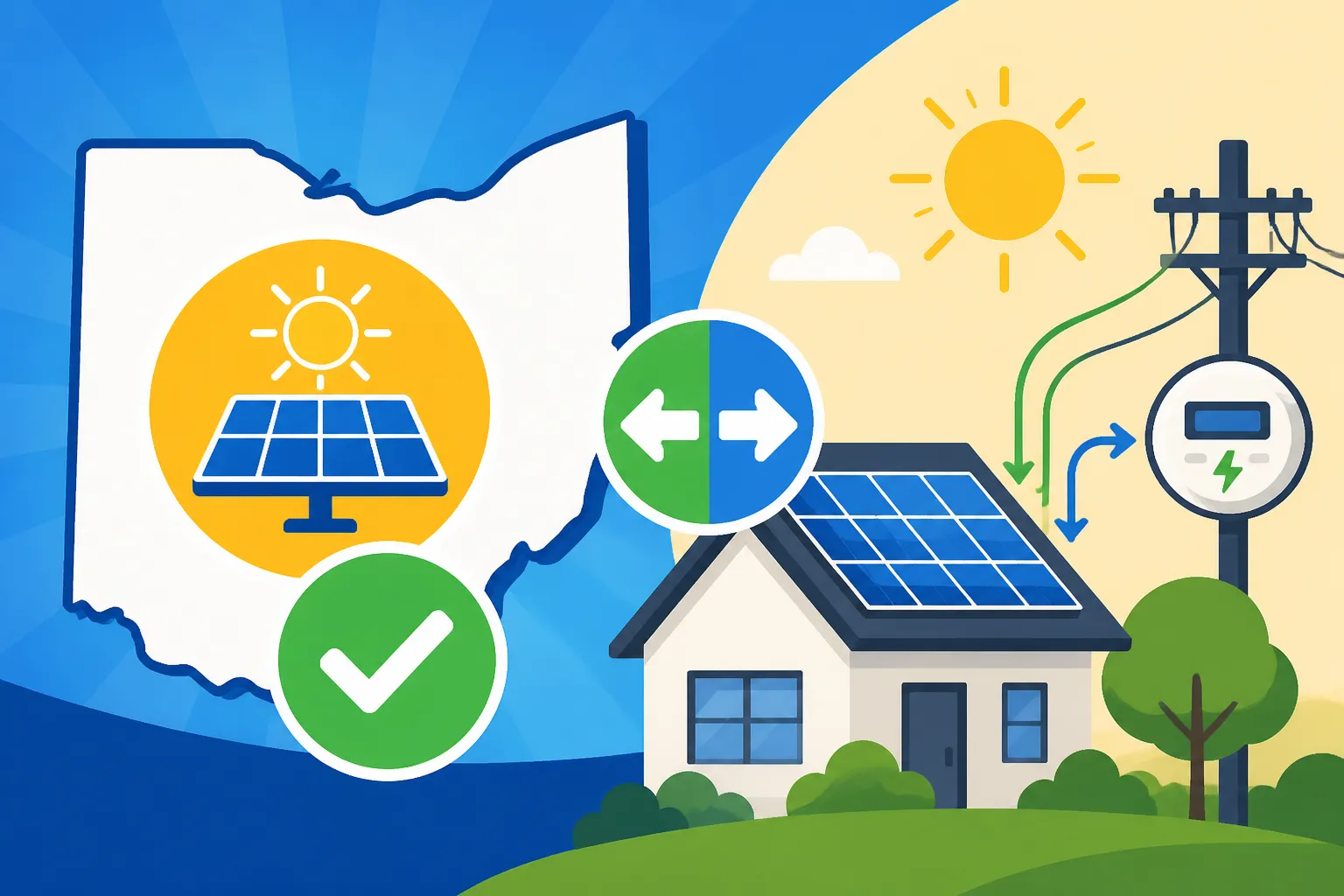
However, the "how" is where things get a bit sticky. Net metering in Ohio operates under the rules established and defended by the Public Utilities Commission of Ohio (PUCO). Unlike some states that have moved toward a "Net Billing" structure that significantly devalues the energy you send back to the grid, Ohio has maintained a system that is relatively friendly to the average homeowner. When your solar panels produce more electricity than your home is using—say, on a bright Tuesday afternoon while you are at work—that excess energy flows back through your meter and into the local grid. Your meter literally runs backward, or at least tracks the outflow, giving you a credit that offsets the energy you pull from the grid at night.
One thing to keep in mind is that this mandatory policy only applies to investor-owned utilities. If you are part of a rural electric cooperative or a municipal utility—like those found in many smaller Ohio villages—they are not strictly required to follow the same PUCO net metering rules. Many of them do offer some form of solar compensation, but it might not be the "1-to-1" credit you would expect. This is why checking your specific utility’s tariff is the first step in the Solar Installation Process in Ohio. You don't want to assume you're getting full retail value only to find out your co-op pays "avoided cost" rates, which are significantly lower.
How the Ohio Billing Cycle and Credits Work
Understanding your bill after going solar can feel like deciphering a secret code. In Ohio, the net metering process is essentially a "net energy" calculation. At the end of your monthly billing cycle, the utility looks at how much total energy you pulled from the grid and subtracts the total energy you sent back. If you used more than you produced, you simply pay for the "net" difference. This is a huge win for the Solar Panel Payback Period in Ohio because it allows you to use the grid like a giant, free battery for the duration of the month.
But what happens if you produce more than you use over the course of the month? This is where the 2026 rules get specific. Any excess generation is carried forward to your next bill as a credit. In Ohio, these credits are typically valued at the "unbundled generation" rate. This is an important distinction: your electric bill is made up of several parts, including generation, transmission, and distribution. When you offset your usage within the month, you are saving the full retail rate (everything included). When you roll over excess from month to month, you are generally only credited for the generation portion of the bill.
For a family in Cincinnati, this means you want to size your system correctly. You don't necessarily want to build a massive "power plant" on your roof that produces double what you need annually. Instead, you want to aim for "100% offset." If you over-produce too much, you’re essentially selling power to the utility at a "wholesale" price while still paying for the transmission and distribution on the power you buy at night. When you start asking How Many Solar Panels Do I Need for My Home?, your installer should be looking at your 12-month usage history to hit that sweet spot of maximum ROI without wasting money on excess capacity that won't be fully compensated.
| Utility Company | Net Metering Type | Credit Carryover Rule | PUCO Regulated? |
|---|---|---|---|
| AEP Ohio | Monthly Netting | Rolls over at generation rate | Yes |
| Duke Energy Ohio | Monthly Netting | Rolls over at generation rate | Yes |
| AES Ohio (DP&L) | Monthly Netting | Rolls over at generation rate | Yes |
| FirstEnergy (OE, IC, TE) | Monthly Netting | Rolls over at generation rate | Yes |
| Co-ops / Munis | Varies by Utility | Often at "Avoided Cost" | No |
Breaking Down the Financial Impact of Ohio Solar
When we talk about whether Are Solar Panels Worth It in 2026?, we have to look at the total financial package. Net metering is the foundation, but it works in tandem with other incentives. For example, Ohio is one of the states where you can still benefit from Solar Sales Tax Exemptions by State, which means you aren't paying that extra 5.75% (plus local taxes) on the purchase price of your equipment. When you're spending tens of thousands of dollars, that's a massive upfront saving that stays in your pocket.
Another vital piece of the puzzle is the property tax situation. Many people worry that adding $30,000 worth of technology to their roof will cause their local tax assessor to come knocking with a higher bill. Fortunately, Solar Property Tax Exemptions by State often include provisions that protect you. In Ohio, current laws generally mean that the added value of a solar system isn't reflected in your property tax assessment, allowing you to increase the resale value of your home without the penalty of higher annual taxes.
The combination of these factors makes the Average Solar Cost in Ohio (2026) a much easier pill to swallow. While the upfront cost is still a consideration, the net metering credits act like a monthly dividend. Think of it this way: every time the utility company announces a rate hike—which seems to happen every year in Ohio lately—your solar panels actually become more valuable. You are essentially locking in your electricity price for the next 25 to 30 years. It’s one of the few ways a homeowner can actually fight back against the inflation of utility costs.
Technical Requirements and Interconnection in Ohio
You can't just slap some panels on your roof and call it a day; there is a formal process to get your system "interconnected" with the Ohio grid to qualify for net metering. This process involves an application to your utility provider, usually handled by your contractor during the Solar Installation Process in Ohio. The utility needs to ensure that your system is safe and won't backfeed power onto the lines in a way that endangers line workers during an outage. This is why "Rapid Shutdown" technology is a requirement in the 2026 building codes across the state.
Once the system is installed and has passed local building inspections in cities like Akron or Dayton, the utility will perform a "meter swap" or a reprogramming of your existing smart meter. This gives you what we call "Permission to Operate" or PTO. Until you have PTO, you shouldn't turn your system on, as an old-fashioned meter might actually charge you for the energy you send back to the grid because it can't tell which direction the power is flowing!
The digital portals for AEP and Duke have become much more streamlined. You can usually log in to your utility account and see a daily breakdown of your net metering performance. This transparency is a huge relief for homeowners who want to verify that they are actually getting the credits they were promised. If you notice your production is lower than expected, it might be time to check for shading or debris, but generally, these systems are "set it and forget it."
Maximizing Your ROI with Ohio Solar Incentives
To truly make the most of net metering in Ohio, you have to look at the broader landscape of Ohio Solar Incentives in 2026. While net metering handles the monthly flow of energy, SRECs (Solar Renewable Energy Credits) provide an additional "cherry on top" for some owners. Ohio's SREC market has seen its ups and downs over the years due to legislative changes, but for many systems, there is still an opportunity to sell the "green value" of your electricity to utilities that need to meet state-mandated renewable goals. It's not the windfall it was ten years ago, but it’s still passive income that shortens your payback period.
We also have to consider the role of battery storage. Many Ohioans are choosing to add a battery like the Tesla Powerwall or Enphase IQ Battery to their solar setup. Why would you do this if you have net metering? Two reasons: reliability and "rate arbitrage." While Ohio has a solid net metering policy, having a battery ensures that when a summer thunderstorm knocks out the power in your neighborhood, your lights stay on. Furthermore, if Ohio utilities ever move toward "Time of Use" (TOU) rates—where electricity is more expensive during the evening—your battery can discharge stored sun power during those peak hours, saving you even more than standard net metering would.
Even without a battery, the financial health of a solar investment in Ohio is strong. When you look at the Average Solar Cost in Ohio (2026) and compare it to the projected utility costs over 25 years, the savings often exceed $20,000 to $40,000 for a standard-sized home. That is money that could go toward your retirement, your kids' college fund, or simply a better quality of life. The peace of mind that comes from knowing your "fuel" is free and falls from the sky is something you can't put a price on.
Future Outlook: Will Net Metering Stay in Ohio?
One of the biggest frustrations for homeowners is the fear that the "rug will be pulled out from under them." We’ve seen states like California and Nevada make drastic changes to net metering that hurt solar owners. In Ohio, the political climate around energy is always active, but net metering remains a protected right for those under investor-owned utilities. The PUCO has a long history of maintaining these rules to ensure grid stability and consumer choice.
If you are on the fence, the best advice is usually to "grandfather" yourself in. Typically, when states change their net metering rules, existing solar customers are allowed to keep their original terms for 10 to 20 years. By going solar now, you lock in the current 2026 Ohio net metering benefits, protecting yourself against future legislative shifts that might favor the big utility companies over the individual homeowner.
The transition to clean energy in Ohio isn't just about the environment; it’s about energy independence. Every kilowatt-hour you produce on your own roof is one less kilowatt-hour you have to buy from a company that might not have your best interests at heart. Whether you are in the snowy northern reaches near Lake Erie or the rolling hills of Southern Ohio, the sun is a resource that is currently being underutilized by far too many people.
Disclaimer
This guide is provided for informational purposes only and does not constitute legal, tax, or financial advice. Solar policies, utility rates, and incentive programs in Ohio are subject to change by the Public Utilities Commission of Ohio (PUCO), state legislature, and individual utility companies. Always consult with a qualified solar professional and a tax advisor to confirm the specifics of your situation before making an investment.