Will the Solar Tax Credit Come Back?
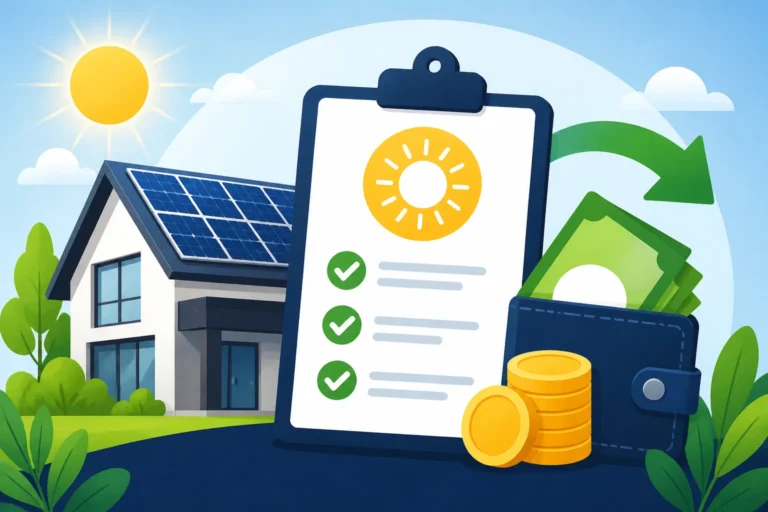
Many homeowners who have dreamed of harnessing the sun's power for their homes are now facing a knotty question: what happened to the federal solar tax credit? It's frustrating, I know, when you've been planning for years, counting on that significant financial boost, only to find the landscape has changed. This comprehensive guide is here to shed light on the federal solar investment tax credit, its history, its recent wind-down, and what you can realistically expect – or not expect – regarding its return in the near future.
Understanding the Federal Solar Investment Tax Credit (ITC)
For years, the federal Solar Investment Tax Credit (ITC) was undeniably the biggest game-changer for homeowners considering solar. It offered a substantial incentive that made going green not just environmentally sound, but also a smart financial decision. But like all good things, it had its own timeline.
A Look Back at Its History and Impact
The federal solar Investment Tax Credit (ITC) was first established way back in 2006 under the Energy Policy Act. Its initial purpose was simple: to jumpstart the nascent solar industry in the United States and encourage both residential and commercial property owners to invest in renewable energy technologies. When it first came out, it offered a hefty 30% tax credit for the cost of installing a solar energy system. This wasn't just a small discount; it was a direct reduction of your income tax liability, dollar for dollar, which made a monumental difference in the upfront cost of solar.
Think about it: a system that might have cost you $30,000 suddenly felt like $21,000 out of your pocket after the credit. That kind of savings really opened the door for countless families to make the switch. Over the years, the ITC was extended multiple times, reflecting its incredible success in driving solar adoption across the country. It created jobs, spurred technological innovation, and helped significantly reduce our collective carbon footprint. It truly shaped the solar landscape we know today.
How the ITC Worked for Homeowners
For eligible homeowners, claiming the ITC was relatively straightforward, though it definitely required understanding how tax credits work. When you purchased and installed a new solar photovoltaic (PV) system for your residence, you could claim a percentage of the total cost as a credit on your federal income taxes. This included not just the solar panels themselves, but also labor costs for on-site preparation, assembly, installation, wiring, inverters, mounting equipment, and even storage devices like solar batteries.
Let's say you installed a system for $25,000. If the credit was at 30%, you'd get $7,500 back as a credit. If your tax liability for that year was less than $7,500, the beauty of the ITC was that you could often carry forward the unused portion of the credit to subsequent tax years. This meant you wouldn't lose out on the full value even if you didn't owe enough taxes in the year of installation. This flexibility was a huge boon, making solar accessible to a broader range of income levels and ensuring homeowners could truly maximize their savings. Knowing "How Much Can Solar Incentives Save Me in 2026?" often depended heavily on this federal credit.
The Phased Wind-Down: Why It Expired
Unfortunately, the federal solar tax credit was always designed to be a temporary measure, a catalyst rather than a permanent fixture. It began its scheduled step-down process after years of being at the maximum 30%. The credit gradually decreased from 30% to 26%, then to 22%, and finally to a permanent 0% for residential systems installed in 2026 and beyond. This phased reduction was deliberate, intended to wean the industry off federal subsidies as solar technology matured and became more competitive on its own. The idea was that by the time the credit fully expired, the solar market would be robust enough to stand on its own two feet, driven by lower equipment costs and increasing consumer demand.
While this long-term plan was generally understood, for many homeowners who were just getting around to exploring solar, the final expiration of the full residential credit in 2026 felt like a missed opportunity. It certainly put a damper on the immediate financial appeal for some. If you're wondering "Is the Solar Tax Credit Gone in 2026?", the answer for new residential installations is yes, the federal residential credit has indeed phased out.
The Current Landscape: What Replaced the Federal Solar Tax Credit in 2026?
With the federal residential solar tax credit now in the rearview mirror for new installations, many homeowners are left wondering, "What now?" It's a valid question, and the good news is that the incentives picture isn't entirely bleak. The focus has simply shifted, becoming more localized and diverse.
State-Level Incentives Stepping Up
Without the overarching federal incentive, individual states have really stepped up to fill the void, or in many cases, continue to build upon their own successful programs. These state incentives come in a variety of forms, tailored to each state's energy goals and market conditions. For instance, states like Massachusetts with its Massachusetts SMART Program Explained or New York with the New York NY-Sun & State Solar Tax Credit (25%) offer substantial programs. Some states provide their own state-level tax credits, which function similarly to the old federal ITC but are applied to your state income tax liability. These can range anywhere from a modest percentage to a significant chunk, often combined with limits on the maximum credit you can claim.
Beyond tax credits, many states offer property tax exemptions for solar. This means that while adding solar panels typically increases your home's value, the added value from the solar system isn't factored into your property tax assessment, saving you money year after year. Similarly, some states have sales tax exemptions, meaning you don't pay sales tax on the purchase of your solar equipment and installation services, which can be a considerable saving on a large investment. To get a clearer picture of what's available where you live, you might want to check out our comprehensive guide on State Solar Incentives: Complete 2026 Guide.
Local Programs and Utility Rebates
It's not just states; even at the local level, cities and counties sometimes offer their own solar initiatives. These might be smaller grants, low-interest loan programs, or specific permitting fee waivers. These can be a bit harder to track down, as they're often hyper-local, but your solar installer should be well-versed in any programs specific to your area.
Then there are utility solar rebates, which can be quite impactful. Many utility companies, especially those under mandates to increase renewable energy generation, offer direct cash rebates to customers who install solar panels. These rebates can vary wildly depending on your utility provider and geographic location. Some rebates are per-watt, meaning the bigger your system, the more you get back, while others might be a fixed amount. For example, some utilities in California or Arizona might offer a few hundred to a couple of thousand dollars back. It's crucial to check with your specific utility company, like Pacific Gas & Electric or Arizona Public Service, to see what's on offer. Finding "Utility Solar Rebates: How to Find Yours" can be a game-changer for your bottom line.
The Future of Federal Support (or Lack Thereof)
As it stands for 2026, there isn't a direct federal residential solar tax credit for new installations. While the previous credit's phased wind-down was a long-planned action, it doesn't mean federal support for solar has entirely vanished. Instead, the focus has shifted towards broader energy initiatives, research and development funding, and commercial incentives. There are still some federal programs, especially those aimed at low-income communities or for specific commercial projects, but the generous, across-the-board residential ITC is no longer active for new systems.
This doesn't mean there will never be another federal residential incentive, but any future program would likely look quite different, perhaps focusing on specific technologies, equity, or grid modernization rather than a broad installation credit. For now, homeowners need to rely on the robust combination of state, local, and utility incentives to make their solar dreams a reality.
Why the Federal Solar Tax Credit May Not Return (or Look Different)
The idea of the federal solar tax credit making a grand comeback is a hopeful thought for many, but the reality is more nuanced. While it's not impossible, several factors suggest that if it does return, it would likely be in a significantly altered form, or perhaps not at all for residential solar in its previous iteration.
Shifting Political Priorities and Economic Realities
Government policies and incentives are often a direct reflection of current political priorities and economic realities. The original ITC was born from a need to stimulate a nascent industry and address climate concerns. Now, with solar being a mature and increasingly cost-effective technology, the urgency for a broad, across-the-board residential subsidy might be perceived differently in Washington D.C. There's a strong argument to be made that the industry has achieved "grid parity" in many areas, meaning solar electricity is as cheap or cheaper than traditional grid power, even without significant subsidies.
Furthermore, any new federal tax credit would need to navigate a complex legislative landscape, requiring bipartisan support and careful consideration of its economic impact. The current political climate often sees differing views on the role of federal incentives in private markets. Some policymakers might prefer market forces to drive adoption, while others might advocate for targeted incentives for specific demographics or technologies. The simple truth is that the political will and economic justification that existed for the original ITC may not align in the same way today.
The Success of Solar Without Direct Federal Tax Credits
One of the strongest arguments against the return of a broad federal residential tax credit is the sheer success of the solar industry itself. Over the past decade, the cost of solar panel installation has plummeted dramatically. Technological advancements, increased manufacturing efficiency, and fierce competition among installers have made solar far more affordable than many imagined when the ITC was first introduced. This means that for a growing number of homeowners, solar is a sound investment even without the federal incentive.
The industry has demonstrated its resilience and ability to grow substantially even as the ITC phased out. Companies like Sunrun and Tesla Energy continue to innovate in solar and battery storage solutions, pushing prices down and efficiency up. Many states are seeing robust solar markets thrive, supported by their own state incentives, favorable net metering policies, and the ever-increasing desire of homeowners to control their energy costs. This success story, while fantastic for consumers, paradoxically makes the case for a new, broad federal credit harder to justify for some policymakers who might argue that the industry no longer needs that level of direct federal support.
Alternative Forms of Federal Support
If federal support for residential solar were to re-emerge, it's highly probable it would take a different shape. Instead of a direct tax credit for every homeowner, we might see more targeted programs. These could include:
- Low-Income Solar Programs: There's a significant push to ensure renewable energy benefits are accessible to all, not just those with higher incomes. Future federal programs might focus on grants or financing specifically for low-income households, addressing energy equity concerns. You can learn more about this in Low-Income Solar Programs & Assistance.
- Battery Storage Incentives: As the grid evolves and resilience becomes a bigger priority, federal incentives could shift towards encouraging energy storage. A federal tax credit specifically for Solar Battery Incentives in 2026 could be a way to support grid stability and provide homeowners with blackout protection.
- Community Solar Initiatives: Support for Community Solar: How It Works & Who Qualifies could also be a focus, allowing renters or those with unsuitable roofs to benefit from solar energy.
- Advanced Technology Incentives: Future credits could be aimed at encouraging the adoption of newer, more efficient solar technologies, or those integrated with smart home systems, rather than just basic panel installations.
So, while the old ITC might not come back as we knew it, the door is certainly open for new, strategically focused federal support in the future.
Exploring Other Financial Pathways to Go Solar Today
Okay, so the federal residential tax credit for new installations is gone. But don't despair! There are still plenty of fantastic ways to make solar work for your home, thanks to a robust ecosystem of state programs, utility offerings, and innovative financing solutions. It's all about knowing where to look and what to leverage.
State Tax Credits and Exemptions
As we discussed, state-level incentives are now more critical than ever. Many states offer their own versions of tax credits that can significantly reduce your out-of-pocket costs. For instance, a state like Hawaii offers a very generous 35% state tax credit, capped at $5,000, which can make a huge difference in your overall system cost. New York also has a 25% state solar tax credit, up to $5,000, in addition to its NY-Sun program. These credits work similarly to the former federal ITC, directly reducing your state income tax liability.
Beyond direct tax credits, keep an eye out for property tax exemptions. This is a game-changer because while solar increases your home's value, these exemptions prevent that added value from hiking up your annual property taxes. States like California, Texas, and Florida all offer some form of property tax exemption for solar energy systems. There are also solar sales tax exemptions in many states, meaning you won't pay sales tax on the equipment or installation, which can save you hundreds, even thousands, on your total project cost. For specific details on your state, you might find our guide on Solar Sales Tax Exemptions by State particularly helpful.
Performance-Based Incentives (PBIs) and SRECs
Another exciting avenue for solar savings comes in the form of Performance-Based Incentives (PBIs), often linked to Solar Renewable Energy Credits (SRECs). These are prevalent in states that have Renewable Portfolio Standards (RPS), which mandate that utilities generate a certain percentage of their electricity from renewable sources.
Here's how it generally works: when your solar panels generate electricity, you earn one SREC for every megawatt-hour (MWh) of electricity produced. These SRECs can then be sold on an open market to utility companies or other entities trying to meet their RPS obligations. The value of an SREC can fluctuate based on market demand, but in states with strong SREC markets like New Jersey with its New Jersey SREC-II / SuSI Program Guide, or Massachusetts with its SMART program, they can provide a substantial, ongoing revenue stream for your system's lifetime. Maryland also has a robust SREC market, which you can explore further in our Maryland Solar Incentives & SREC Guide. Selling your SRECs, whether through platforms like SRECTrade or Sol Systems, can effectively shorten your solar payback period.
Solar Loans and Financing Options
For many homeowners, the upfront cost of solar, even with incentives, can be a hurdle. This is where solar loans and financing come into play. Instead of paying cash, you can finance your solar system through a dedicated solar loan, a home equity loan, or even a personal loan.
- Solar Loans: These are often specifically designed for solar installations, sometimes featuring competitive interest rates and terms. However, be wary of "dealer fees" that can inflate the loan amount without clear disclosure. It's crucial to understand Solar Dealer Fees Explained (Hidden Loan Costs) before signing anything.
- Home Equity Loans/Lines of Credit (HELOCs): Leveraging the equity in your home can be a good option, as these often come with lower interest rates.
- PACE Financing: Property Assessed Clean Energy (PACE) programs are another option in some areas, allowing you to pay for solar through an assessment on your property tax bill. This can be attractive because the loan is tied to the property, not the homeowner, and repayment terms can be quite long. However, there are pros and cons to PACE financing, which you should thoroughly research.
Each financing option has its own benefits and drawbacks, and the best choice depends on your financial situation and goals. For a deeper dive, our guide on Solar Loans: Complete Guide can provide valuable insights. Choosing between cash and financing is a big decision, and understanding "Cash vs Financing Solar: Which Saves More?" can help you make an informed choice.
Making the Most of Solar in a Post-ITC World
While the federal residential solar tax credit is no longer available for new installations, that doesn't mean solar is no longer a smart investment. In fact, with dropping equipment costs and ongoing state and local incentives, many homeowners are still finding significant value in going solar. It's all about smart planning and understanding the full picture of benefits.
Optimizing Your System for Maximum Savings
Even without the federal ITC, maximizing your savings still boils down to a few key strategies:
- Design for Efficiency: Work with a reputable solar installer to design a system that precisely matches your energy consumption, taking into account factors like your roof's orientation, shading, and the efficiency of the panels themselves. Choosing high-quality, efficient panels and inverters (like those from Enphase or SolarEdge) can significantly impact your long-term production. You might want to consider "Best Solar Panels of 2026" to find the right fit for your home.
- Leverage Net Metering: Net Metering Explained: How It Works by State is still one of the most powerful financial incentives for solar owners. It allows you to send excess electricity your panels produce back to the grid and receive credits on your utility bill, essentially offsetting your electricity usage at night or on cloudy days. While some states, like California with NEM 3.0 (Net Billing), have changed their net metering policies, it remains a crucial component of solar savings. Understanding the nuances between Net Metering vs Net Billing: What's the Difference? is essential.
- Consider Battery Storage: Adding a solar battery, like a Tesla Powerwall or Enphase IQ Battery, can be a smart move, especially in areas with unfavorable net metering policies or frequent power outages. Batteries allow you to store excess solar energy and use it when electricity rates are highest or when the grid goes down. This can enhance your energy independence and optimize your self-consumption. Plus, some states offer incentives specifically for batteries, which can make the investment even more appealing. Our guide on Do I Need a Battery With Solar? can help you decide.
- Shop Around for Installers: Don't settle for the first quote you get. Obtain multiple quotes from different installers to compare system designs, equipment, warranties, and pricing. This ensures you're getting the best value for your investment. Asking "How to Choose a Solar Installer" is critical to a successful project.
The Enduring Value of Solar Beyond Incentives
While incentives certainly sweeten the deal, the value of solar extends far beyond them. For starters, you gain significant control over your electricity costs. With rising utility rates, locking in a predictable energy cost for decades is a massive advantage. Imagine not flinching every time your utility announces a rate hike!
Moreover, solar panels significantly increase your home's value. Studies consistently show that homes with owned solar panels sell for more and often faster than comparable homes without solar. This added home value often outweighs the initial investment. Our article on "Do Solar Panels Increase Home Value?" delves into this topic in depth.
Finally, there's the undeniable environmental benefit. By producing your own clean energy, you're reducing your carbon footprint and contributing to a more sustainable future. This sense of environmental stewardship is a huge motivator for many homeowners and offers a priceless return.
Staying Informed About Future Opportunities
The solar industry and the policies surrounding it are constantly evolving. What's true today might change tomorrow, especially at the state and local levels. It's wise to stay informed by:
- Following Local Solar News: Keep an eye on news from your state energy office, public utility commissions, and local solar advocacy groups.
- Consulting with Reputable Installers: Good solar companies stay up-to-date on all available incentives and can often guide you through the process of applying for them.
- Checking Government Resources: Websites for the Department of Energy or your state's renewable energy programs are excellent sources of official information.
Even if a federal tax credit isn't immediately on the horizon, new programs, rebates, and financing options are always emerging. By being proactive and informed, you can ensure you're making the most of every opportunity to go solar economically.
Here's a quick overview of potential incentives and benefits to look for:
| Incentive Type | Description | Example Benefits | Current Federal Availability (Residential, New Installations) |
|---|---|---|---|
| Federal Solar Tax Credit (ITC) | Direct reduction of federal income tax liability. | Up to 30% of system cost (historically). | Phased out for new residential installations in 2026. |
| State Tax Credits | Direct reduction of state income tax liability. | Varies by state (e.g., 25% in NY, 35% in HI). | Varies significantly by state. |
| State Property Tax Exemptions | Excludes solar system value from property tax assessment. | Annual savings on property taxes. | Varies by state. |
| State Sales Tax Exemptions | No sales tax on solar equipment and installation. | Upfront savings on total project cost. | Varies by state. |
| Net Metering / Net Billing | Credits for excess electricity sent to the grid. | Reduced or eliminated electricity bills. | Varies by state and utility. |
| SRECs (Solar Renewable Energy Credits) | Marketable certificates generated by solar production. | Ongoing revenue stream from selling credits. | Varies by state (where SREC markets exist). |
| Utility Rebates | Direct cash payments from your utility for installing solar. | Upfront cash back, reducing initial cost. | Varies by utility. |
| Solar Loans / PACE Financing | Various financing options to spread out system cost. | No upfront cash required, immediate energy savings. | Available through private lenders and some state/local programs. |
| Increased Home Value | Solar systems increase property resale value. | Higher selling price and faster home sale. | Universal benefit of owned solar. |
| Energy Independence | Reduced reliance on utility companies, stable electricity costs. | Protection against rising electricity rates. | Universal benefit of owned solar. |
This table highlights that while the federal ITC is gone, a multi-faceted approach leveraging state, local, and utility programs, combined with smart financing, still makes solar a powerful investment for your home.
Disclaimer
This article is intended for informational purposes only and should not be considered financial or tax advice. Please consult with a qualified tax professional or financial advisor for personalized guidance regarding your specific situation. Incentive programs and policies are subject to change, and eligibility may vary. Always verify current information with official government sources and your chosen solar installer.