How Many Solar Panels for a 1,500 Sq Ft House?
Trying to figure out exactly how many solar panels you need for your 1,500 sq ft home can feel like a guessing game. It's frustrating to hear wildly different numbers or vague answers when you're just looking for a straightforward estimate. This comprehensive guide will walk you through the key factors that determine your solar panel needs, giving you a realistic understanding and empowering you to get the most accurate quotes for your specific situation.
It's Not Just About Square Footage: Understanding Your Home's Energy Needs
One of the biggest misconceptions when people start exploring solar is that home size directly dictates the number of panels. While a larger house often means more energy usage, it's not a hard-and-fast rule. A 1,500 sq ft home with an older, inefficient HVAC system and energy-hungry appliances might use more electricity than a well-insulated 2,000 sq ft home with modern, energy-efficient fixtures. What truly matters is your actual electricity consumption, which can vary wildly even among similar-sized houses.
How to Calculate Your Daily Energy Consumption (kWh)
The best place to start is your electricity bill. Most utility companies break down your usage by month, and often, by day. You’re looking for your average monthly kilowatt-hour (kWh) usage.
For example, if your bill shows you used 900 kWh in a month, you'd divide that by 30 days to get an average daily usage of 30 kWh. This daily number is your golden ticket for solar sizing. For a 1,500 sq ft home, average monthly electricity consumption in the U.S. can range from around 700 kWh to 1,200 kWh, depending heavily on location and habits. So, your daily usage could realistically be anywhere from 23 kWh to 40 kWh or even higher. It’s crucial to look at your actual bills for at least the past 12 months to account for seasonal variations, like higher usage in summer for air conditioning or winter for heating. Don't just pick one month; analyze a full year to see the true peaks and valleys of your energy demand.
Factors That Drive Your Energy Usage Beyond Size
Your home's square footage is just one piece of the puzzle. There are so many other variables that push your energy meter up or keep it humming low. Understanding these helps you see why your neighbor with the same size house might need a totally different solar setup.
First, think about your HVAC system. Is it an older, less efficient unit that's constantly running to keep your 1,500 sq ft comfortable? Or do you have a newer, high-efficiency system that sips power? Geographic location plays a massive role here, too. Someone in Phoenix, Arizona, will likely have much higher AC usage than someone in Portland, Oregon, even with the same square footage. Second, what about your appliances? Do you have an electric water heater, electric dryer, or perhaps an older refrigerator that's not as energy-star rated as newer models? Every appliance contributes to your overall demand. Finally, consider your personal habits. Are you home all day, working remotely with multiple monitors, lights on, and a TV playing? Or is your house empty for most of the workday? Do you keep your thermostat set to a chilly 68°F in summer or a cozy 75°F? All these daily choices add up to your total energy footprint and dictate how many solar panels for a 1,500 sq ft house you'll ultimately need.
Estimating Solar Panel Needs for a 1,500 Sq Ft Home
Once you have a handle on your energy consumption, we can start talking numbers for solar panels. It’s never a one-size-fits-all answer, but we can establish a solid range.
Average System Size for a Home This Size
Based on typical energy usage for a 1,500 sq ft home (let's say averaging 700-1,200 kWh per month), you're likely looking at a solar system size somewhere between 5 kilowatts (kW) and 8 kilowatts (kW). This range will cover most scenarios, but remember, this is an average. If you have particularly high energy usage, perhaps due to an electric vehicle charger, a swimming pool, or an older, less efficient home, your needs could easily creep up to 9 kW or more. Conversely, if you're a super-saver and have made significant energy efficiency upgrades, you might even get by with a slightly smaller system. The goal of a typical residential solar installation is to offset 80-100% of your electricity bill, so matching your system size to your actual usage is critical for maximizing savings. To get an even better idea of the overall investment, you might want to consider "How Much Do Solar Panels Cost?" as a next step.
Panel Efficiency and Wattage
The number of physical panels you'll need depends directly on the wattage of each individual panel. Solar panels today typically range from 350 watts (W) to 450W, and sometimes even higher for premium models. More efficient panels, which usually come with higher wattage ratings, generate more electricity in a smaller footprint.
Let's do some quick math:
- If you need a 6 kW (or 6,000 W) system:
- With 400W panels: 6,000 W / 400 W/panel = 15 panels
- With 350W panels: 6,000 W / 350 W/panel = ~17 panels
- With 450W panels: 6,000 W / 450 W/panel = ~13-14 panels
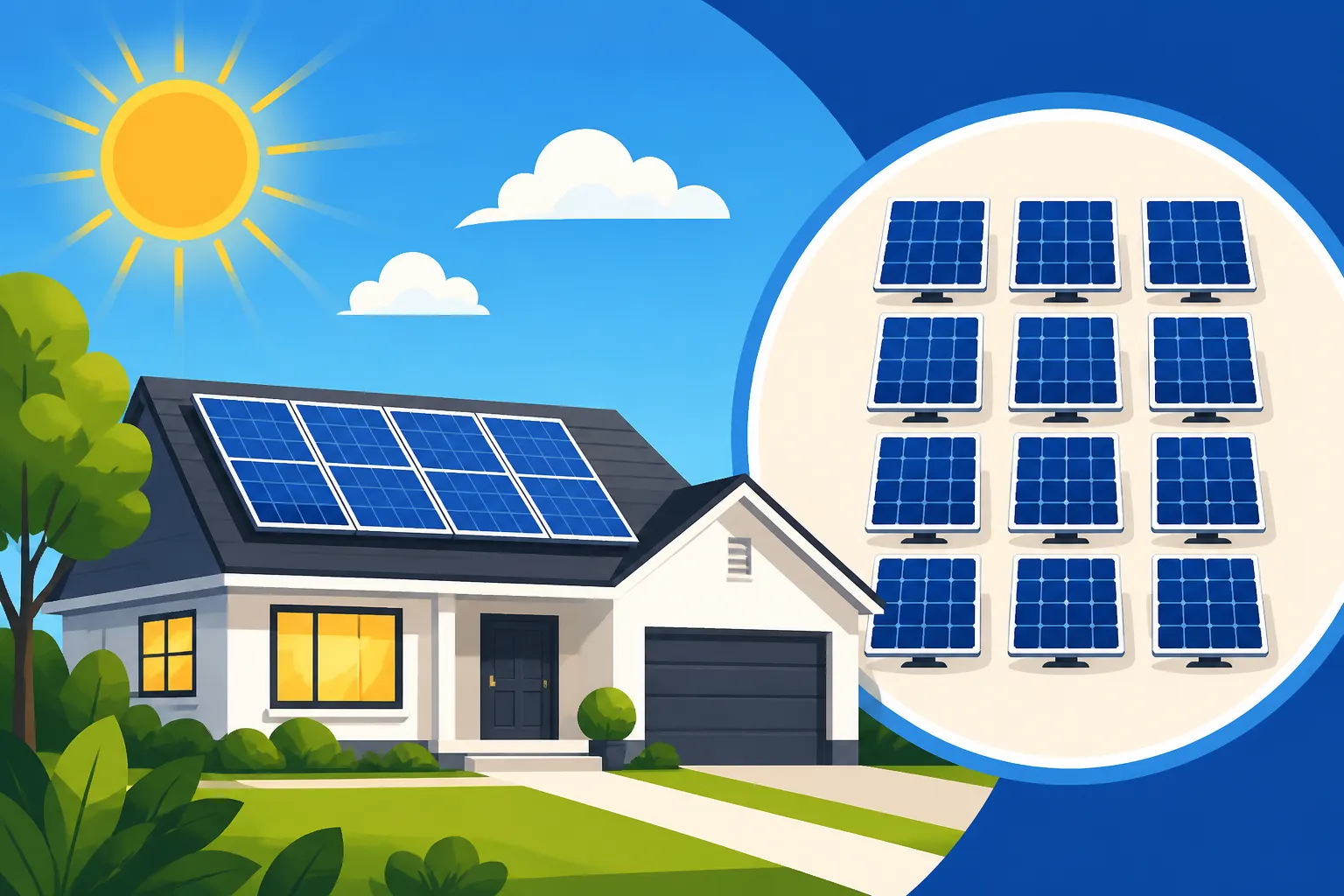
So, for a 1,500 sq ft house needing a 5-8 kW system, you're generally looking at 12 to 23 panels. The exact number will be refined based on the specific panels your installer recommends. While higher-wattage panels mean fewer panels, they can sometimes come at a higher "Solar Panel Cost Per Watt Explained", so it's a balancing act between footprint and budget. Understanding "Solar Panel Efficiency & Degradation Explained" can also help you choose the right panels for long-term performance.
Here's a quick overview:
| Average Monthly Usage (kWh) | Estimated System Size (kW) | Number of 350W Panels | Number of 400W Panels | Number of 450W Panels |
|---|---|---|---|---|
| 700 | 5.0 | 15 | 13 | 11 |
| 900 | 6.5 | 19 | 16-17 | 15 |
| 1,200 | 8.0 | 23 | 20 | 18 |
Note: These are estimates. Actual numbers can vary based on local sunlight, shading, and specific panel specifications.
The Impact of Sunlight and Climate
Where your 1,500 sq ft home is located geographically has a huge bearing on how many solar panels you’ll need. This comes down to something called "peak sun hours." This isn't just about how long the sun is in the sky, but how many hours per day your panels receive intense, direct sunlight.
For instance, a homeowner in sunny Phoenix, Arizona, might get 5.5 to 6 peak sun hours per day on average, while someone in Seattle, Washington, might only get 3.5 to 4.5 peak sun hours. This difference directly affects how much electricity each panel can produce. If you live in an area with fewer peak sun hours, you'll need more panels to generate the same amount of electricity as someone in a sunnier climate. This is because each panel will produce less on average throughout the year. Your installer will factor in your specific location's solar insolation data to design a system that meets your energy goals. You might also want to explore "Does Solar Make Sense if I'm Moving Soon?" if your plans are uncertain, as location changes can impact the system's effectiveness.
Practical Considerations for Panel Placement and Roof Space
Even if you've crunched all the numbers for your energy usage, the physical reality of your roof will dictate the final number of panels you can actually install. This is where the practical side of solar installation comes into play.
Roof Size and Orientation
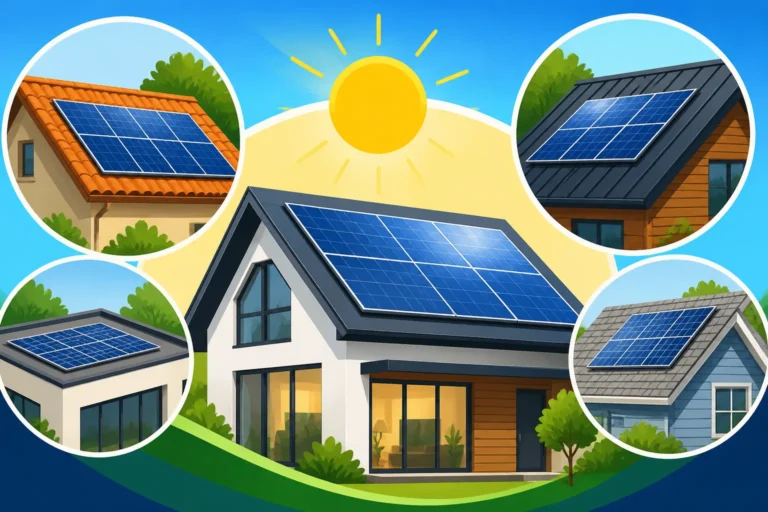
The typical solar panel measures about 65 inches by 39 inches (roughly 5.4 ft by 3.25 ft) and covers about 17.5 sq ft. So, 15-20 panels, for example, would need 260-350 sq ft of unobstructed roof space. For a 1,500 sq ft house, this is usually manageable, but not always a given. The ideal roof orientation for solar panels in the Northern Hemisphere is south-facing, as this receives the most direct sunlight throughout the day. South-facing roofs offer the highest production and generally require the fewest panels. East and west-facing roofs are also viable, but they will produce less power, often requiring 10-20% more panels to achieve the same energy offset. North-facing roofs are generally avoided due to their significantly lower production.
Beyond orientation, the pitch or angle of your roof also plays a role. An optimal pitch helps maximize sun exposure. If your roof has multiple angles, dormers, or other structures, it can limit the continuous, usable surface area, potentially increasing the number of panels needed or making it more challenging to fit your desired system size. Checking "Roof Considerations for Solar Panels" can give you a deeper dive into these specifics.
Shading and Obstructions
Nothing hinders solar panel performance more than shade. Even partial shading from a nearby tree, a chimney, a vent pipe, or an adjacent building can dramatically reduce the output of an entire string of panels if you're using a string inverter system. This is why a thorough site assessment is crucial. An installer will analyze your roof's "solar window" throughout the year, identifying any potential shading issues.
If significant shading is present, they might recommend using microinverters or power optimizers (like those from SolarEdge or Enphase) that allow each panel to operate independently. This mitigates the impact of shade on the overall system. In some cases, if shading is too severe, a ground-mount system might be a better option than roof-mount, if you have the land available. However, for most 1,500 sq ft homes, the roof is the primary and most cost-effective location.
Local Permitting and Homeowners Association Rules
Navigating local regulations and HOA rules can sometimes feel like an unexpected hurdle in your solar journey. Before any panels go on your roof, your installer will need to secure various permits from your city or county building department. These permits ensure that your solar installation meets local safety codes and structural requirements. Some municipalities might have specific restrictions on how much of your roof can be covered by panels, or even aesthetic guidelines for visible installations.
If you live in a community with a Homeowners Association (HOA), you'll almost certainly need their approval before installation. HOAs often have rules regarding external modifications, including solar panels. While many states have "solar access laws" that prevent HOAs from outright banning solar, they can still impose reasonable restrictions on placement, appearance, or materials. For example, an HOA might require panels to be flush-mounted or to not be visible from the street. Your solar installer should be familiar with local permitting and HOA processes, but it's always a good idea for you to review your HOA's covenants beforehand to avoid any surprises. The "Solar Permit Process in California" (or your specific state) can be a helpful resource for understanding these steps.
Getting an Accurate Estimate: Why Professional Consultation is Key
While you can do a great job estimating your needs with the information above, nothing beats a professional assessment. Solar is a significant investment, and you want to ensure your system is perfectly tailored to your 1,500 sq ft home and your lifestyle.
The Value of a Site Assessment
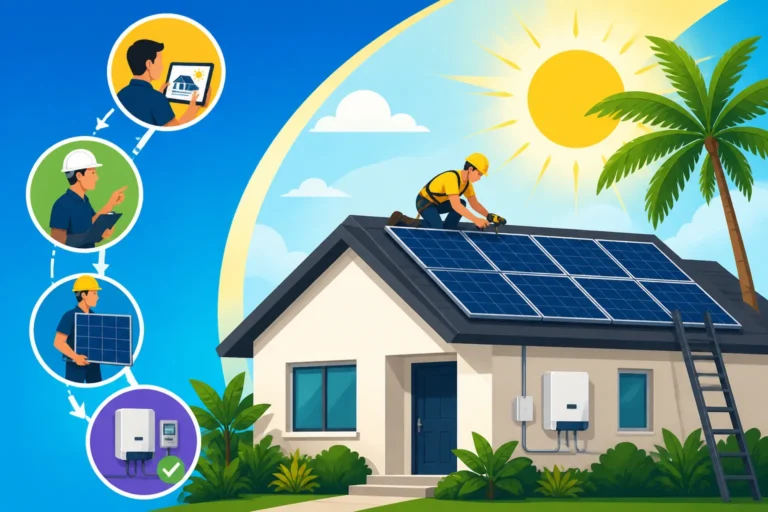
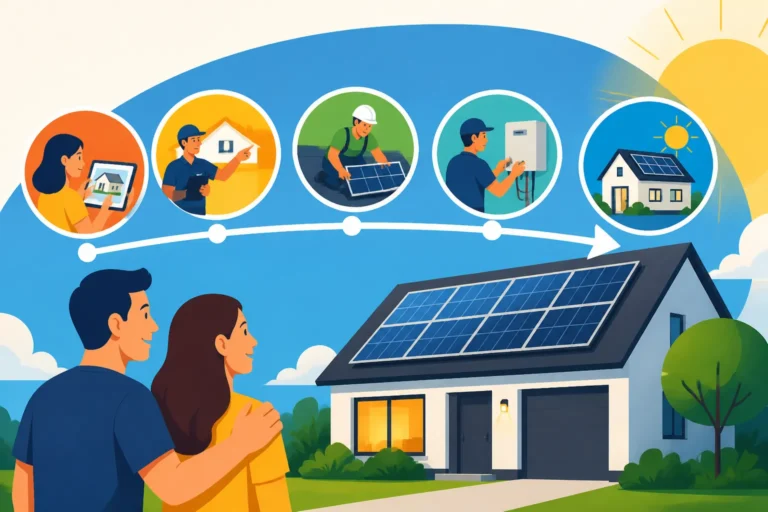
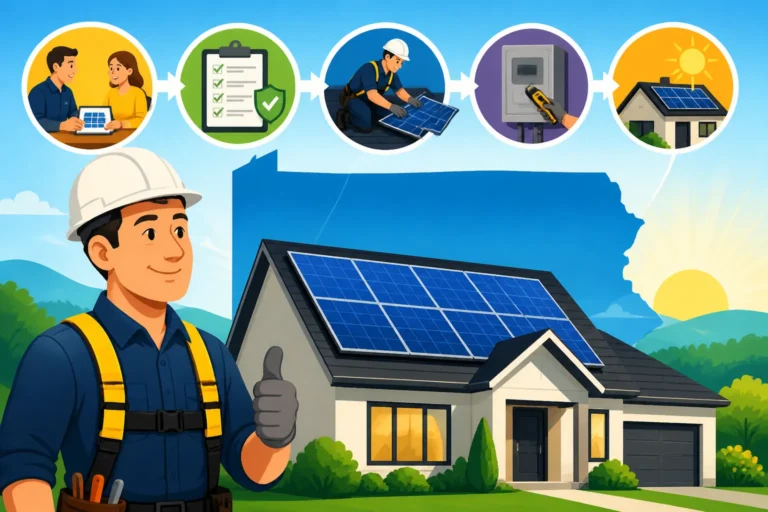
When you reach out to a reputable solar company, one of the first things they'll do is schedule a comprehensive site assessment. This isn't just a quick look at your roof from the street; it’s a detailed inspection. During this visit (or sometimes through advanced satellite imagery and drone technology), the installer will:
- Assess your roof's condition and structural integrity: They'll check the age of your roof and determine if it can support the weight of the panels. This might even lead to a discussion about "Do I Need a New Roof Before Solar?".
- Analyze shading: They'll use specialized tools to map out potential shade from trees, chimneys, or neighboring buildings throughout the year.
- Evaluate your electrical panel: They’ll confirm your current electrical service can handle the new solar system and identify if any upgrades are needed.
- Consider your energy goals: Are you aiming for 100% offset, or just looking to reduce your bill significantly? Do you want to add a battery for backup power?
This detailed assessment allows them to provide you with the most accurate system size, panel count, and overall cost estimate. Companies like Modernize can help connect you with reputable local installers who perform these thorough evaluations. Knowing "What Happens During a Solar Site Survey?" can help you prepare for this important step.
Using Online Solar Calculators with Caution
Online solar calculators are fantastic starting points. They can give you a ballpark figure for system size and potential savings based on your address and estimated energy usage. They often use average solar insolation data for your region and typical panel efficiency to generate a quick estimate. They are excellent for the initial research phase, helping you understand the general scope of a project.
However, these calculators are just that: estimates. They can't account for unique roof conditions, specific shading patterns on your property, the actual efficiency of your appliances, or the intricacies of your local utility's net metering policies (if available). While a calculator might suggest 15 panels for your 1,500 sq ft home, a professional site visit might reveal that due to a large vent pipe and a mature oak tree, you can only realistically fit 12 panels on the ideal south-facing portion of your roof. Always treat online calculators as a guide, not a definitive quote.
Comparing Multiple Quotes for Best Fit
Once you have a better understanding of your home's unique solar potential, it's wise to gather several quotes from different solar installers. This isn't just about price; it's about comparing proposed system designs, equipment (panel brands, inverters), warranties, and installer reputation.
One installer might suggest 18 x 375W panels, while another might propose 15 x 420W panels, both aiming for a similar overall kW output. They might also differ in their assessment of your roof or their recommended solution for minor shading. By comparing proposals, you can ask informed questions, understand the different approaches, and ultimately choose the best fit for your 1,500 sq ft home and budget. Don't be afraid to dig into the details of the warranties offered or the installer's experience. Companies like Modernize can help streamline this process by providing access to vetted installers, ensuring you get competitive bids and transparent information. Getting "Should I Get Multiple Solar Quotes?" is always a good strategy, as different companies can offer varying solutions and pricing for "How Much Can You Save With Solar Panels?".
Disclaimer
The information provided in this article is for general informational purposes only and does not constitute financial, legal, or professional advice. Solar system sizing, costs, and savings can vary significantly based on individual circumstances, location, energy consumption, system design, available incentives, and installer. Always consult with qualified solar professionals to obtain accurate estimates and personalized recommendations for your specific property.