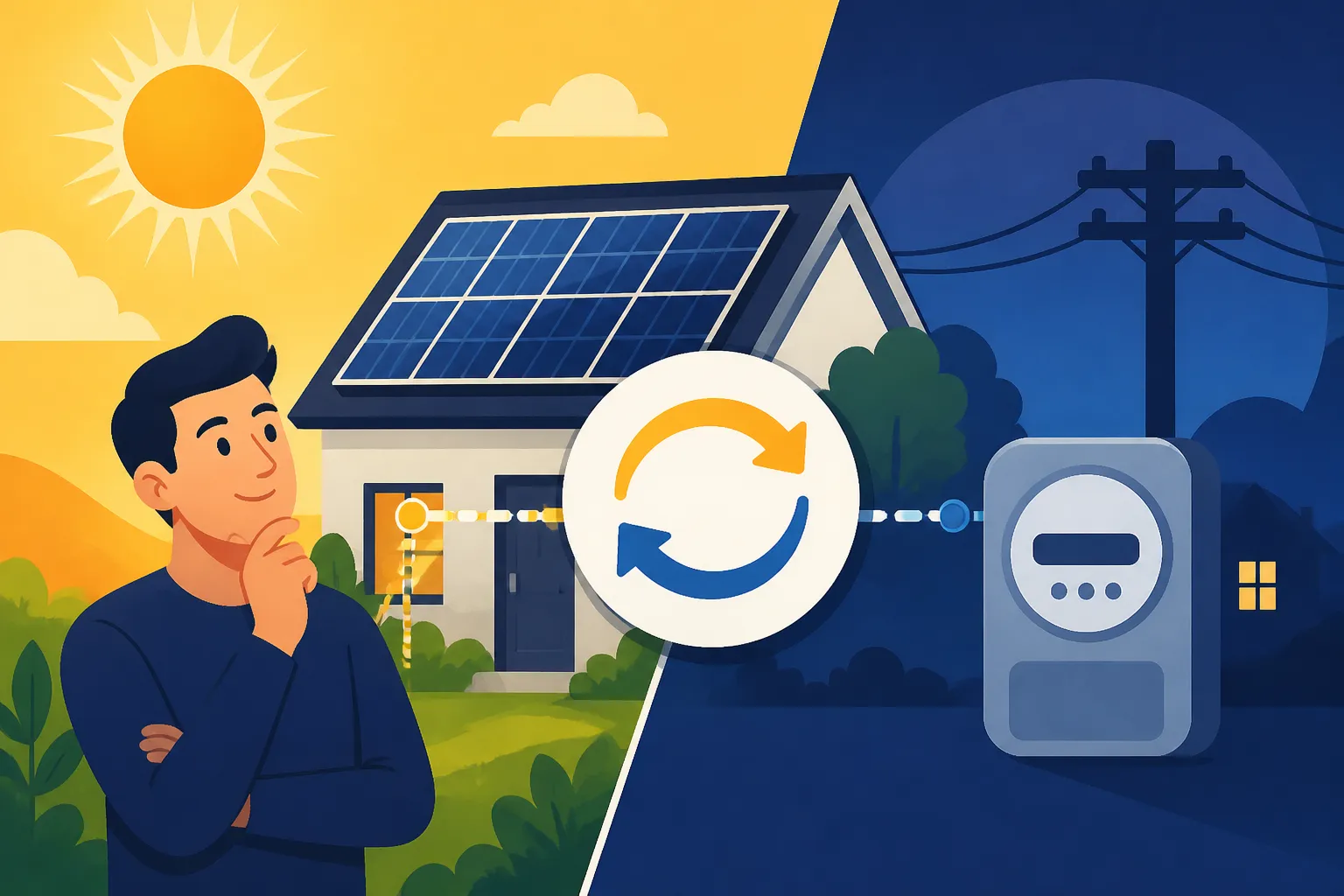
What Is NEM 3.0 (California Net Billing)?
Oh, California solar homeowners, you've likely heard the whispers, seen the headlines, and perhaps felt a shiver down your spine worrying about what "NEM 3.0" actually means for your shiny new panels or your dream of going solar. It's confusing, it's frustrating, and it feels like the goalposts just keep moving, making it incredibly hard to figure out if solar is still a smart move in the Golden State. But don't despair! This comprehensive guide is here to untangle the complexities of California's Net Billing Tariff, formerly known as NEM 3.0, helping you understand precisely what it is, how it works, and most importantly, how you can still maximize your solar savings despite the changes.
Understanding Net Energy Metering (NEM) in California
Before we dive headfirst into the new world of NEM 3.0, it’s really helpful to understand where we've come from. Net Energy Metering, or NEM, has been the cornerstone of residential solar savings for decades, allowing homeowners to essentially "bank" their excess solar power with the utility grid.
A Brief History of NEM in California
For years, California led the nation in solar adoption, largely thanks to generous net metering policies. We started with NEM 1.0, which was revolutionary in its simplicity: for every kilowatt-hour (kWh) of electricity your solar panels sent back to the grid, you received a credit on your bill equal to the full retail rate you'd pay for electricity. It was a one-to-one exchange, meaning if you produced more than you consumed over a billing period, you could zero out your electricity bill or even get a credit for future use. This made solar incredibly attractive and helped the industry flourish.
Then came NEM 2.0, which took effect in 2016. While still very favorable for solar owners, it introduced a few tweaks. Homeowners under NEM 2.0 had to switch to a Time-of-Use (TOU) rate plan, meaning the value of their exported power varied throughout the day, being higher during peak demand hours and lower during off-peak. There were also some non-bypassable charges (NBCs) that couldn't be offset by solar credits, like charges for public purpose programs. Despite these minor adjustments, NEM 2.0 still offered excellent returns, typically allowing solar systems to pay for themselves within 5-7 years and still significantly reduce or eliminate monthly electricity bills. Many homeowners locked into these favorable rates, and if you got your solar installed and approved before the transition, you're likely still enjoying the benefits of NEM 2.0 for a good long while.
Why the Change to NEM 3.0?
So, if NEM 2.0 was working so well, why did the California Public Utilities Commission (CPUC) decide to introduce NEM 3.0, or the Net Billing Tariff, in April 2023? The official line from the utility companies and the CPUC was that the old net metering rules disproportionately benefited solar owners at the expense of non-solar customers. They argued that non-solar customers were bearing a larger share of the fixed costs of maintaining the grid, such as transmission lines and infrastructure, while solar owners paid less because their bills were reduced by their exported energy credits.
Another stated reason was to encourage the adoption of energy storage solutions, like solar batteries. The argument was that the grid needed power most during late afternoon and early evening hours, when solar production wanes but demand from homes ramps up (the infamous "duck curve"). By reducing the value of daytime exports and increasing the incentive to store that energy for later use, the hope was to shift consumption patterns and strengthen grid reliability. While these points have some merit, many solar advocates and existing solar customers felt that the changes were overly drastic and primarily served the financial interests of the utility companies, making solar a less attractive investment for everyday Californians.
What Exactly is NEM 3.0 (Net Billing Tariff)?
Okay, let's get down to brass tacks. NEM 3.0, officially called the Net Billing Tariff, fundamentally changes how new solar customers in California get compensated for the excess electricity their panels produce and send back to the grid. It's a significant departure from the simple, one-to-one retail rate credit system we once knew.
The Shift from Net Metering to Net Billing
Under the previous NEM 1.0 and NEM 2.0, when your solar panels generated more electricity than your home was using, that excess power flowed back into the grid, and your utility meter would literally spin backward, or your digital meter would record the credit. This credit was valued at the full retail rate of electricity, which is what you'd pay to buy power from the utility. It was a straightforward exchange, making it easy to see the direct financial benefit of your solar production.
NEM 3.0 throws a wrench into that system by moving from "net metering" to "net billing." What does that mean in practice? It means that when you export electricity to the grid, you are no longer compensated at the full retail rate. Instead, you're compensated at what's called an "avoided-cost rate." This rate is significantly lower than the retail rate, reflecting what it would cost the utility to avoid generating that power themselves, rather than what you'd pay to buy it. Think of it like selling your produce to a wholesale buyer versus selling it directly to a customer at market price; the wholesale price is always much lower. This reduction in export compensation is the single biggest change and the primary reason why many are finding NEM 3.0 to be a much less financially appealing proposition on its own.
Export Rates and the Avoided-Cost Calculator
The avoided-cost rate is not fixed; it's dynamic and varies based on several factors, primarily the time of day, the season, and even the specific needs of the grid at that moment. The California Public Utilities Commission (CPUC) uses an "Avoided-Cost Calculator" to determine these rates. This calculator takes into account things like wholesale energy prices, greenhouse gas reduction values, and other grid benefits to arrive at a value for exported solar power.
What this boils down to for you, the homeowner, is that the electricity you send to the grid during the middle of the day, when solar production is highest and grid demand is often lower, receives a much lower compensation rate. Conversely, the value might be slightly higher during late afternoon or early evening hours, but your panels are typically producing less during those times. The export rates can be 75-80% lower than the retail rates, especially during midday. This drastically changes the economics, as you're getting pennies on the dollar for your exported power compared to what you're paying to pull power from the grid when your panels aren't producing enough.
For instance, during a sunny afternoon, your solar system might be pumping out excess power. Under NEM 2.0, that might earn you a credit of $0.30/kWh. Under NEM 3.0, the same kWh exported might only get you $0.05-$0.08/kWh, depending on your utility and the specific time. This means that simply exporting all your excess power is no longer the optimal strategy for maximizing your savings.
The Role of Time-of-Use (TOU) Rates
Time-of-Use (TOU) rates are not new to California solar, as they were also a feature of NEM 2.0. However, under NEM 3.0, their impact becomes even more critical. TOU rates mean that the price you pay for electricity (and the compensation you receive for exports) changes based on the time of day. Utilities divide the day into different periods, such as "on-peak," "mid-peak," and "off-peak," with electricity being most expensive during on-peak hours (typically late afternoon to early evening) and cheapest during off-peak hours (often overnight and early morning).
Under NEM 3.0, all new solar customers are automatically placed on a TOU rate plan. This is where strategic energy management becomes paramount. The low export rates during midday off-peak hours mean you want to use as much of your solar production when it's generated as possible, rather than sending it back to the grid for minimal credit. Furthermore, the higher retail rates during on-peak evenings mean that if you can store your solar energy and use it when rates are highest, or avoid pulling from the grid during those times, your savings will be significantly greater. This creates a strong incentive to align your major energy usage with your solar production, or, more realistically, to invest in a solar battery to store that daytime energy for evening use. You can learn more about how TOU rates impact your savings by understanding Net Metering Explained: How It Works by State.
Key Impacts of NEM 3.0 on Solar Homeowners
The transition to NEM 3.0 has undeniably shifted the landscape for Californians considering solar. It's not necessarily a deal-breaker, but it does mean a different approach is required to make solar truly pay off.
Longer Payback Periods for New Solar Systems
One of the most immediate and significant impacts of NEM 3.0 is the projected increase in the solar panel payback period. Under NEM 1.0 and 2.0, homeowners could often see their systems pay for themselves in 5-7 years, sometimes even less depending on their energy usage and available incentives. This rapid return on investment made solar a no-brainer for many.
With the dramatically reduced compensation for exported electricity under the Net Billing Tariff, the time it takes to recoup your initial investment has lengthened considerably. Early estimates suggest that payback periods could extend to 9-12 years, or even longer, especially for systems installed without a battery. This is because a large portion of the financial benefit previously came from selling excess power back to the grid at a high rate. Now, without that high export value, the emphasis shifts heavily to self-consumption – using the power as you make it, or storing it for later use – to avoid buying expensive electricity from the utility. This doesn't mean solar isn't worth it, but it requires a more careful calculation and often, a different system design. For a deeper dive, check out our guide on Solar Panel Payback Period Explained.
Increased Incentive for Solar Batteries
If there's one silver lining, or perhaps a strong nudge, from NEM 3.0, it's the undeniable case it makes for solar batteries. Under NEM 2.0, a battery was often a "nice-to-have" for backup power during outages or to slightly optimize savings. Under NEM 3.0, a battery has become almost essential for maximizing your solar investment.
Here's why: with low export compensation for daytime power, you don't want to send that valuable electricity back to the grid if you don't have to. A solar battery, like a Tesla Powerwall, allows you to capture that excess solar energy produced during the day and store it. Then, when the sun goes down and utility rates climb to their expensive on-peak levels, you can draw from your battery instead of buying power from the grid. This "time-shifting" of your solar power significantly improves your self-consumption, minimizing how much expensive electricity you buy and maximizing the value of every kWh your panels produce. It effectively turns low-value exported power into high-value consumed power, directly offsetting those higher evening rates. For many, a battery is the key to making solar viable under the new rules. You might be wondering, Do I Need a Battery With Solar? The answer, increasingly in California, is yes.
Strategic Energy Consumption and Management
Beyond batteries, NEM 3.0 forces a more conscious approach to how and when you use electricity in your home. Under the old rules, you might not have thought twice about running your dishwasher at 7 PM or charging your EV when you got home from work. Now, with the dramatic differences in electricity prices throughout the day and the low export compensation, becoming an active energy manager is crucial.
This means rethinking your daily routines. Can you run your washing machine and dryer in the middle of the day when your solar panels are producing abundantly? Can you pre-cool your home during off-peak hours and rely on the thermal mass to stay comfortable during peak? Can you program your electric vehicle to charge during the day or late at night, rather than immediately when you plug it in? While these changes require some effort, they can significantly reduce your reliance on grid power during expensive peak times and help you get the most out of your solar investment.
Navigating NEM 3.0: Strategies for Maximizing Savings
So, NEM 3.0 is a challenge, but it's not the end of the world for solar in California. With the right strategies and a bit of planning, you can still achieve substantial savings and enjoy the benefits of clean energy.
Integrating Solar Batteries
As mentioned, a solar battery is arguably the most impactful strategy for new solar installations under NEM 3.0. Here's how it helps you maximize savings:
- Increased Self-Consumption: During the day, your solar panels generate power. Your home uses some of it, and the excess charges your battery instead of being sent to the grid for low compensation.
- Peak-Shaving: In the late afternoon and evening, when utility rates are highest (on-peak), your home draws power from the battery rather than from the expensive grid. This avoids buying power at premium prices.
- Grid Services (Potentially): In some areas, future programs might emerge that allow your battery to provide services back to the grid, earning you additional credits. While less common for residential users currently, this could be a future benefit.
- Backup Power: Beyond savings, a battery still provides invaluable backup power during grid outages, offering peace of mind when the lights go out.
When considering a battery, research your options. Brands like Tesla with their Powerwall, Enphase with their IQ Battery, and FranklinWH are popular choices, each with unique features and capacities. Understanding your energy usage patterns and desired backup duration will help you choose the right Solar Battery Cost: Full Breakdown and size. There are also still Solar Battery Incentives in 2026 that can help offset the upfront cost.
Optimizing Your Energy Usage
Even with a battery, smart energy usage remains a critical component of maximizing your NEM 3.0 savings. Here are some practical tips:
- Shift High-Draw Activities to Daytime: Run appliances like dishwashers, washing machines, and dryers during midday when your solar panels are producing the most power. If you have an electric vehicle, set it to charge during these hours as well.
- Pre-cool/Pre-heat Your Home: If you have a smart thermostat, schedule it to cool or heat your home before the peak rate period begins. This allows your HVAC system to run when electricity is cheaper (or free from your solar production) and then rely on your home's insulation to maintain comfort during expensive peak hours.
- Use Smart Home Devices: Smart plugs and smart thermostats can help automate these shifts, making it easier to manage your energy consumption without constant manual intervention.
- Monitor Your Production and Consumption: Many solar monitoring apps, like those from Enphase or SolarEdge, provide detailed insights into your real-time solar production and home consumption. Use these tools to identify patterns and areas where you can improve your energy shifting.
Considering System Sizing and Design
Under NEM 3.0, the "size it big and export everything" mentality no longer holds true. Instead, careful system sizing and design are paramount to optimize for self-consumption.
- Match Production to Consumption: Work with your solar installer to design a system that closely matches your annual energy consumption, taking into account your ability to shift usage and the addition of a battery. Oversizing a system to generate large amounts of export credit is no longer financially efficient. You'll want to review guides like How Many Solar Panels Do I Need for My Home? and Solar Panel Cost by System Size (kW) to help with planning.
- Factor in Future Usage: If you anticipate increased electricity use (e.g., buying an EV, adding an electric heat pump, growing your family), communicate this to your installer. It's often more cost-effective to include these considerations in the initial design rather than adding panels later, which can involve additional permitting and interconnection fees.
- Optimal Panel Orientation: While a south-facing roof is often ideal, under NEM 3.0, a slight east-west split might be considered to extend production throughout the day, especially into the shoulder periods of the late afternoon. This helps produce more power closer to the evening peak, reducing your reliance on grid power when it's most expensive. Your installer can model different orientations to find the best balance for your specific usage patterns.
Comparing NEM 3.0 to Previous Tariffs and Other States
Understanding how NEM 3.0 stacks up against its predecessors and what other states are doing provides crucial context for California homeowners.
NEM 2.0 vs NEM 3.0: A Direct Comparison
The differences between NEM 2.0 and NEM 3.0 are stark, particularly concerning the compensation for exported solar power. Let's lay them out clearly.
| Feature | NEM 2.0 (Legacy Net Metering) | NEM 3.0 (Net Billing Tariff) |
|---|---|---|
| Export Compensation | Full retail electricity rate for excess energy exported. | Avoided-cost rate (wholesale rate) for exports. Significantly lower than retail. |
| Time-of-Use (TOU) Rates | Mandatory, but export credit value still high during peak. | Mandatory, export values highly variable and low during midday. |
| Non-Bypassable Charges | Applied, but minor impact. | Still apply, cannot be offset. |
| Battery Incentive | "Nice-to-have" for backup, optional for maximizing savings. | "Essential" for maximizing savings and optimizing ROI. |
| Payback Period (Typical) | 5-7 years for a well-sized system. | 9-12+ years without a battery; potentially 7-9 years with a battery. |
| Interconnection Fee | Minimal or none. | Application fees vary, but generally higher. |
| Monthly Minimum Bill | Applied by some utilities. | Still applies, typically $10-$12 for most residential customers. |
The key takeaway from this comparison, as highlighted in our article California NEM 2.0 vs NEM 3.0 Explained, is that NEM 2.0 strongly favored exporting excess solar power, while NEM 3.0 strongly favors immediate self-consumption and battery storage. If you're on NEM 2.0, you're in a very advantageous position, with rates locked in for 20 years from your interconnection date. For those considering new solar, the equation has simply changed, requiring more strategic planning around batteries and energy usage.
How California Compares to Other States with Net Metering
California's shift to NEM 3.0 represents a move away from the traditional, generous net metering policies still enjoyed by homeowners in many other states. While states like Arizona, Hawaii, and Nevada have also reduced net metering compensation in recent years, California's changes are among the most impactful.
Many states, particularly those with strong renewable energy mandates and fewer grid congestion issues, still offer full retail net metering or very favorable compensation schemes. For instance, states like Massachusetts with its SMART program, or New Jersey with its SREC-II / SuSI program, continue to provide robust incentives that make solar highly attractive. Our guide on What States Still Have Full Retail Net Metering? can provide a deeper look into the varying policies across the country.
The move by California's CPUC to implement NEM 3.0 has been controversial and sets a precedent that other states might consider. It signals a future where solar batteries are increasingly integrated into residential systems, not just for backup, but as a fundamental component of economic viability. However, for now, many other states still offer more straightforward and immediately lucrative solar compensation through policies closer to California's old NEM 2.0. This makes California a unique, and sometimes challenging, market for new solar adopters.
The Future of Solar in California Under Net Billing
Despite the hurdles posed by NEM 3.0, solar isn't going away in California. The state remains committed to its renewable energy goals, and innovation is a constant. The changes simply mean the market and consumer behavior will continue to evolve.
Long-Term Outlook for Solar Adoption
While NEM 3.0 initially caused a slowdown in new solar installations, particularly for systems without batteries, the long-term outlook for solar adoption in California is still positive. The state has an abundance of sunshine, high electricity rates, and a strong environmental ethos, all of which continue to drive demand for rooftop solar.
What we're likely to see is a sustained shift towards "solar-plus-storage" solutions becoming the default. Homeowners will increasingly view solar panels and a battery as a single, integrated system rather than separate components. This integrated approach is what will unlock the best savings under the Net Billing Tariff. Installers are already adapting their sales strategies and system designs to prioritize batteries, and as battery technology continues to improve and costs potentially decrease, this trend will only accelerate. The market will normalize, albeit with different economic parameters than before.
Continued Evolution of Incentives and Technology
The solar landscape is always changing, and California is no exception. While the generous federal solar tax credit remains a powerful incentive nationwide for those who qualify, California itself could see new or modified state and local incentives emerge to support solar adoption under the new rules. It's essential to stay informed about any new programs or rebates that might become available, as these could significantly improve your financial returns. For example, some programs might specifically target battery storage or community solar initiatives to address grid needs. You can always refer to guides like Federal Solar Incentives That Still Exist in 2026 and State Solar Incentives: Complete 2026 Guide for the latest information.
Technological advancements will also play a crucial role. We're seeing continuous improvements in solar panel efficiency, battery energy density, and smart home energy management systems. These innovations will make solar-plus-storage solutions more effective and potentially more affordable over time. As smart inverters become even smarter and integrate more seamlessly with home energy management systems, optimizing for NEM 3.0 will become simpler and more automated for homeowners, further enhancing the appeal and savings potential of going solar in California.
Disclaimer
This article is for general informational purposes only and does not constitute professional advice. Laws, prices and regulations vary by location and change over time. Consult a qualified professional for guidance on your specific situation.