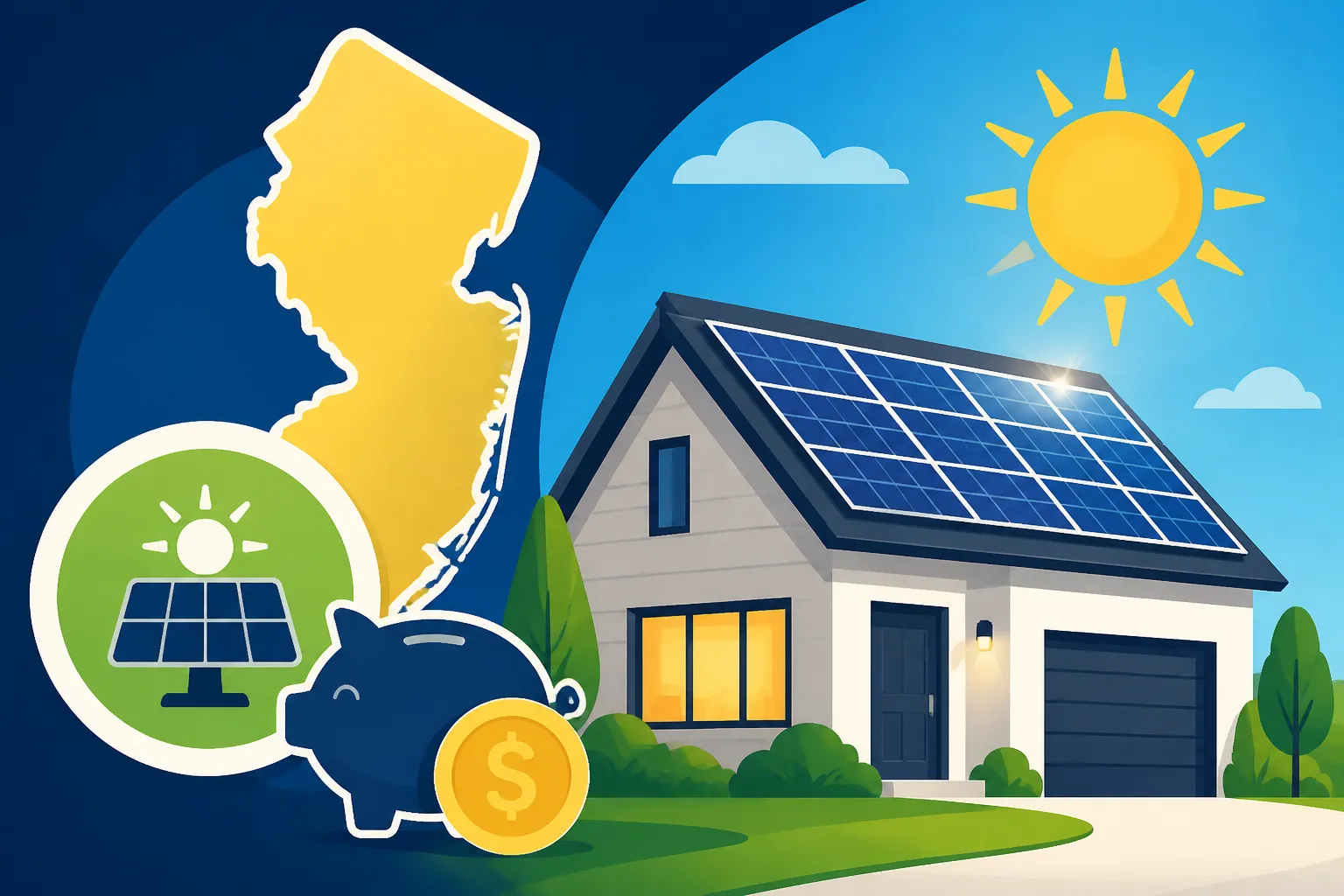
Solar Panel Cost in New Jersey
The idea of going solar in New Jersey sounds fantastic – lower electricity bills, a smaller carbon footprint, and energy independence. But let's be real, the moment you start looking into it, the numbers can feel overwhelming. You're not alone if you've found yourself staring at online calculators, wondering how the heck to figure out the actual, localized cost for your home. This comprehensive guide is designed to cut through the confusion, giving you a clear, empathetic look at solar panel costs in the Garden State, and how to navigate them effectively.
Understanding Average Solar Panel Costs in New Jersey
When you first start researching solar, one of the biggest questions on your mind is undoubtedly, "How much is this actually going to cost me?" It's a valid concern, and one that doesn't have a simple, universal answer because so many variables are at play. However, we can certainly give you a clear picture of what to expect in New Jersey specifically. The cost of solar in the Garden State, much like anywhere else, is typically calculated based on the system's size in kilowatts (kW) and often expressed as a price per watt.
System Size and Its Impact on Price
The total upfront cost of your solar panel system is primarily dictated by its size. A larger home with higher energy consumption will naturally require a larger system, meaning more solar panels and associated equipment, which translates to a higher overall price tag. For instance, a small, efficient bungalow in Trenton might only need a 5 kW system to cover its energy needs, while a sprawling suburban home in Bergen County with central air conditioning and a pool pump could easily require a 10 kW or even 12 kW system. This is why you'll see a range in prices, not a single figure.
To give you a better idea, a common average system size for a typical New Jersey home might fall in the 6 kW to 8 kW range. If you're looking for more detailed information on how to determine your specific needs, our guide on how many solar panels do I need for my home? can be incredibly helpful. The size of your system isn't just about your current electricity use, though; it's also about anticipating future needs, like potentially adding an electric vehicle charger or a solar battery down the line. A reputable installer will always start with an energy audit and discuss your long-term goals to recommend the ideal system size.
Cost Per Watt in the Garden State
While the total system cost varies, comparing the price per watt ($/W) is often a more useful metric for homeowners to gauge value. This figure allows you to compare different quotes on an apples-to-apples basis, regardless of the system size being proposed. In New Jersey, the average cost per watt generally hovers around $2.70 to $3.50, but this can fluctuate based on market conditions, installer overheads, and the specific equipment chosen.
For example, a premium solar panel brand known for high efficiency might push you towards the higher end of that range, while a more budget-friendly option could bring the cost per watt down. Keep in mind that a lower price per watt doesn't always mean a better deal if it comes with lower quality equipment or a less reputable installer. It’s crucial to look at the entire package. When you get quotes, make sure the installers clearly break down their costs, including equipment, labor, permits, and interconnection fees. This transparency is key to understanding what you're truly paying for, and it's a good practice to always get multiple quotes from different providers through services like Modernize to ensure you're getting competitive pricing and the best fit for your needs.
Here's a general idea of what common solar system sizes might cost in New Jersey before incentives:
| System Size (kW) | Average # of Panels (approx.) | Average Pre-Incentive Cost Range | Estimated Price Per Watt |
|---|---|---|---|
| 5 kW | 12-15 | $13,500 – $17,500 | $2.70 – $3.50 |
| 8 kW | 20-24 | $21,600 – $28,000 | $2.70 – $3.50 |
| 10 kW | 25-30 | $27,000 – $35,000 | $2.70 – $3.50 |
| 12 kW | 30-36 | $32,400 – $42,000 | $2.70 – $3.50 |
These are just averages, and your specific costs will vary. Think of these as a starting point for your conversations with installers.
Unpacking What Influences Your New Jersey Solar Quote
It would be wonderful if solar panel costs were as simple as picking a shirt off the rack, but the reality is that many different elements come together to form your final quote. Many homeowners get frustrated when quotes vary wildly, and it's often because they aren't comparing the same underlying components. Understanding these influencing factors can empower you to ask the right questions and ensure you're getting a system tailored to your home and budget, not just a one-size-fits-all solution.
Equipment Choices: Panels, Inverters, and Batteries
The specific brands and types of equipment you choose play a significant role in your overall solar cost. It's like buying a car; a basic model will cost less than a luxury version, even if they both get you from point A to point B.
- Solar Panels: You have options here. High-efficiency monocrystalline panels from top-tier manufacturers like Maxeon (formerly SunPower) or REC, known for their superior performance and durability, will naturally come at a higher price point per panel than more standard options. These premium panels might be a great investment if you have limited roof space and need to maximize energy production in a smaller footprint. Conversely, more budget-friendly brands like Jinko Solar or Trina Solar offer excellent value and reliability for homes with ample roof space. Understanding the nuances between manufacturers and technologies, such as TOPCon or HJT, can directly impact your efficiency and long-term savings. For more insights, exploring topics like the best solar panels of 2026 can give you a good overview of options.
- Inverters: The unsung heroes of a solar system, inverters convert the DC electricity from your panels into AC electricity your home can use. You'll typically encounter three main types: string inverters, microinverters, and power optimizers. Microinverters, like those from Enphase, are often more expensive upfront but offer panel-level monitoring and performance optimization, which can be a huge benefit on roofs with partial shading. String inverters, on the other hand, are generally more affordable and efficient for roofs with uniform sun exposure. If you're on a budget but still want some optimization, power optimizers (like those from SolarEdge) paired with a central inverter can be a good middle ground.
- Solar Batteries: Adding a battery storage system, such as a Tesla Powerwall or Enphase IQ Battery, can significantly increase your upfront costs. While not strictly necessary for every solar setup, especially if New Jersey's net metering policies are favorable to your usage patterns, a battery provides energy independence during grid outages and allows you to store excess solar power for use at night. Given that Solar Battery Incentives in 2026 are still available, the added cost might be offset by savings and peace of mind, but it's a significant upgrade that needs careful consideration.
Installation Complexity and Labor
The actual labor involved in getting your solar panels onto your roof and connected to your home's electrical system is a major component of the cost. This isn't just about the crew on your roof; it includes design, engineering, project management, and all the administrative tasks.
- Roof Type and Condition: Believe it or not, the material and pitch of your roof can impact labor costs. Installing panels on a straightforward asphalt shingle roof is typically less complex and thus less expensive than installing them on a tile, slate, or metal roof, which often require specialized mounting hardware and techniques. If your roof is old and needs replacement, installers might recommend doing that before solar, which adds to your overall project cost. Our guide on do I need a new roof before solar? delves deeper into this common dilemma. Furthermore, a very steep roof pitch or multiple dormers can make installation more time-consuming and hazardous, leading to higher labor charges.
- Permitting and Interconnection: Navigating local permits and utility interconnection requirements can be a labyrinth. Your solar installer handles all of this on your behalf, and these administrative fees are factored into your total cost. Different municipalities and utility companies in New Jersey have varying fee structures and processes, which can subtly affect your overall price. For example, some townships might have more stringent zoning or electrical inspection requirements than others. Understanding the Solar Permitting & Interconnection PTO Explained process can shed more light on these steps.
- Ground-Mount vs. Roof-Mount: While most residential solar systems are roof-mounted, some homeowners opt for ground-mounted systems, especially if their roof isn't suitable due to shading, age, or orientation. Ground-mount systems typically cost more due to the additional structural elements, trenching for electrical conduits, and land preparation required. However, they offer greater flexibility in panel orientation and tilt, potentially maximizing energy production.
New Jersey's Solar Incentives and How They Reduce Your Costs
Here's where the financial picture gets much brighter for New Jersey homeowners. The state has long been a leader in solar adoption, thanks in no small part to its robust incentive programs. These incentives are designed to make solar more accessible and affordable, significantly reducing your net investment and improving your return on investment.
State-Specific Programs: SREC-II and SuSI
New Jersey has evolved its incentive programs over the years, transitioning from the original SREC program to the SREC-II program, and now primarily relying on the Successor Solar Incentive (SuSI) program, which includes the Administratively Determined Incentive (ADI) and Competitive Solar Incentive (CSI) programs. These are crucial for understanding your ongoing savings.
- Administratively Determined Incentive (ADI) Program: This program is designed for smaller solar projects, typically residential and small commercial systems. Under ADI, new solar projects receive fixed payments based on their expected energy production. Instead of selling volatile SRECs on a market, homeowners receive a predictable incentive amount for 15 years. The incentive rate is set by the Board of Public Utilities (BPU) and varies based on factors like system type (rooftop vs. ground-mount) and whether it includes energy storage. This predictability helps homeowners forecast their savings much more accurately, reducing financial uncertainty. For specific details on the current rates and how to qualify, our New Jersey SREC-II / SuSI Program Guide is an excellent resource.
- Competitive Solar Incentive (CSI) Program: The CSI program is for larger commercial and community solar projects. While most residential systems fall under ADI, understanding that New Jersey has a comprehensive strategy for various solar scales shows the state's commitment. These performance-based incentives are crucial for continued solar growth across different sectors.
These state-level incentives effectively reduce the payback period for your solar investment, making it more attractive for homeowners. They transform what might seem like a daunting upfront cost into a manageable, long-term investment with significant returns.
Net Metering Policies and Energy Credits
Beyond direct incentives, New Jersey's net metering policy is a game-changer for solar economics. Net metering allows you to send any excess electricity your solar panels produce back to the grid and receive credits on your utility bill. Essentially, your electric meter spins backward (or, more commonly, your digital meter records the outflow).
- How Net Metering Works in NJ: When your solar panels produce more electricity than your home consumes, that surplus power is exported to the grid. Your utility, like Public Service Electric & Gas (PSE&G) or Atlantic City Electric (ACE), then credits you for that electricity at a rate similar to what you pay for power. These credits can then be used to offset the cost of electricity you draw from the grid at night or on cloudy days when your panels aren't producing enough. This mechanism effectively turns the grid into a giant, free battery for solar homeowners.
- Maximizing Your Savings: Without net metering, you'd have to store all your excess energy in a physical battery, which, as we discussed, adds considerable cost. Net metering ensures that every kilowatt-hour your panels generate contributes to your savings, making solar a truly viable option. It's why understanding Net Metering Explained: How It Works by State is so vital for anyone considering solar. Keep in mind that while New Jersey has strong net metering rules, policies can change, so it's always good to stay informed about the New Jersey Net Metering Rules in 2026.
Local Utility Rebates and Programs
While state-level incentives are generally the largest, some local utility companies in New Jersey might offer additional rebates or programs to encourage solar adoption. These are often smaller but can add up to further reduce your costs.
- Checking with Your Provider: It's always a good idea to check directly with your utility company – whether it's PSE&G, JCP&L, or Atlantic City Electric – to see if they have any current solar rebate programs or special tariffs for solar customers. These can be seasonal or specific to certain types of installations. Our guide on Utility Solar Rebates: How to Find Yours offers excellent tips on where to look for these often overlooked savings opportunities.
- Combined Savings: The real magic happens when you combine all these incentives. The state programs, robust net metering, and any potential utility rebates work together to drastically lower the net cost of your solar system and shorten your solar panel payback period explained. This stacked approach is why New Jersey remains one of the most attractive states for solar investment.
Making Solar Affordable: Your Financing Journey in New Jersey
One of the biggest hurdles homeowners face when considering solar is the upfront investment. It's completely understandable to feel daunted by what can be a tens of thousands of dollar decision. But the good news is, there are several pathways to ownership that can make solar accessible, often with little to no money down. Your choice of financing method will not only affect your initial outlay but also your long-term savings and whether you fully benefit from all available incentives.
Cash Purchase: The Direct Route
If you have the means, paying for your solar system upfront with cash is often the most financially advantageous option.
- Maximized Savings and ROI: When you pay cash, you avoid all interest payments and financing fees. This means every dollar saved on your electricity bill goes directly into your pocket, and your system's payback period is typically the shortest. You also immediately own the asset, retaining full control and receiving all available incentives, including the often substantial state programs and any federal solar incentives that still exist in 2026. Over the 25+ year lifespan of your system, these savings can be truly significant, making the solar ROI and 25-year savings breakdown look incredibly appealing.
- Simplicity and Full Ownership: A cash purchase is straightforward. You pay, the system is installed, and you own it outright. There are no monthly loan payments, no interest rates to worry about, and no lease agreements to navigate. This complete ownership also means that if you decide to sell your home down the line, the solar system is a clear asset that can increase your property value.
Solar Loans: Spreading the Cost
For many homeowners, a solar loan is the sweet spot between upfront cash and long-term leasing. It allows you to finance the system over a period, making monthly payments, while still generally retaining ownership and eligibility for incentives.
- Types of Solar Loans: You'll typically encounter secured solar loans (like a home equity loan or PACE financing) or unsecured solar loans. Secured loans often offer lower interest rates because they're backed by your home's equity. Unsecured loans, while potentially having higher interest rates, don't put your home at risk. Many solar companies partner with specific lenders to offer dedicated solar loans, often with attractive rates and terms specifically designed for solar projects.
- Balancing Payments and Savings: With a solar loan, your goal is often to have your monthly loan payment be equal to or less than your previous average electricity bill. This way, you're essentially swapping one payment for another, but building equity in an asset that will eventually pay for itself. It's important to scrutinize the loan terms, including interest rates, loan duration, and any dealer fees, which can sometimes be hidden costs. For a complete understanding, our solar loans complete guide walks you through everything you need to know. Remember, using a platform like Modernize can help you compare different loan options offered by various installers.
- Claiming Incentives: With a solar loan, you generally remain the system owner, making you eligible for all applicable state and local incentives. This is a key advantage over leases or PPAs.
Leases and Power Purchase Agreements (PPAs): $0 Down Options
If the idea of a large upfront cost or taking on a loan makes you hesitant, solar leases and Power Purchase Agreements (PPAs) offer a way to go solar with little to no money down. These are often attractive for their simplicity and lack of upfront financial commitment.
- Solar Lease: With a solar lease, a third-party company (the solar provider) owns, installs, and maintains the solar panel system on your roof. You, the homeowner, pay a fixed monthly "rent" for the use of the system, similar to leasing a car. Your electricity bills are reduced or eliminated, and your lease payment is typically less than what you would have paid for electricity previously, leading to immediate savings. The solar company generally claims the incentives, as they are the system owner. Our guide on solar lease vs PPA vs buy which is best? offers a deep dive into comparing these options.
- Power Purchase Agreement (PPA): A PPA is similar to a lease in that a third party owns and maintains the system, but instead of paying a fixed monthly lease payment, you agree to purchase the electricity generated by the panels at a fixed rate per kilowatt-hour (kWh). This rate is typically lower than your utility's rate, guaranteeing savings. Like a lease, you typically have little to no upfront cost, and the solar provider handles all maintenance and claims the incentives.
Both leases and PPAs offer predictable monthly costs and peace of mind regarding maintenance, as the solar provider is responsible for ensuring the system performs. However, a major downside is that you generally do not claim the solar incentives yourself, as the system owner does. This means you miss out on a significant portion of the total lifetime savings compared to owning the system outright or via a loan. While they can still save you money, it's crucial to understand that your overall return on investment will be lower than if you purchased the system.
No matter which financing option you choose, the goal is to make solar work for your budget. New Jersey's strong market and incentives mean there's likely a path that makes solar panels in the Garden State a smart investment for you.
Disclaimer
Please note that the information provided in this article is for general guidance and informational purposes only. Solar costs, incentives, and policies are subject to change and can vary significantly based on location, specific equipment, and individual circumstances. It is always recommended to consult with multiple qualified solar professionals and financial advisors to get personalized quotes and advice tailored to your home and financial situation.