Do Solar Panels Pay Off in Cold or Cloudy States?
Solar panel financial returns in cold or cloudy states rely on diffuse light capture and temperatures below seventy-seven degrees.
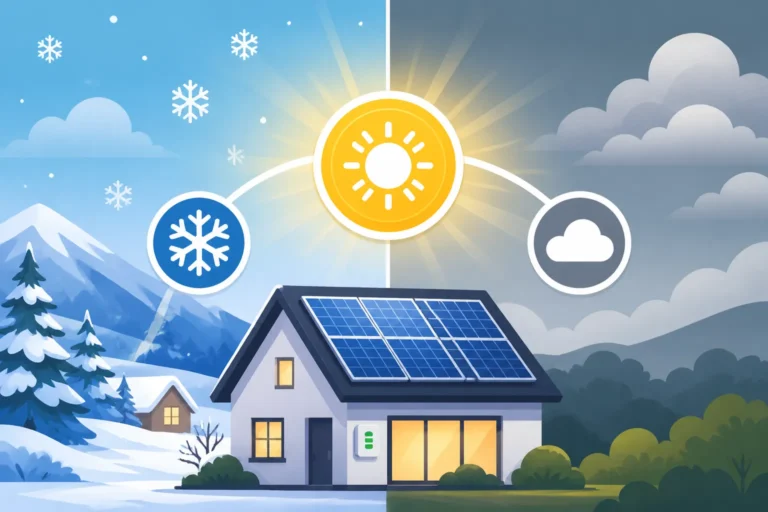
Solar panel financial returns in cold or cloudy states rely on diffuse light capture and temperatures below seventy-seven degrees.
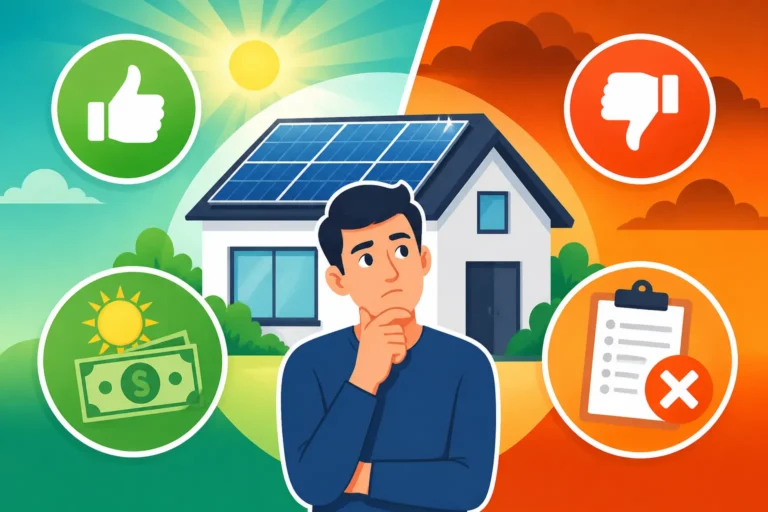
A solar power purchase agreement lets homeowners buy rooftop electricity through long term contracts without paying upfront equipment costs.
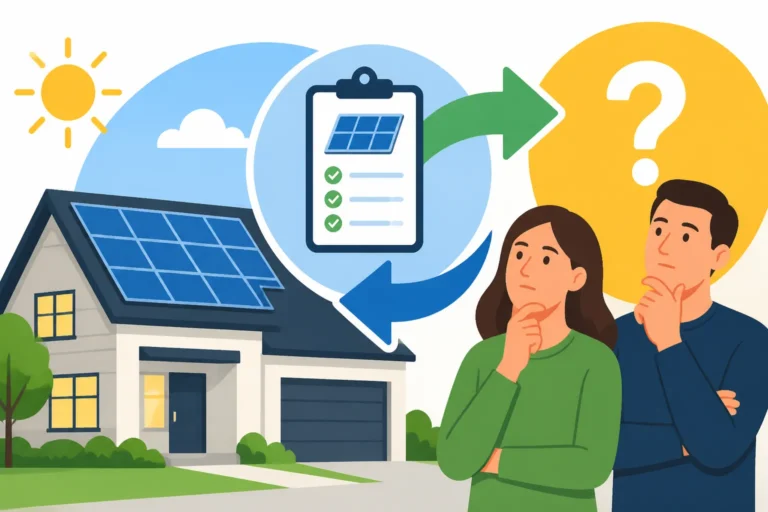
Leased solar agreements during a home sale explain transferability, buyout options, and early termination penalties for owners.
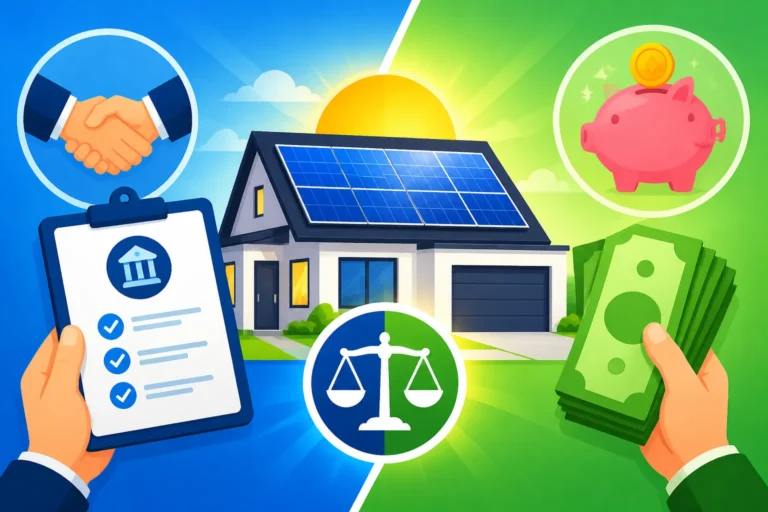
Solar financing and cash purchases in 2026 involve comparing interest costs, tax credits, and home resale value impacts.
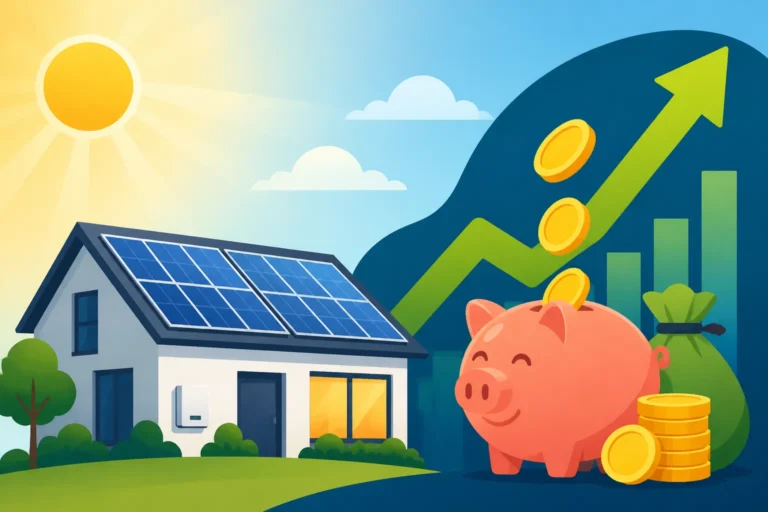
Solar panel savings over twenty five years, including regional electricity rates, sunshine amounts, and panel warranties.
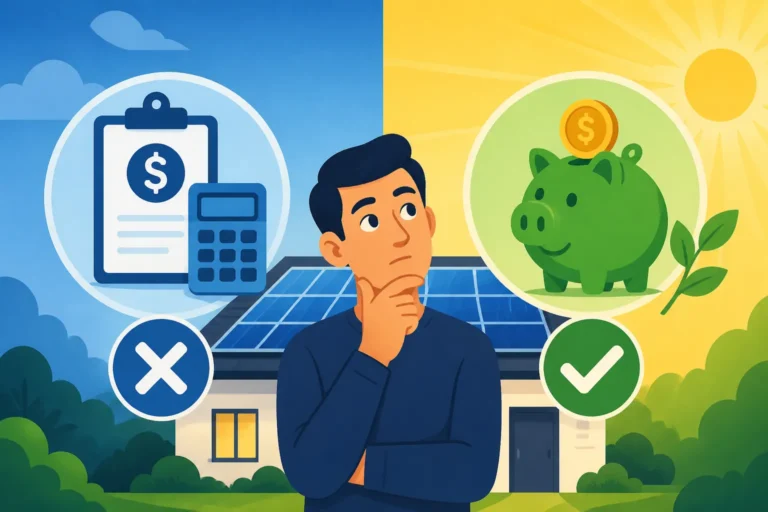
Early solar loan payoff terms, interest rates, prepayment penalties, and unsecured debt differences explained for homeowners.
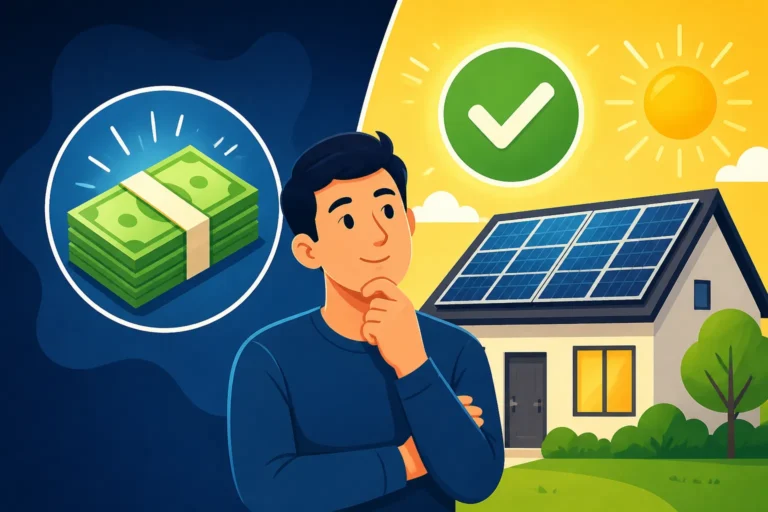
Buying home solar panels with cash eliminates loan interest and dealer fees while maximizing long term electricity savings.
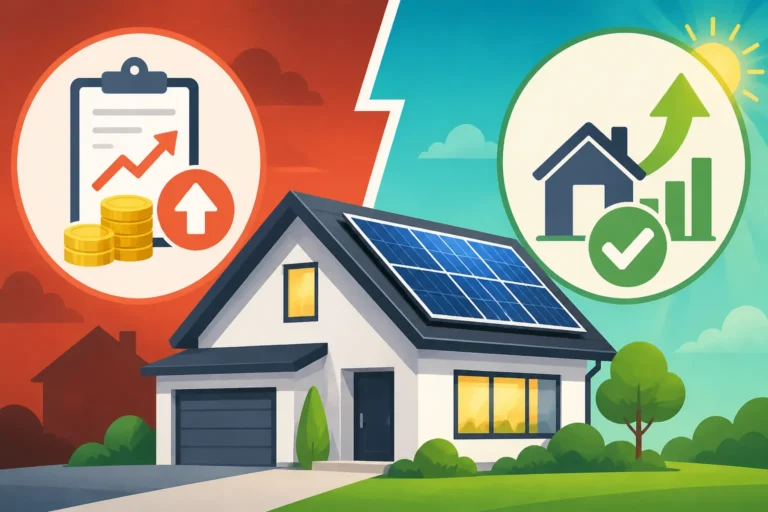
Solar energy systems usually boost home value without increasing annual property taxes through state level tax exemptions.
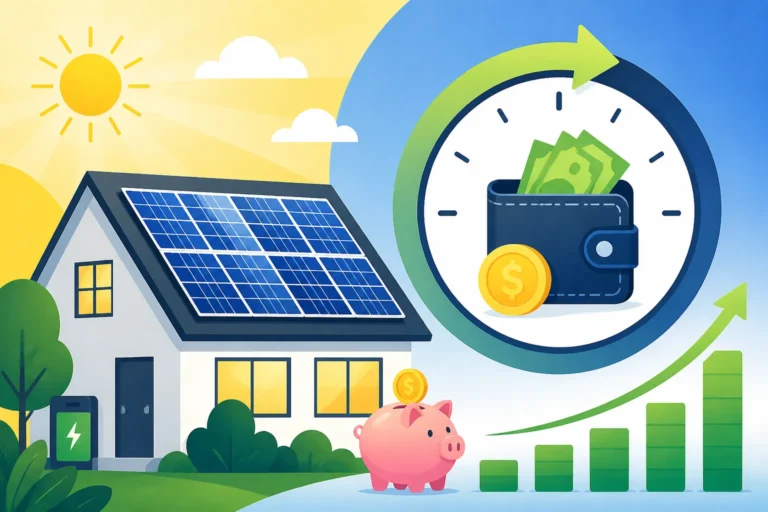
Residential solar payback periods in the United States average eight to twelve years, with specific timelines depending on location and system costs.
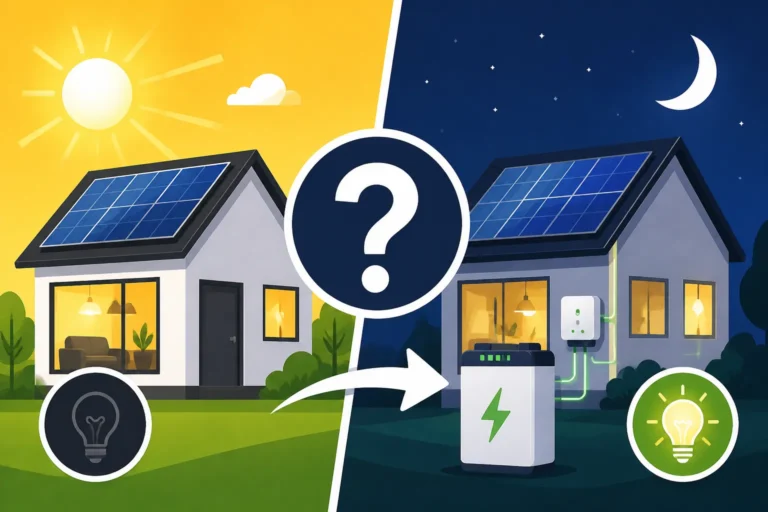
Adding a lithium-ion battery to home solar systems stores excess daytime electricity and provides backup power during blackouts.