Are American-Made Solar Panels Better?
It’s totally understandable to feel a bit overwhelmed when you're wading through all the choices for home solar panels. You hear terms like "American-made" and immediately think "better quality," "supporting local," and maybe even "more reliable." But is that truly always the case, or is it a more nuanced conversation? This guide is here to unravel the complexities surrounding American-made solar panels, helping you understand what that label really means and if they're the right fit for your home and values.
Understanding What "American-Made" Truly Means for Solar Panels
When you hear "American-made," it evokes a strong sense of pride and quality, right? But with solar panels, like so many modern technologies, the reality is often a lot more intricate than a simple label suggests. The global supply chain for solar components is vast and interconnected, meaning even panels assembled within the U.S. might have a complex lineage.
The Nuances of Sourcing Components
Think of it this way: a car might be branded "American," but look under the hood, and you'll find parts from Germany, Japan, Mexico, and dozens of other countries. Solar panels operate on a very similar principle. The primary component, the silicon wafer, often comes from Asia, which dominates the global polysilicon and wafer production. These wafers are then processed into photovoltaic cells, which might happen in one country, before being shipped to another for module assembly.
Even highly reputable "American" brands often rely on this international dance. For instance, the glass that protects the cells, the aluminum frames, the junction boxes, and even the tiny electrical connectors often come from specialized factories around the world. It’s an economic reality driven by efficiency, scale, and specific expertise. A company might have a fantastic, cutting-edge facility in the United States, but if the most cost-effective or highest-quality silicon is sourced from overseas, they'll often go that route to keep the final product competitive for homeowners like us. This doesn't necessarily detract from the panel's overall quality, but it certainly adds layers to the "made in America" claim.
Assembly vs. Full Manufacturing
Here's a crucial distinction that often gets overlooked: is a panel truly manufactured in the U.S. from scratch, or is it assembled here using imported components? The difference is significant. Full manufacturing would imply taking raw materials, like polysilicon, through the ingot, wafer, and cell production stages, all the way to the final panel. This is a capital-intensive process that fewer companies do entirely within the United States.
Many companies, however, have invested heavily in U.S. assembly plants. These facilities take pre-made solar cells and other components and put them together into finished modules. This still creates American jobs, contributes to the local economy, and might qualify for certain "Buy American" provisions or incentives. For example, Qcells, a major player, has invested significantly in its manufacturing facility in Dalton, Georgia, which handles cell and module production. Similarly, Silfab Solar operates plants in Washington and South Carolina. These facilities are incredibly important for domestic production capacity and for ensuring a certain level of oversight. Understanding this distinction can help you ask more informed questions when talking to solar installers about where their panels truly originate. It’s not just about where the name on the panel comes from, but where the physical work happens.
Advantages of Choosing American-Made Solar Panels
So, with all those nuances in mind, why might someone still specifically seek out American-made solar panels? There are indeed several compelling reasons that extend beyond simple patriotism, touching on everything from quality assurance to economic impact and even global stability.
Quality Control and Reliability
One of the most frequently cited advantages for American-made products across industries, including solar, is the perception of higher quality control. U.S. manufacturing facilities are typically subject to rigorous environmental regulations, labor laws, and quality assurance standards. This often means better working conditions, more stringent testing protocols, and a higher expectation for consistency in the final product.
While top-tier international manufacturers also maintain excellent quality, some homeowners feel a greater sense of trust knowing their panels were produced under U.S. oversight. This could potentially translate into a lower defect rate and a more reliable system over its long lifespan. It's not a guarantee, of course – a poorly made panel is poorly made regardless of origin – but the systemic approach to quality in American factories can offer an added layer of assurance. When considering the long-term investment of solar, knowing that the manufacturing process adheres to high standards can offer significant peace of mind. Checking out a company's product and performance warranties, which often span 25 years or more, can give you a good indication of their confidence in their own quality, regardless of manufacturing location.
Economic and Environmental Impact
Choosing American-made solar panels directly supports the U.S. economy. This means jobs, not just in the manufacturing plants themselves (like those in states such as Georgia, Washington, Texas, and Minnesota), but also in related industries like transportation, material suppliers, and even the local businesses that support the factory workers. For many, this local economic ripple effect is a powerful motivator.
Furthermore, there can be environmental benefits. Panels manufactured domestically typically have a shorter supply chain, meaning less long-distance shipping. This reduces the carbon footprint associated with transporting components and finished products across oceans. While the environmental impact of manufacturing itself is a separate consideration, reducing shipping miles is a tangible benefit. It aligns with the broader goal of solar energy: to reduce our reliance on fossil fuels and lessen our overall environmental impact. For those who prioritize sustainability in every aspect of their choices, including procurement, this can be a significant factor.
Supply Chain Security and Trade Policies
The past few years have highlighted the vulnerabilities of global supply chains. Wars, pandemics, and various geopolitical tensions can cause significant disruptions, leading to material shortages, shipping delays, and price volatility. By choosing solar panels manufactured in the U.S., you're investing in a more resilient and secure supply chain.
Domestic production offers a buffer against these international uncertainties. It means less reliance on overseas shipping routes and fewer potential choke points that could impact installation timelines or the availability of replacement parts down the road. Additionally, U.S. solar manufacturers are sometimes shielded by trade policies, like anti-dumping and countervailing duties (AD/CVD), which can impose tariffs on imported panels. While these policies aim to level the playing field for domestic producers, they can also affect the cost and availability of foreign panels. Opting for American-made can make your project less susceptible to these fluctuating international trade dynamics, offering a degree of predictability in planning your solar installation.
Addressing the Trade-offs: Cost, Availability, and Performance
While the appeal of "American-made" is strong, it's crucial to look at the full picture, including some of the trade-offs that might arise. Going solar is a big decision, and understanding these factors will help you make the best choice for your specific situation.
Price Considerations
Let's be real: cost is almost always a primary concern for homeowners considering solar. And generally speaking, American-made solar panels can sometimes come with a higher price tag compared to their internationally produced counterparts. Why? A few key reasons stand out. Labor costs in the United States are typically higher than in many other manufacturing hubs around the world. This includes wages, benefits, and adherence to stricter labor laws.
Additionally, U.S. factories often face more stringent environmental regulations and compliance costs. While these are good for workers and the planet, they do add to the overhead. The scale of production also plays a role; some international manufacturers operate on such massive scales that they achieve economies of scale that are hard for even large U.S. plants to match. This isn't to say American-made panels are always prohibitively expensive, but it's a factor to budget for. It's essential to compare quotes not just on the final price, but on the cost per watt for solar panels, which provides a more apples-to-apples comparison. Sometimes, the peace of mind or the desire to support domestic manufacturing outweighs a slight cost increase for homeowners.
Variety and Efficiency
The global solar market is incredibly dynamic and diverse. Countries like China, South Korea, and Germany have poured immense resources into research and development, leading to a vast array of panel technologies and efficiency ratings. This means that if you're looking for the absolute cutting-edge in panel efficiency or a very specific panel size or aesthetic, the widest selection might often be found among international brands.
While American manufacturers like Silfab and Mission Solar produce high-quality, efficient panels, the sheer breadth of options and rapid innovation cycles sometimes mean that international players can bring new technologies to market faster or offer a broader range of products. For instance, if you have a particularly small or complex roof and need every square inch to generate maximum power, you might find more ultra-high-efficiency options from global leaders. This isn't a knock on American innovation, but rather a reflection of the globalized nature of technological advancement and manufacturing scale. When you're searching for specific panels or even smaller components on marketplaces like Amazon, you'll see this vast diversity first-hand, with options from all over the globe.
Real-World Performance Differences
Here's the kicker: the "American-made" label, by itself, doesn't automatically guarantee superior real-world performance compared to a top-tier panel manufactured elsewhere. Many international brands, such as Canadian Solar, Jinko Solar, and Trina Solar, consistently rank among the most reliable and efficient in the world. They offer excellent warranties, rigorous testing, and decades of proven performance in diverse climates.
What truly matters for your system's performance is the overall quality of the components, the panel's efficiency rating, its degradation rate (how much power it loses over time), and the strength of its product and performance warranties. A high-quality panel from Vietnam or Malaysia with a strong 25-year warranty from a reputable manufacturer can often perform just as well, if not better, than a lower-tier American-assembled panel. It's crucial to look beyond just the country of origin and delve into the technical specifications, independent reviews, and the track record of the specific panel brand and model. Don't fall into the trap of assuming origin automatically equals superior quality; instead, evaluate each panel on its own merits and the confidence the manufacturer places in it through their warranty.
How to Identify and Verify American-Made Solar Panels
So, you're leaning towards supporting domestic manufacturing, and that's fantastic! But with the complexities of global supply chains, how do you actually verify if the panels you're looking at are truly American-made? It requires a bit of detective work and knowing what questions to ask.
Checking Certifications and Labels
The most straightforward way to identify American-made panels is to look for explicit labels and certifications. The "Made in USA" label is regulated by the Federal Trade Commission (FTC) and generally means that "all or virtually all" of the product is made in the U.S. However, as we discussed, solar panels have many components, so this can still be tricky. For solar specifically, you might look for certifications or memberships with organizations like the Solar Energy Industries Association (SEIA). SEIA’s website or their members list can sometimes provide information on manufacturing locations for various brands.
Additionally, some government procurement programs or incentives might have specific "Buy American" clauses, and the panels eligible for these will be clearly identified by manufacturers. Always check the manufacturer's official website for their "About Us" or "Manufacturing" sections. Reputable American manufacturers are usually very proud to highlight their U.S. production facilities and the jobs they create. If an installer is vague about the origin, press for more details or consider getting a quote from an installer who can offer more transparency.
Key American Manufacturers and Brands
While the definition of "American-made" can be fluid due to global component sourcing, several companies have a significant manufacturing or assembly presence in the United States. Knowing these names can help you in your search:
- Qcells: While a South Korean company, Qcells has a substantial manufacturing footprint in Dalton, Georgia, where they produce both cells and modules. This facility is one of the largest solar manufacturing plants in the Western Hemisphere.
- Silfab Solar: This company has manufacturing facilities in Bellingham, Washington, and Fort Mill, South Carolina, producing high-efficiency solar modules.
- Heliene: Operating a manufacturing plant in Mountain Iron, Minnesota, Heliene produces modules for both residential and commercial markets.
- Mission Solar Energy: Based in San Antonio, Texas, Mission Solar manufactures monocrystalline PERC (Passivated Emitter Rear Contact) solar panels.
When you're talking to a solar installer, ask them specifically if they carry panels from these brands and where those specific models were manufactured. Don't be shy about asking for product datasheets, which often list the country of origin. While you might not be buying a full solar system on Amazon, if you're looking for individual panels for a smaller project or doing research, you can often find details about origin in product descriptions or by contacting the seller directly. It’s about being an informed consumer and ensuring that your values align with the products you choose to invest in.
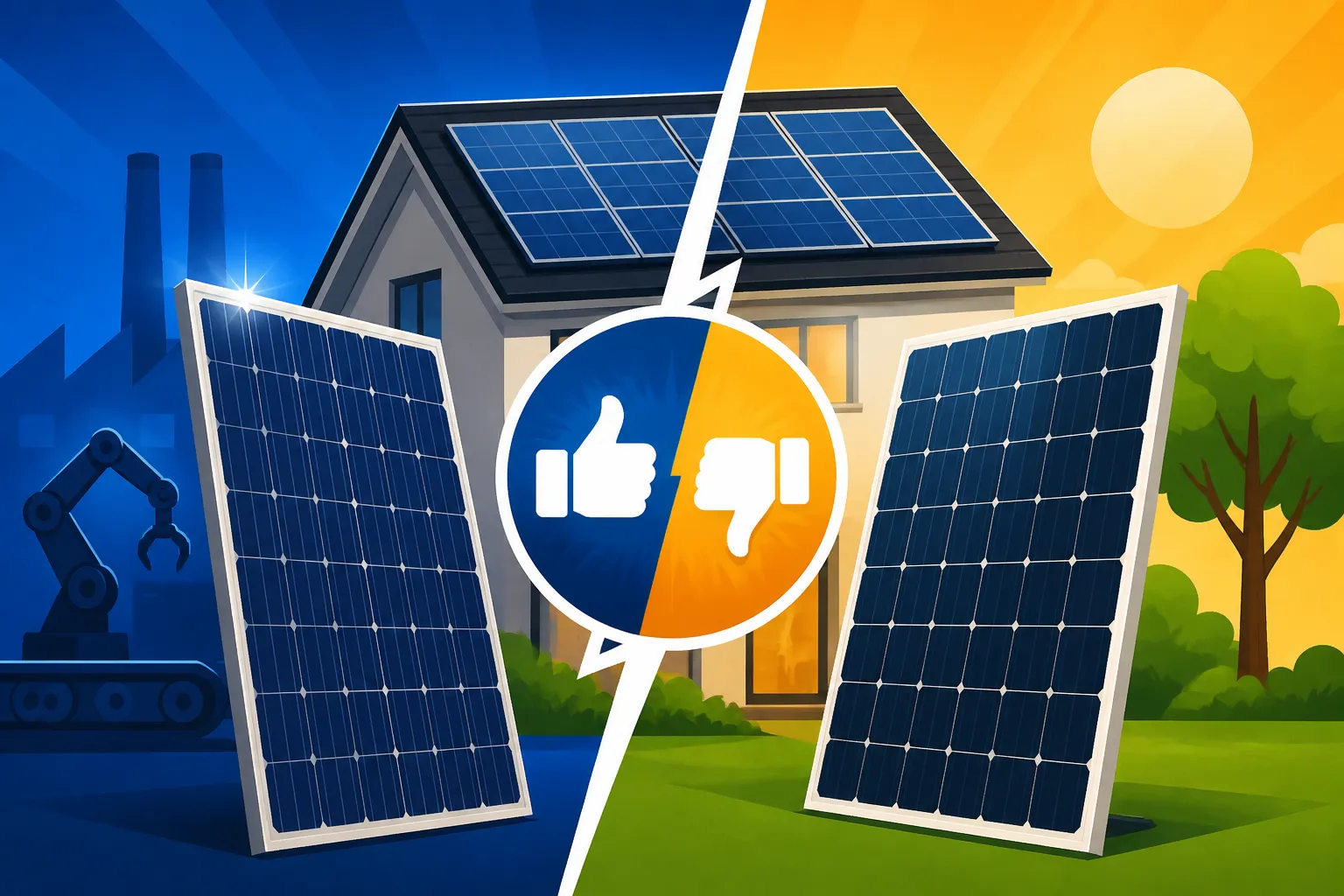
Comparing Solar Panel Options: A Decision-Making Table
To help you sort through the various factors involved in choosing solar panels, here's a handy comparison table. This isn't just about American-made versus international; it's about evaluating the most critical aspects of any panel you might consider.
| Feature / Consideration | American-Made Panels (General Tendencies) | Internationally-Made Panels (General Tendencies) | Key Questions to Ask / Factors to Evaluate |
|---|---|---|---|
| Cost | Often higher upfront | Often more competitive upfront | What is the Solar Panel Cost Per Watt Explained? Does the overall system cost fit my budget? |
| Quality Control | Strong perception of high QC & labor standards | Varies widely by brand; top brands have excellent QC | What are the specific manufacturing processes and quality checks? |
| Availability | Good, but may be limited to specific brands/models | Very wide range of options, global supply chain | Is the desired panel readily available? What are lead times? |
| Efficiency | Many offer high efficiency, but not always cutting-edge | Wide spectrum, often leading in cutting-edge tech | What is the panel's efficiency rating? How much power do I need? |
| Warranties | Typically strong product & performance warranties | Top brands offer strong warranties, some budget options less | What are the terms of the product and performance warranties? How long do Solar Panel Warranties Explained typically last? |
| Innovation | Strong R&D, but global market can lead in specific niches | Rapid innovation, diverse technologies available | Does the panel feature technologies like TOPCon or HJT? |
| Supply Chain | More resilient to geopolitical disruptions | Can be more exposed to global shipping & trade issues | How does the supply chain affect installation timelines? |
| Ethical Sourcing | Generally higher labor and environmental standards | Varies significantly; top brands often prioritize ethics | Does the manufacturer have transparency about their supply chain and labor practices? |
| Local Economy | Directly supports U.S. jobs and manufacturing | Supports global economies, potentially less direct local impact | Is supporting local jobs a high priority for me? |
When you're comparing options, always ask your solar installer for detailed information on every panel they propose. A good installer, like those you might find through reputable regional programs, will be transparent about where their panels come from and why they recommend them. Remember, the goal is to get a system that performs well, lasts long, and meets your personal preferences, whether that includes a "Made in USA" stamp or not.
Final Thoughts on Your Solar Panel Choice
Ultimately, deciding whether American-made solar panels are "better" isn't a simple yes or no. It's about weighing your priorities. If supporting the domestic economy, potentially benefiting from stricter labor and environmental standards, and having a more resilient supply chain are at the top of your list, then seeking out truly American-made panels is an excellent choice. Companies like Qcells, Silfab, and Mission Solar are definitely worth looking into for their U.S. manufacturing presence. You can even find more specific guidance on topics like the Best Solar Panels Made in the USA for deeper research.
However, if your primary drivers are getting the absolute lowest cost per watt, the widest array of cutting-edge technologies, or simply the highest possible efficiency for a very specific roof constraint, then a global search might open up more options. Many international brands offer exceptional quality, robust warranties, and proven reliability that compete directly with, or even surpass, some domestic offerings. It's truly a global marketplace for solar, and the best choice for you might depend heavily on your local market, available incentives like State Solar Incentives: Complete 2026 Guide, and your personal financial and ethical considerations.
The key takeaway is to do your homework. Ask pointed questions to your installer about where the panels are manufactured and assembled. Look closely at the Solar Panel Warranties Explained – both product and performance – as these are strong indicators of a manufacturer's confidence in their quality. Consider how the total system cost, including installation and any financing, fits into your budget. For a broader understanding of pricing, you can explore resources like How Much Do Solar Panels Cost? 2026 Guide or delve into specific costs with Solar Panel Cost Per Watt Explained. Don't let marketing jargon sway you without understanding the facts. Your solar journey is unique, and the "best" panels are the ones that best meet your needs, your budget, and your values for years to come.
Disclaimer
The information provided in this article is intended for general informational purposes only and does not constitute professional advice. Solar panel technology, incentives, and market conditions are subject to rapid change. Always consult with a qualified solar professional and financial advisor before making any purchasing decisions.