Is It Cheaper to Buy or Lease Solar in 2026?
Deciding whether to buy or lease solar panels for your home can feel like navigating a maze blindfolded. You're probably wondering not just about the upfront costs, but also what truly gives you the most bang for your buck in the long run and avoids future headaches. This guide is here to break down the real financial differences and lifestyle implications of purchasing a solar system outright, taking out a loan, or entering into a lease or Power Purchase Agreement (PPA), so you can make an informed decision for your unique situation.
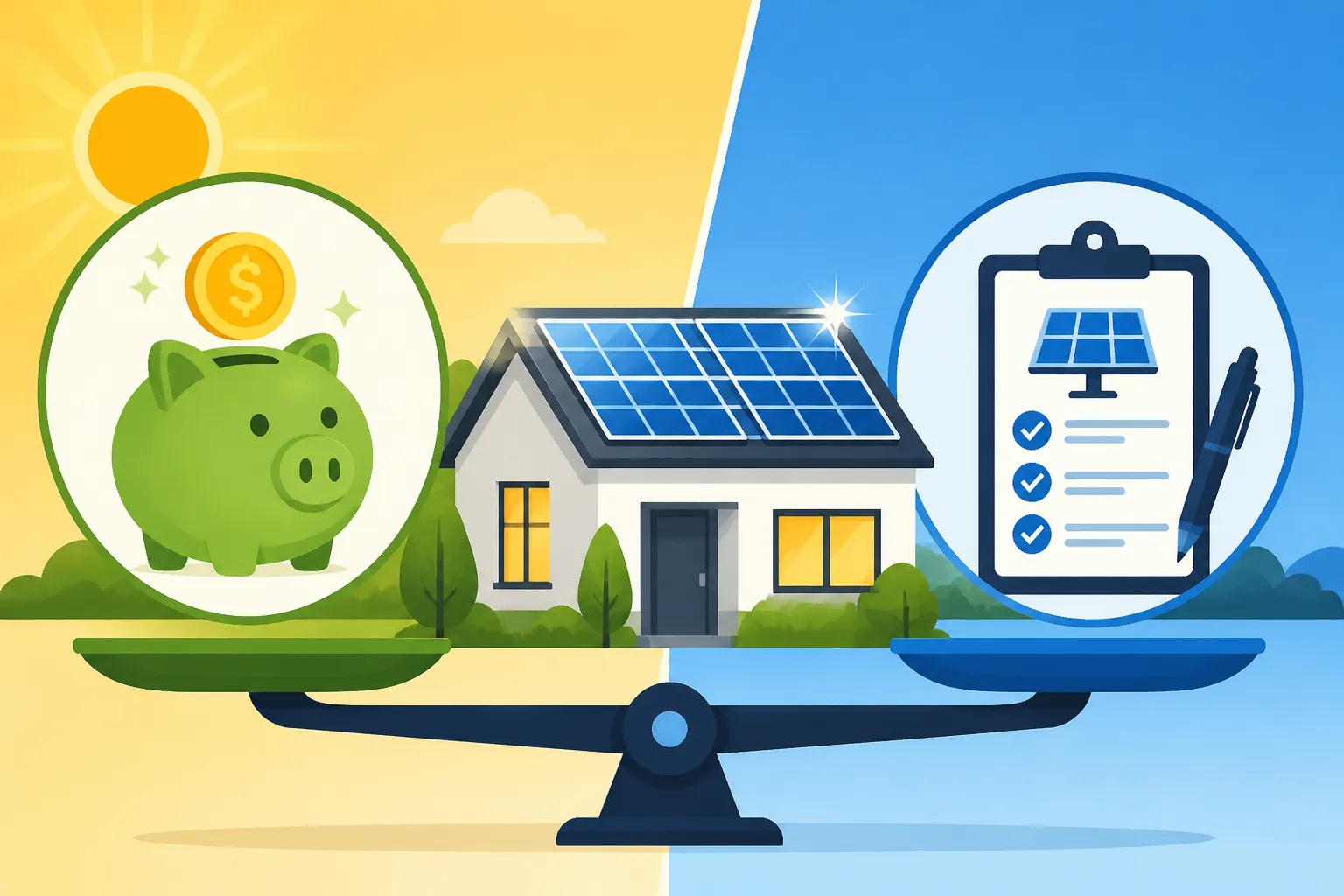
Understanding the Fundamental Differences Between Buying and Leasing Solar
When you're thinking about going solar, the first major fork in the road is deciding how you'll acquire your system. It's not just about getting panels on your roof; it's about ownership, financial commitment, and how much control you want over your energy production. Let's really dig into what "buying" and "leasing" mean in the solar world, because they're not as simple as they might seem on the surface.
Ownership Models: Cash, Loan, Lease, and PPA
It’s easy to get confused by all the jargon. At its heart, "buying" solar means you own the equipment, while "leasing" means someone else does. But within those two broad categories, there are critical distinctions that impact everything from your monthly bills to your long-term savings.
When you buy solar, it typically comes in two flavors: a direct cash purchase or a solar loan. With a cash purchase, you're paying the full cost of the system upfront. This is usually the most financially advantageous route over the system's lifespan, as you avoid interest payments and immediately gain full access to all incentives. However, it requires significant capital. A solar loan, on the other hand, allows you to finance the system, much like a car or home improvement loan. You own the system from day one, but you make monthly payments to a lender. These loans often come with attractive rates, though you need to be mindful of potential "dealer fees" which can inflate the loan amount without you realizing it. Understanding how these fees impact your overall cost is crucial when exploring solar financing.
Leasing solar, however, is a different beast entirely. Here, a third-party company, like Sunrun or Vivint Solar, owns and maintains the solar panel system on your roof. You essentially rent the panels from them. The most common forms are a solar lease or a Power Purchase Agreement (PPA). With a lease, you pay a fixed monthly payment for the right to use the solar panels and the electricity they generate. A PPA is slightly different: instead of a fixed monthly payment, you agree to buy the electricity produced by the panels at a set rate per kilowatt-hour (kWh), which is typically lower than your utility's rate. While both options offer lower upfront costs and often include maintenance, you don't actually own the system. This distinction is paramount, especially when considering things like tax credits or property value. For a deeper dive, you might find this guide on Solar Lease vs PPA vs Buy: Which Is Best? incredibly helpful.
Who Benefits From Which Option?
The "best" option isn't one-size-fits-all; it truly depends on your financial situation, your long-term goals, and even your tax appetite. Cash purchases are ideal for homeowners with sufficient savings who want to maximize their long-term ROI. You get to claim all the incentives and benefit from full electricity bill savings from day one. Solar loans are perfect for those who want to own their system and claim incentives but don't have the upfront cash. They allow you to build equity in your system, and with rising electricity rates, your fixed loan payment can become increasingly advantageous over time.
Solar leases and PPAs, conversely, are excellent for homeowners who want to go solar without any upfront cost or maintenance responsibilities. If you're not eligible for tax credits (perhaps due to low tax liability) or simply prefer a predictable monthly energy bill over system ownership, these can be very appealing. They also offer a degree of simplicity, as the leasing company handles everything. This makes solar accessible to a broader range of homeowners, regardless of their credit score or available cash, although credit checks are usually still part of the process.
The Financial Deep Dive: The True Cost and Savings of Buying Solar
When you decide to buy your solar system, whether with cash or a loan, you're stepping into a world of greater financial control and potentially greater long-term returns. But it's not without its initial investment, and it's vital to understand all the moving parts.
Upfront Costs and Long-Term Value
Let's not sugarcoat it: buying a solar system outright with cash means a significant upfront expenditure. Depending on your home's energy needs and location, a typical 6-10 kW system could run anywhere from $18,000 to $30,000 before any incentives are applied. For example, a homeowner in Texas might see different pricing than someone in California, where costs can fluctuate. However, this upfront investment is where the financial magic begins for homeowners looking for the best return.
By paying cash, you avoid all interest charges associated with a loan, which can easily add thousands of dollars to the total cost over 15-20 years. More importantly, you immediately become eligible for all available solar incentives. In 2026, while the federal solar tax credit will be a different landscape, other federal incentives still exist. Plus, many states and local utilities offer their own robust programs. For example, some states have generous State Solar Incentives: Complete 2026 Guide that can significantly offset costs, or programs like SRECs Explained: Selling Solar Renewable Energy Credits which can provide ongoing income. These incentives drastically reduce your effective purchase price and can shorten your Solar Panel Payback Period Explained considerably.
Over the long haul, owning your system means you're completely insulated from rising utility rates for the energy your panels produce. This predictable energy cost is a huge advantage. Furthermore, solar panels significantly increase your home's value. Studies consistently show that homes with owned solar systems sell for more and often faster than comparable homes without solar. This added equity is a tangible asset you gain by buying, rather than leasing.
Incentives and Property Value Boost
One of the biggest advantages of owning your solar panels is qualifying for incentives. While we often hear about the federal solar tax credit, it's crucial to understand what's happening in 2026. For a detailed update, check out Federal Solar Incentives That Still Exist in 2026. Generally, only the system owner can claim these valuable financial benefits. These can include state-specific tax credits, performance-based incentives (PBIs), or local rebates from utilities. For instance, New York has robust programs through NY-Sun that can make buying very attractive, while states like Maryland offer SREC programs. These incentives directly reduce your out-of-pocket costs, making the overall investment much more palatable.
Beyond the immediate financial incentives, purchased solar panels are considered a home improvement. This means they contribute positively to your home's appraisal value. Unlike a swimming pool, which might appeal to a smaller subset of buyers, solar panels offer universal benefits: lower utility bills, environmental friendliness, and energy independence. This can make your home more appealing on the market, potentially fetching a higher asking price. It’s a smart investment that pays dividends both in energy savings and increased property value. Moreover, many states offer Solar Property Tax Exemptions by State, meaning the increased value from your solar system won't necessarily lead to higher property taxes, sweetening the deal even further.
Solar Loans: Ownership Without the Upfront Hit
If a cash purchase isn't feasible, a solar loan is the next best thing for owning your system. Many lenders specialize in solar financing, offering competitive rates and terms often ranging from 10 to 20 years. When you take out a solar loan, you still own the system, which means you're eligible for all the incentives, just like a cash buyer. You'll make monthly payments on the loan, but these are typically offset by the savings on your electricity bill. The goal, of course, is for your monthly loan payment plus any remaining utility bill to be less than your previous utility bill.
It's crucial to shop around for solar loans, not just for the interest rate but also for the absence of hidden fees. Some installers integrate "dealer fees" into the loan, effectively increasing the total loan amount to cover their administrative costs. Always ask for the cash price of the system versus the financed price to see this difference clearly. A reputable company like Modernize can help connect you with installers who are transparent about their pricing and financing options. While you'll pay interest over the life of the loan, the ability to capitalize on incentives and enjoy rising electricity savings usually makes a solar loan a solid investment. You're building equity in a valuable asset that will eventually be paid off, leaving you with free electricity for the remainder of its long lifespan. For more information on finding the right financing, explore our Solar Loans: Complete Guide.
The Flexibility and Simplicity: The Realities of Leasing Solar
Leasing solar offers a different set of benefits, primarily focused on convenience and minimal upfront financial commitment. It's often seen as the "easy button" for going solar, but it's important to understand the trade-offs.
Zero Upfront Costs and Predictable Payments
The most attractive feature of a solar lease or PPA is the promise of zero (or very low) upfront costs. For many homeowners, the idea of having solar panels installed without having to pay a substantial sum out of pocket is incredibly appealing. Instead of a large initial investment, you simply start making monthly payments for the use of the system (lease) or for the power it generates (PPA). These payments are generally predictable, offering a stable energy cost that can be particularly appealing if your local utility rates are known for their volatility.
Think about it like renting an apartment versus buying a home. You get to enjoy the benefits of solar energy—reduced electricity bills and a smaller carbon footprint—without the responsibilities of ownership. The leasing company handles all the installation, maintenance, and monitoring. If a panel breaks or the inverter fails, it's their problem, not yours. This "set it and forget it" approach can be very liberating for homeowners who are busy or less inclined to deal with system upkeep. Companies like Sunrun and SolarCity (now Tesla Solar) popularized this model, making solar accessible to millions who might otherwise not have considered it.
Limitations with Incentives and Property Value
Here's where the primary trade-off of leasing comes into play: you don't own the system, so you generally don't get to claim the financial incentives. The leasing company, as the system owner, usually claims the federal solar tax credit and any other state or local incentives. While they factor these savings into the lower monthly payments they offer you, you're not directly benefiting from them. This means that while your monthly payments might be lower than your old utility bill, your total long-term savings will likely be less than if you had purchased the system and claimed those incentives yourself.
Regarding property value, leased solar panels tend to have a different impact than owned systems. While a leased system can make your home more attractive to some buyers due to the lower energy bills, it can also complicate a sale. The lease agreement often needs to be transferred to the new homeowner, and if the new buyer doesn't qualify or doesn't want the lease, it can become a hurdle. This means that while an owned system generally adds clear value, a leased system's impact on sale price can be neutral or even slightly negative if it causes friction during closing. It's a key consideration if you anticipate moving within the typical 20-25 year lifespan of a solar lease. We delve into this more in our article about Selling a House With Solar Panels.
Lease Escalators and Contractual Obligations
One critical detail to scrutinize in a solar lease or PPA contract is the "escalator clause." Many lease agreements include an annual increase in your monthly payment, typically around 2.9% to 3.5%. While this might seem small initially, it adds up over a 20-year contract. The idea is that utility rates will also rise, so your escalated lease payment will still be lower than what you'd pay the utility. However, if utility rates don't rise as quickly as your escalator, you could end up paying more than necessary towards the end of your contract.
You're also locked into a long-term contract, usually 20 to 25 years. Early termination can involve significant fees, and the options for buying out the system early might not always be favorable. Before signing, it's vital to read every line of the contract, understand the escalator, and know your obligations. If you're planning home renovations that might impact the roof or considering moving, these long-term commitments need careful consideration. Always get multiple quotes and have a trusted advisor review the terms before committing.
Making the Right Choice: Factors to Consider for Your Home
Now that we've broken down the intricacies of buying versus leasing, it's time to bring it back to your unique situation. The "cheaper" option isn't always the one with the lowest monthly payment; it's the one that best aligns with your financial goals, lifestyle, and long-term plans.
Your Financial Situation and Tax Appetite
Your personal financial picture is arguably the most significant factor. Do you have a substantial amount of savings that you're comfortable investing in a home improvement? If so, a cash purchase offers the best long-term return and maximum savings. You'll avoid all interest, capitalize on all incentives, and enjoy free electricity for decades once the system is installed.
If you don't have the cash but have a good credit score and a stable income, a solar loan allows you to own the system and reap the tax benefits without the upfront cost. However, remember to scrutinize loan terms, including interest rates and potential dealer fees. A good rule of thumb: always ask for the cash price of the system, even if you plan to finance, to ensure transparency. You'll also need sufficient tax liability to fully utilize any federal or state tax credits, as these are non-refundable. If your tax burden is low, a lease or PPA might ironically offer a more predictable financial benefit, as the leasing company would monetize the tax credit and pass some of that savings on to you via lower rates. This makes understanding your personal tax situation incredibly important when weighing the options.
How Long You Plan to Stay in Your Home
The length of time you plan to stay in your current home is a critical consideration. If you see yourself moving within the next 5-10 years, the payback period for a purchased system might not fully materialize before you sell. While an owned system does add significant value to your home and can make it more appealing to buyers, the upfront investment might not be recouped entirely in a very short timeframe.
On the other hand, a leased system, while offering no upfront cost, can sometimes complicate a home sale. Transferring a lease to a new buyer requires them to qualify and agree to the terms, which can occasionally lead to delays or even be a deal-breaker. If a buyer isn't interested in taking over the lease, you might be forced to buy out the remaining portion of the contract, which could be a substantial unexpected cost. For homeowners with shorter timelines, a cash purchase (if affordable) offers the cleanest exit, as you simply sell the asset along with your home. If you're moving soon, or might be, you might wonder Does Solar Make Sense if I'm Moving Soon?
Your Desire for Control and Responsibility
Think about your comfort level with maintenance and system management. When you buy solar, you own the equipment. This means you're responsible for monitoring its performance, understanding your warranties, and arranging for any necessary repairs beyond what's covered by the installer's labor warranty. While modern solar systems are highly reliable and low maintenance, and panels typically come with 25-year performance warranties, the responsibility ultimately rests with you. For homeowners who enjoy a DIY approach or want complete control over their investments, this is often seen as a benefit. You can decide if and when to clean your panels, or whether to add a battery down the line.
With a lease or PPA, the leasing company typically handles everything. They own the system, so they're responsible for maintenance, repairs, and ensuring it performs as expected. This hands-off approach is a major draw for many, offering peace of mind and simplifying the solar experience. However, this convenience comes at the cost of control. You can't make modifications to the system without their approval, and you're tied to their specific equipment and service terms for the duration of the contract. It's a trade-off between freedom and convenience.
Comparing Costs: A Hypothetical Scenario
Let's imagine two neighbors, both looking at a 7 kW solar system that costs $21,000 before incentives.
| Feature | Buying (Cash) | Buying (Loan) | Leasing (PPA) |
|---|---|---|---|
| Upfront Cost | $21,000 | $0 – $1,000 (minimal dealer fees) | $0 |
| Incentives | You claim all (e.g., ~$6,300 federal credit) | You claim all (e.g., ~$6,300 federal credit) | Leasing company claims |
| Monthly Payment | $0 (after upfront payment) | ~$120 – $160 (depending on terms/interest) | ~$80 – $100 (based on usage, typically escalates) |
| Total 25-Year Cost | $21,000 – $6,300 (incentives) = ~$14,700 | ~$120/month x 240 months = ~$28,800 + interest. If incentives are applied: ~$22,500 (net) | ~$90/month x 240 months x (1.03)^25 = ~$30,000+ (with 3% escalator) |
| Total 25-Year Savings | Max savings, as all energy is free, plus increased home value. | High savings, lower than cash due to interest, plus increased home value. | Moderate savings, less than buying, no home value increase. |
| Maintenance | Your responsibility | Your responsibility | Leasing company responsibility |
| Property Value | Significant increase | Significant increase | Neutral to potential complication during sale |
| Flexibility | High | High | Low (contract limitations) |
Note: This table uses hypothetical numbers and does not account for specific state incentives, fluctuating utility rates, or individual loan terms, which can significantly alter the outcome. It also simplifies the federal tax credit for illustration.
In this simplified example, buying with cash appears to be the most cost-effective over the long term, assuming the homeowner can access and utilize the incentives. Even with a loan, the net cost after incentives typically comes out significantly lower than a lease over 25 years. However, the lease offers the immediate benefit of no upfront cost and no maintenance worries.
To truly understand your own potential savings, it's always best to get personalized quotes from several reputable installers. Platforms like Modernize can help streamline this process by connecting you with trusted solar providers in your area, allowing you to compare both cash and financing options thoroughly. Don't be afraid to ask detailed questions about all costs, including any hidden fees, and always compare the system's performance warranties with the terms of your lease or loan. For even more detailed cost considerations, you can read our guide on How Much Do Solar Panels Cost? 2026 Guide.
Disclaimer
The information provided in this article is for general informational purposes only and does not constitute financial, tax, or legal advice. Solar incentives, regulations, and costs can vary significantly by location and change over time. It is crucial to consult with qualified professionals, including a solar installer, financial advisor, and tax professional, to assess your specific situation and make informed decisions.