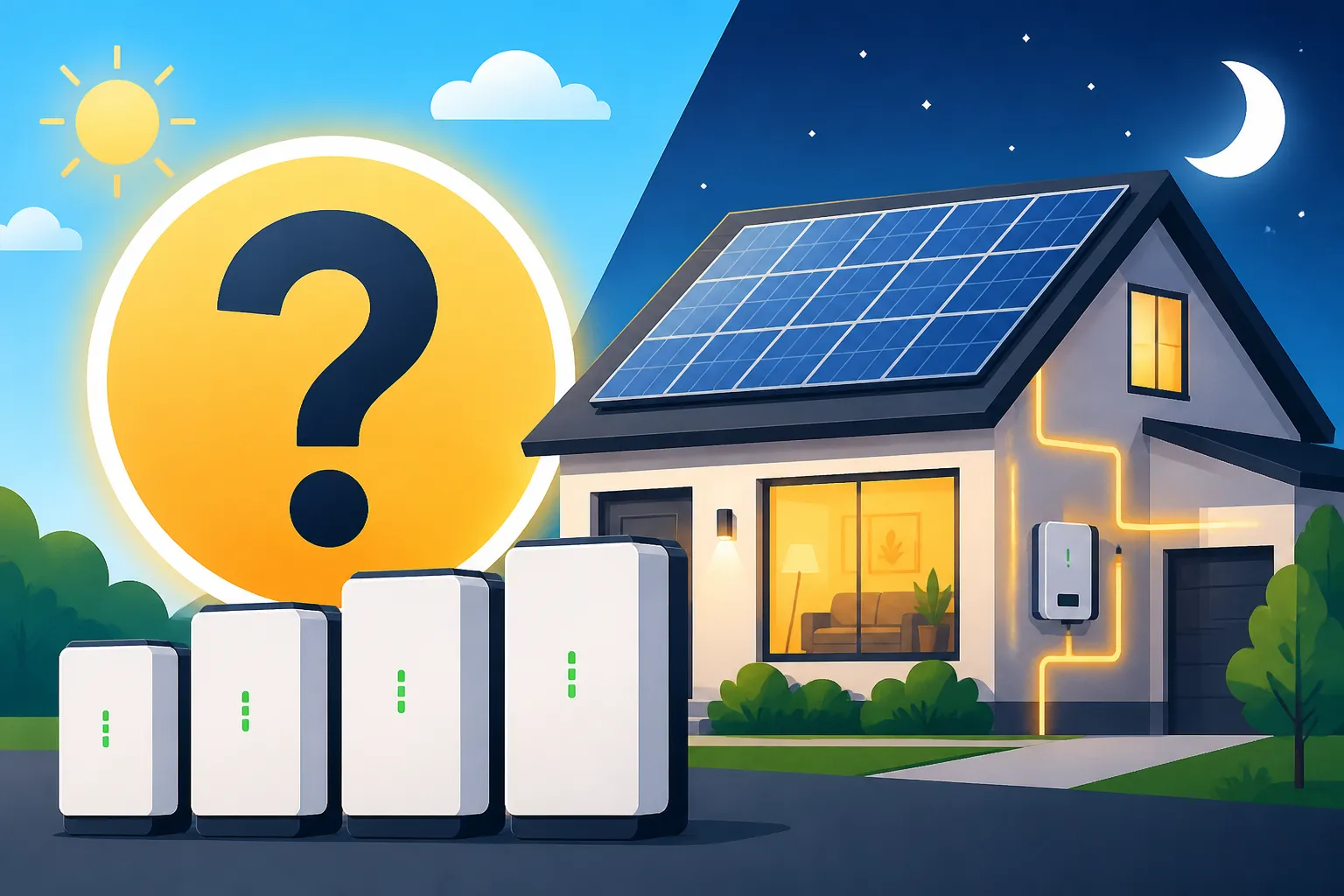
How Many Batteries Do I Need for My House?
Figuring out how many solar batteries your home truly needs can feel like trying to solve a complicated puzzle, especially when everyone from solar installers to online forums throws around technical terms like kWh, DoD, and peak demand. It’s frustrating when you just want a straightforward answer to protect your home from outages or simply lower your monthly electric bill. This comprehensive guide will cut through the noise, helping you understand your unique energy situation and determine the ideal solar battery setup for your household.
Understanding Your Energy Needs and Consumption Patterns
Before you even start looking at battery brands or capacities, the absolute first step is to get a clear picture of your household's energy appetite. Think of it like grocery shopping; you wouldn't just grab a random cart without knowing how many people you're feeding or what meals you plan to make. Your energy consumption is no different, and a proper assessment here will save you a lot of headaches and money down the road.
Why Your Daily Energy Use Matters Most
Your daily energy usage, typically measured in kilowatt-hours (kWh), is the bedrock of battery sizing. You can usually find this information right on your monthly utility bills. Most bills will show your total monthly consumption, and a quick division by the number of days in the month gives you an average daily usage. However, averages can be deceiving. Consider a household in, say, Phoenix, Arizona, where air conditioning might run almost constantly in July but barely at all in December. Your daily average for the entire year won't tell you much about your peak summer needs.
It's also crucial to consider when you use the most energy. Are you a household where everyone showers, makes breakfast, and brews coffee simultaneously before 8 AM? Or are you running your washer, dryer, and dishwasher every evening? These peak usage times, even if brief, demand a higher power output from your battery, not just a high capacity. For instance, a small apartment might average 15 kWh per day, while a larger family home in a state like Texas, with significant heating and cooling needs, could easily hit 40-60 kWh daily. Knowing these nuances is key to preventing your battery from being undersized in either capacity or instantaneous power delivery.
Differentiating Between Essential Loads and Whole-Home Backup
One of the biggest misconceptions in solar battery discussions is that everyone needs to back up their entire house. While it sounds appealing to keep everything running seamlessly during a grid outage, it's also the most expensive and often unnecessary approach. A far more practical strategy for many homeowners is to identify "essential loads" – those critical appliances and systems that provide comfort, safety, and convenience.
Imagine a power outage hitting your neighborhood in, for example, Charlotte, North Carolina. Do you really need to run your second refrigerator in the garage, the pool pump, or every single TV simultaneously? Probably not. Most people prioritize their main refrigerator (to save food), a few lights, Wi-Fi, phone charging, and perhaps a well pump if they rely on it for water. Backing up just these essential loads requires significantly less battery capacity and power output compared to a "whole-home" solution that aims to keep your central air conditioning, electric oven, and multiple large appliances operational. A targeted approach means a smaller, more affordable battery system, like a single Tesla Powerwall or a couple of Enphase IQ Batteries, might be perfectly adequate. For a full breakdown of whether this technology is right for you, check out our guide on if you need a battery with solar.
Calculating Your Target Backup Duration
Once you know what you want to power, the next question is for how long? This "backup duration" is another major factor in determining how many batteries you need. Do you live in an area prone to short, sporadic outages, like those caused by summer thunderstorms in Florida? Or are you in a region that experiences longer, multi-day disruptions due to severe weather events, like ice storms in the Northeast or hurricanes along the coast?
To calculate your target backup duration, first sum up the daily energy consumption of your essential loads. Let's say your critical appliances collectively draw 10 kWh per day. If you want two days of backup, you'll need at least 20 kWh of usable battery capacity. It’s also wise to consider what your solar panels will be doing during an outage. If the sun is shining, your panels can recharge your batteries, extending your backup duration indefinitely until the grid comes back online. However, if it's cloudy or nighttime, your battery is your sole source of power. Planning for the worst-case scenario (no sun for a day or two) is always a smart move. Think about how much energy a 5 kW solar system produces in a day to ensure your panels can keep up with battery demands.
Deciphering Solar Battery Specifications and Capacity
Now that you have a firm grasp on your energy needs and backup goals, it's time to dive into the technical specs of the batteries themselves. This can feel a bit overwhelming with all the numbers and acronyms, but understanding these key metrics will empower you to make an informed decision and ensure your chosen system actually meets your expectations.
Key Metrics: Usable Capacity, Power Output, and Depth of Discharge
When you're comparing solar batteries, there are three primary specifications you'll encounter:
- Usable Capacity (kWh): This is perhaps the most straightforward metric, representing the total amount of energy (in kilowatt-hours) that the battery can store and deliver to your home. It's important to distinguish this from the total capacity, as most manufacturers recommend only discharging their batteries to a certain percentage to prolong their lifespan. For instance, a battery might have a total capacity of 13.5 kWh, but a usable capacity of 12.2 kWh. This usable number is what truly matters for your backup needs.
- Power Output (kW): While usable capacity tells you how much energy you have, power output tells you how quickly that energy can be delivered. Measured in kilowatts (kW), this is crucial for running multiple appliances simultaneously. If your essential loads include a well pump (which might surge to 2 kW) and a refrigerator (0.5 kW), along with lights and Wi-Fi (another 0.5 kW), you'd need a battery with at least 3 kW of continuous power output to handle that combined demand. Trying to run too many high-power appliances at once with an undersized battery can lead to it shutting down.
- Depth of Discharge (DoD): This refers to the percentage of the battery's capacity that has been discharged relative to its total capacity. Modern lithium-ion solar batteries typically allow for a very high DoD, often 90-100%, without significantly impacting their lifespan. This is a huge improvement over older lead-acid batteries, which often recommended a much lower DoD (e.g., 50%) to preserve their cycle life. A higher DoD means more of the stored energy is usable, making the battery more efficient for its given capacity. Manufacturers will provide specifications on cycle life, often stating how many cycles (charge and discharge) a battery can undergo at a certain DoD before its capacity degrades below a specified threshold, usually 70-80%.
Comparing Popular Solar Battery Options
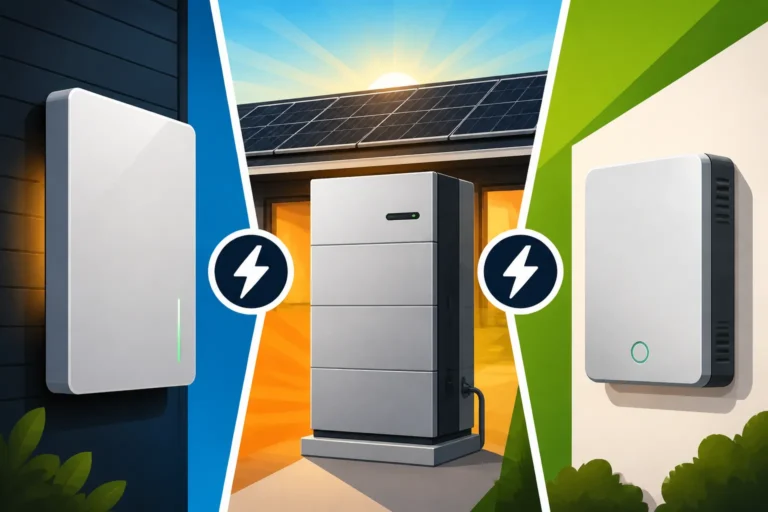
The market for home solar batteries has really expanded in recent years, giving homeowners more choices than ever. Brands like Tesla, with their iconic Powerwall, are well-known for their sleek design and integrated ecosystem. Then there's the Enphase IQ Battery, which often pairs seamlessly with Enphase microinverter systems, known for their modularity and individual panel optimization. Another strong contender is the FranklinWH Home Power System, which offers a comprehensive energy management solution. Each brand has its strengths, whether it's high power output, compact size, or sophisticated energy management software. You can explore the Best Solar Batteries of 2026 to learn more about the leading options.
To illustrate, let's look at some common options. Keep in mind that specific models and capacities can vary, so always check the latest specs.
| Battery Brand/Model | Usable Capacity (kWh) | Continuous Power (kW) | Peak Power (kW, duration) | Expansion Capabilities |
|---|---|---|---|---|
| Tesla Powerwall | 13.5 | 5 | 7 (10s) | Up to 10 units |
| Enphase IQ Battery 5P | 5 | 3.84 | 7.68 (10s) | Modular, many units |
| FranklinWH aPower | 13.6 | 5 | 10 (10s) | Up to 15 units |
| SolarEdge Home Battery | 9.7 or 19.4 | 5 | 7.5 (10s) | Up to 3 units |
Note: Specifications are approximate and can change; always confirm with the manufacturer.
For a small home focusing on essential loads, a single Enphase IQ Battery 5P might suffice, offering 5 kWh of usable capacity. If you're looking for more robust whole-home backup, you might consider one or two Tesla Powerwalls, or perhaps a pair of FranklinWH aPower batteries for extended duration. The number of batteries directly correlates with the total usable kWh you need. For example, if you determine you need 20 kWh of usable capacity for your essential loads for two days, you might go with two Tesla Powerwalls (13.5 kWh x 2 = 27 kWh) or four Enphase IQ Battery 5P units (5 kWh x 4 = 20 kWh). The best choice often depends on your specific system, installer preferences, and budget. For further information on individual battery costs, see our article on How Much Does a Tesla Powerwall Cost?.
Understanding Battery Expandability and Modular Systems
It’s completely normal to feel a bit unsure about your exact long-term energy needs, especially if you're new to solar. This is where the beauty of modular battery systems comes into play. Many modern solar batteries, particularly those from brands like Enphase and FranklinWH, are designed to be expandable. This means you don't necessarily have to commit to a massive battery bank from day one. You can start with a single battery or a smaller cluster to cover your immediate essential loads, and then add more units later if your energy consumption increases, your backup needs change, or your budget allows.
This flexibility is incredibly valuable. For instance, if you initially install solar panels and a single battery unit to save money on time-of-use rates in California, but later decide you want more robust backup capability due to an aging grid, you can often integrate additional identical battery units into your existing system. This staggered investment can make the upfront cost of solar plus storage more manageable for many families. When evaluating quotes, always ask your installer about the expandability of the proposed battery system.
Factors Influencing Your Battery Sizing Decision
Deciding on the right number of solar batteries isn't just about simple math; it's also about how your home interacts with the electrical grid and your long-term energy goals. Various external and internal factors can significantly influence how much battery storage makes sense for your specific situation.
Grid Interconnection and Net Metering Policies
The policies surrounding how your solar system interacts with the utility grid – primarily net metering – play a huge role in how valuable a battery becomes. In states with robust, full retail net metering programs, your utility essentially acts as a "bank" for your excess solar production. When your panels generate more electricity than you're using, that excess power is sent back to the grid, and you receive credits on your bill, often at the same rate you pay for electricity. In these scenarios, the financial incentive for a battery primarily shifts to backup power during outages or taking advantage of time-of-use (TOU) rates, where electricity is more expensive during peak demand hours (often evenings). Batteries can store cheap daytime solar power and discharge it during expensive TOU periods, a practice known as "arbitrage." Our guide on Net Metering Explained: How It Works by State can provide more specific details.
However, in areas with less favorable net metering, like California under NEM 3.0 (Net Billing Tariff), or states where net metering is being phased out or offers a lower "avoided-cost rate" for exported power, batteries become almost essential for maximizing your solar investment. Without good net metering, sending excess power back to the grid offers little financial benefit. In these cases, storing your excess solar power in a battery for later use—either for backup or to power your home when the sun isn't shining—is often the only way to realize significant savings. This can dramatically increase the number of batteries you might need to store all that valuable daytime generation.
Your Existing or Planned Solar Panel System Size
The amount of electricity your solar panels generate is inextricably linked to your battery storage needs. Think of your solar panels as the "income" and your home's consumption as the "expenses" that your battery helps balance. If you have a large solar array that consistently produces a lot of excess power during the day, you'll need sufficient battery capacity to store that power rather than sending it back to the grid for minimal credit. Conversely, if your solar system is relatively small and primarily covers your immediate daytime consumption, you might not generate enough excess energy to fully charge a very large battery bank regularly.
It's a delicate balance. A properly sized solar system, paired with the right amount of battery storage, creates a harmonious energy ecosystem for your home. You don't want a massive battery that your panels can't reliably recharge, nor do you want a tiny battery that's constantly full while your excess solar power is being exported cheaply. Your installer will help you balance these two components, ensuring your How Many Solar Panels Do I Need for My Home? question is answered in conjunction with your battery needs. This synergy is key to optimizing your overall energy independence and financial savings.
Budget, Space, and Aesthetic Considerations
Let's be real: cost is a significant factor for almost every homeowner considering solar and batteries. Solar battery incentives in 2026 can help, but these systems are still a substantial investment. The more batteries you add, the higher the upfront cost. It's important to weigh the desired level of backup and energy independence against what you're willing and able to spend. While going completely off-grid might sound liberating, the cost for enough batteries to sustain a typical family home through extended periods without sun can be exorbitant. You can get a general idea of these costs by checking out our resource on Solar Plus Battery Cost.
Beyond the financial aspect, physical space and aesthetics also come into play. Solar batteries, while becoming more compact, still require dedicated space. A single Tesla Powerwall, for instance, is a relatively flat, rectangular unit that can be mounted on a garage wall or exterior wall. However, if you need multiple units, they will take up a considerable amount of wall space. Some homeowners might prefer the sleek, integrated look of certain battery systems, while others might be less concerned with appearance and more with pure functionality. Consider where the batteries will be installed—inside a garage, a utility room, or mounted outside the house—and how that affects your available space and personal preferences. You can even find smaller battery-related accessories or monitoring tools on platforms like Amazon if you're looking to enhance your existing setup or keep an eye on performance.
Real-World Scenarios and Practical Examples
To make this all a bit more tangible, let's walk through some common household scenarios and discuss how their unique needs might translate into specific battery requirements. This should help you visualize what kind of battery setup might be right for your home.
Sizing for Critical Loads in a Small Home
Consider a smaller home, say 1,500 square feet, perhaps for a couple or a small family, located in a region with occasional, short-duration power outages, such as a suburban area of Atlanta, Georgia. Their primary concern during an outage is to keep essential appliances running: the refrigerator to save groceries, a few lights, and the Wi-Fi router for communication and internet access. They might also want to charge phones and laptops.
Let's estimate their essential daily consumption during an outage:
- Refrigerator: ~1-2 kWh/day
- Lights (LED): ~0.5 kWh/day
- Wi-Fi Router/Modem: ~0.2 kWh/day
- Phone/Laptop Charging: ~0.3 kWh/day
- Total Essential Load: ~2.0 – 3.0 kWh per day
For this household, a single, smaller-capacity battery might be perfectly sufficient for 1-2 days of backup. An Enphase IQ Battery 5P, with its 5 kWh usable capacity, could easily power these essential loads for nearly two full days, assuming no solar charging. If they have a small solar array (e.g., 5 kW), the panels could help recharge the battery during daylight hours, extending the backup duration even further. This setup prioritizes cost-effectiveness and targeted protection, making it a smart choice for those who don't need to run their entire house during an emergency. Looking to optimize your investment? Consider if Is It Worth Adding a Battery to My Solar System?.
Whole-Home Backup for a Mid-Sized Family Home
Now, picture a larger, mid-sized family home of 2,500 square feet in a place like Houston, Texas, where summer heat necessitates some air conditioning, and a family with kids might want more than just the basics during a longer outage. This family might aim for backup that includes their refrigerator, a few critical lights, Wi-Fi, television, a few small kitchen appliances, and perhaps limited use of a smaller window AC unit or central AC for a few hours.
Their estimated essential-plus-comfort daily consumption during an outage:
- Refrigerator: ~1-2 kWh/day
- Lights: ~0.5 kWh/day
- Wi-Fi/TV/Entertainment: ~1.0 kWh/day
- Phone/Laptop Charging: ~0.5 kWh/day
- Small Appliances (microwave, toaster): ~0.5 kWh/day
- Limited AC (central or window unit): ~5-10 kWh/day (highly variable based on usage)
- Total Daily Outage Load: ~8.5 – 14.5 kWh per day
For this more comprehensive backup, a single battery unit like a Tesla Powerwall (13.5 kWh usable) might cover their needs for a day, especially if it's recharged by their solar panels. However, for 1.5 to 2 days of backup, or if they have higher AC demands, they would likely need two of these larger batteries, or perhaps 3-4 of the smaller, modular Enphase IQ Battery units. A robust 10 kW solar system would also be crucial to ensure these larger battery banks can be adequately recharged during the day. Sometimes, installers will package together two Powerwall units or similar larger battery systems, often managed by a central inverter or smart home energy controller, which you can research for specifications, even on platforms like Amazon.
Off-Grid Aspirations or Extended Outage Preparedness
Finally, let's consider the homeowner who lives in a rural area of northern California, far from reliable grid infrastructure, or someone simply aiming for complete energy independence. They want to power their entire home, including larger appliances, multiple AC units, and potentially even electric vehicle charging, for multiple days without any grid connection. This is the realm of true off-grid or extended backup systems.
Their estimated full-home daily consumption:
- Standard Appliances (refrigerator, laundry, dishwasher): ~5-10 kWh/day
- HVAC (AC/Heating): ~10-30+ kWh/day (depending on season and usage)
- Lighting & Electronics: ~3-5 kWh/day
- Well Pump/Other large loads: ~2-5 kWh/day
- Total Daily Load: ~20 – 50+ kWh per day
Achieving this level of backup for multiple days requires a significant investment in both solar panels and battery storage. Such a setup would typically involve 3-5 (or more) high-capacity batteries like Tesla Powerwalls or FranklinWH aPower units, totaling 40-70+ kWh of usable capacity. Moreover, their solar panel array would need to be substantial, perhaps a 15 kW solar system or larger, to reliably produce enough energy to meet daily demand and fully recharge such a large battery bank. This is where you really delve into the specifics of How Much Does It Cost to Go Off-Grid With Solar?. It's a serious commitment, but for those who value ultimate resilience and independence, it can be a worthwhile one.
Disclaimer
Please note that the information provided in this guide is intended for general informational purposes only. Solar energy systems and battery storage solutions are complex and highly dependent on individual circumstances, local regulations, and specific energy consumption patterns. We strongly recommend consulting with a qualified, local solar professional for a personalized assessment, system design, and accurate cost estimates. They can perform a detailed site survey, analyze your historical energy usage, and recommend a system tailored to your unique needs and goals.